
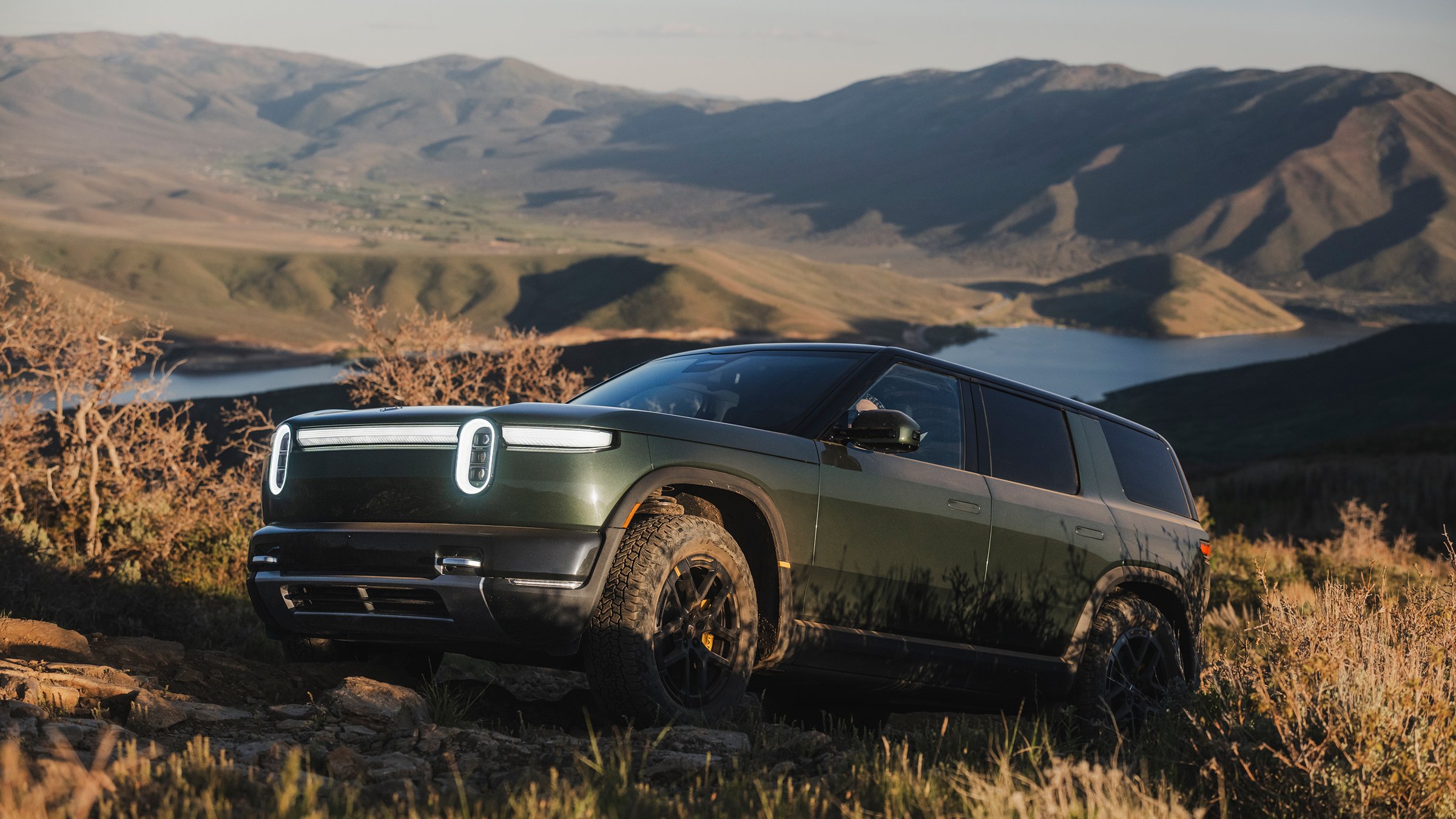
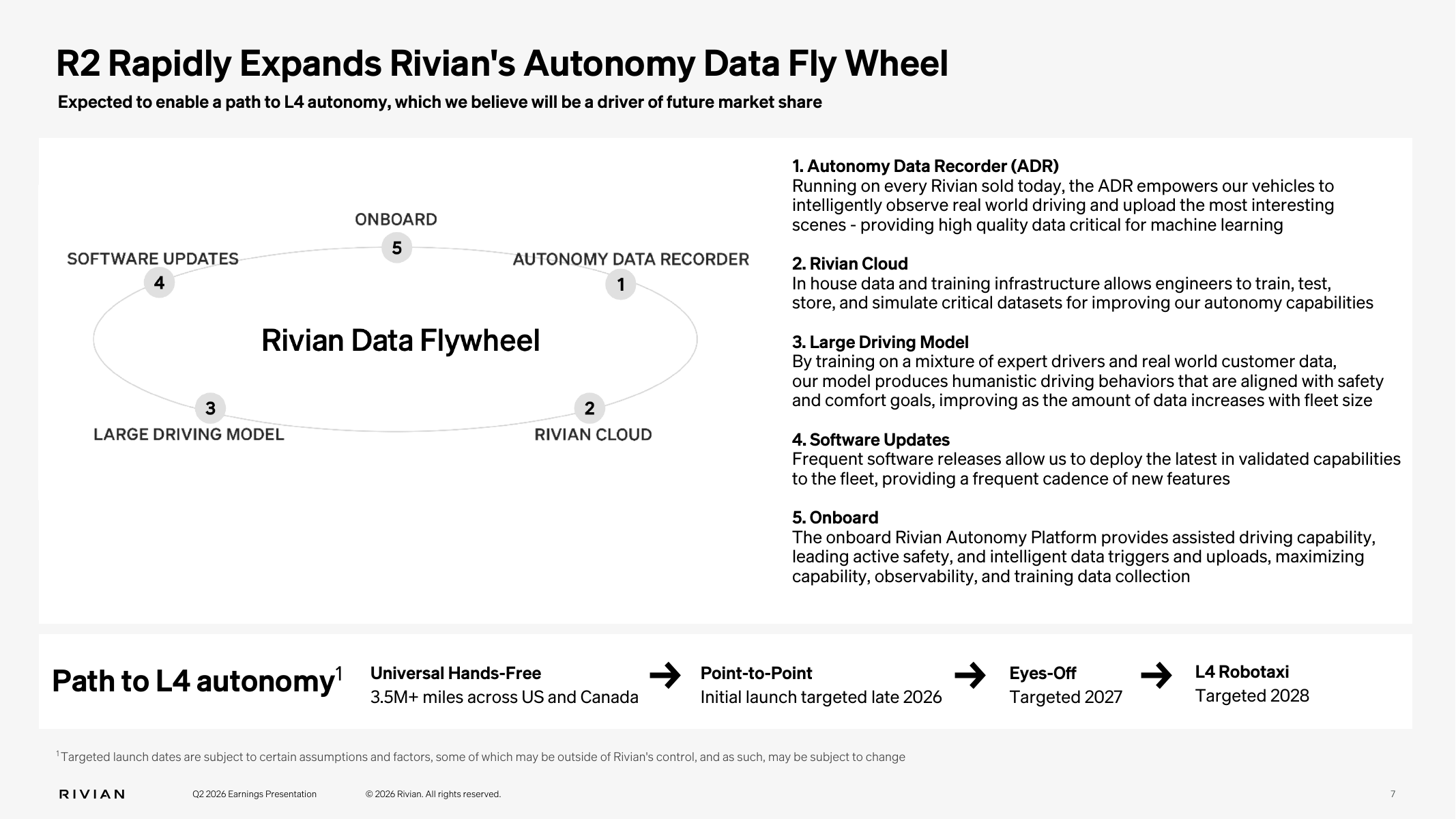
Rivian reported second-quarter revenue of $1.658 billion, up 27 percent year over year, with gross profit of $179 million and a net loss of $837 million. Deliveries landed at 12,194, a 14 percent increase over the same quarter last year, and production came in at 12,613, which is more than double the 5,979 vehicles built in Q2 2025 when Normal was down for the R2 retooling.
The number that matters most to anyone reading this is smaller than any of those. R2 customer deliveries started on June 9, which means the quarter only captured about three weeks of R2 revenue, and most of the delivery volume in the period still came from R1 and the commercial vans.
That timing shows up in the cost side. Rivian said it recognized roughly $100 million in incremental cost of revenues tied to the R2 ramp, compared to what production would have cost at more normalized levels. Early build rates are expensive, lines are still being tuned, new team members are still being trained, and all of that lands in the automotive number before the volume shows up to absorb it.
Even after accounting for that, automotive gross profit was a loss of $36 million, compared with a loss of $335 million in the same quarter last year, which is a fairly large swing. Automotive gross margin was negative 3 percent. Regulatory credits helped, at $108 million in the quarter and up $103 million year over year, and there was also an IEEPA tariff refund receivable in the mix, which ties back to the suit Rivian filed against the federal government over duties it already paid. Average selling price went the other way because the delivery mix now includes more vans and more R2.
Software and services continue to do the heavy lifting on margin. That segment brought in $515 million, up 37 percent, with gross profit of $215 million at a 42 percent margin. Most of the growth came from the vehicle electrical architecture and software development work for the Volkswagen Group joint venture, with vehicle repair and maintenance and the paid Autonomy+ offering that started in April adding to it. Rivian described the take rate on Autonomy+ as encouraging but did not put a number on it, which is the kind of thing worth watching over the next couple of quarters.
Guidance moved in the right direction on all three lines. Deliveries went up by 3,000 units in early July and now sit at 65,000 to 70,000 for the year, which is the raise I wrote about after the Q2 delivery report and still implies a second half nearly double the first. Adjusted EBITDA improved by $50 million at the midpoint to a range of negative $2.00 billion to negative $1.80 billion, helped by the stronger regulatory credit revenue and the higher volume. However, Rivian called out rising raw material, memory, and logistics costs working against it. Capital expenditures came down by $250 million at the midpoint, to $1.70-$1.80 billion, due to project efficiencies and timing.
The memory cost callout is a small detail that I would not skip past. Every automaker building a software-defined vehicle is buying into the same tight memory market right now, and Rivian putting it in writing, next to raw materials and logistics, says something about where the cost pressure is coming from.
On the manufacturing side, Rivian said the first R2 shift is ramping and that it expects to move to two shifts in Normal by the end of the third quarter. That has been the number to watch since the night shift staffing showed up on LinkedIn back in May, and it is the single line in the deck with the most direct effect on delivery timelines for anyone still holding a reservation.
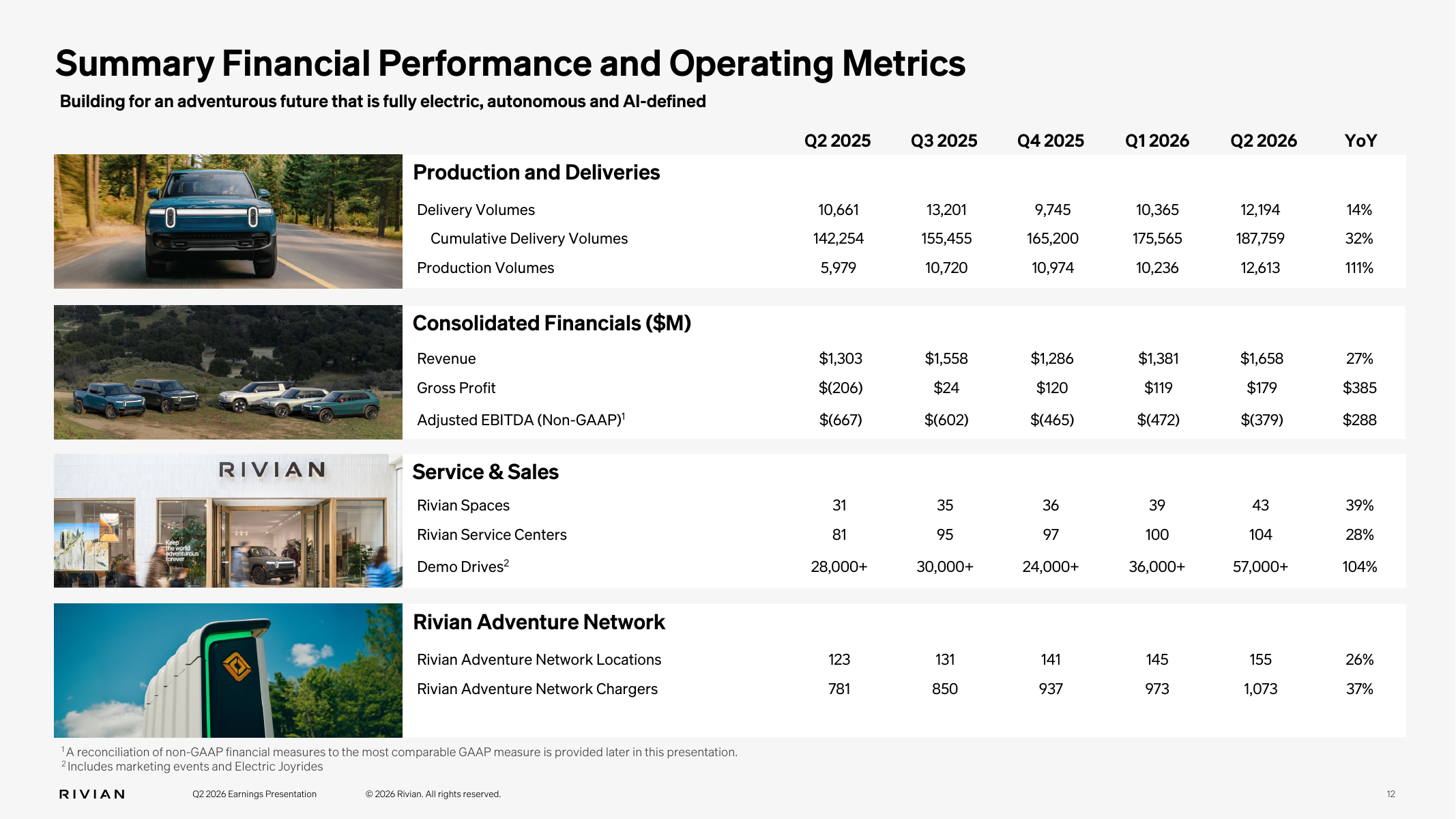
Autonomy got its own slide, and the roadmap did not change. Universal Hands-Free has now covered more than 3.5 million miles across the US and Canada. Point-to-point is still targeted for an initial launch late this year, which lines up with what James Philbin told me in Park City and with the roadmap Rivian laid out in May. Eyes-off is still targeted for 2027, and the L4 robotaxi work tied to the Uber deal is still pointed at 2028. Rivian also said development of the RAP1 chip is on track and that it has entered the final testing phases of production silicon.
Rivian Assistant is now live on all R1 vehicles and is expected to roll out to R2 later this year. R2 also got its first over-the-air update in the quarter, which brought over Pet Comfort, Gear Guard, Launch Mode, and WiFi Hotspot.
The balance sheet section is where the quarter gets more complicated. Cash and short-term investments finished at $5.31 billion, down from $6.08 billion at the end of last year, and free cash flow was negative $849 million for the quarter. The July follow-on offering of 86.25 million shares at $15.50 raised about $1.3 billion net, and those proceeds are earmarked, in part, for the equity contributions and reserve accounts that must be pre-funded before the first draw on the Department of Energy loan. That first draw is expected by early 2027. Pro forma available liquidity is $7.16 billion, and the deck stacks that up to $14.07 billion once the targeted Volkswagen, Uber, and DOE capital is included. However, most of that is conditional on milestones.
So the picture is a company still burning cash at a real clip, but doing so while carrying the front end of an R2 ramp, with loss per vehicle moving in the right direction. Whether the market gives Rivian any credit for that is a separate question, and it has not so far this year.
What I will be watching in Q3 is whether the second shift actually lands inside the quarter and how much of that $100 million ramp cost burns off once volume picks up. The R2 story so far has been about whether Rivian could build it. The next few months are about whether Rivian can build enough of it.
Other things you might have missed
- Rivian hosted more than 57,000 demo drives in Q2, a record up 104 percent year over year.
- Amazon now has more than 40,000 Rivian Electric Delivery Vans on the road across North America.
- The commercial van platform passed one billion cumulative miles driven during the quarter.
- New EDV variants are in development with an AWD configuration and a larger battery pack expected to add about 30 percent more range, aimed at rural route coverage.
- Adjusted EBITDA was negative $379 million, a $288 million improvement year over year.
- Net loss per share was $0.63, compared to $0.97 a year ago.
- Cumulative deliveries since launch now sit at 187,759 vehicles
- Rivian Adventure Network has 155 locations and 1,073 chargers, up 37 percent in charger count.
- The retail and service footprint is now 43 Spaces and 104 service centers.
- Combined capacity across Normal and Georgia supports up to 515,000 vehicles per year, with room for later phase expansion.
- R1T was named the 2026 Edmunds Top Rated Electric Truck for the second year running
- The six-month results include a $506 million gain tied to the Mind Robotics Series A and the related deconsolidation.
- Total operating expenses were $1.015 billion, roughly flat against Q1.