
Rivian R2: every spec that matters before you order.
Living reference · last updated August 1, 2026
Jump to
So this is the running reference I’ll keep pointing people to. Bookmark it, come back to it while you sit in the configurator building one out for real. I own an R2 Performance now, picked it up at the factory in Normal and drove it 2,500 miles home to Orlando, and I have since run it at max tow and taken it to zero on a highway range test with the Out of Spec crew. My first drive is here if you want the on-road and off-road impressions. Most of what follows now comes from living with the thing rather than reading a spec sheet, and I’ll keep updating it as the Premium and Standard trims firm up.
Range, and the thing nobody tells you about wheels
The longest-range R2 is the $48,490 Standard RWD Long Range at 345 miles, not the priciest trim. Your wheel choice alone swings range 20+ miles. And at a steady 70 mph, expect closer to 250 than to the EPA number.
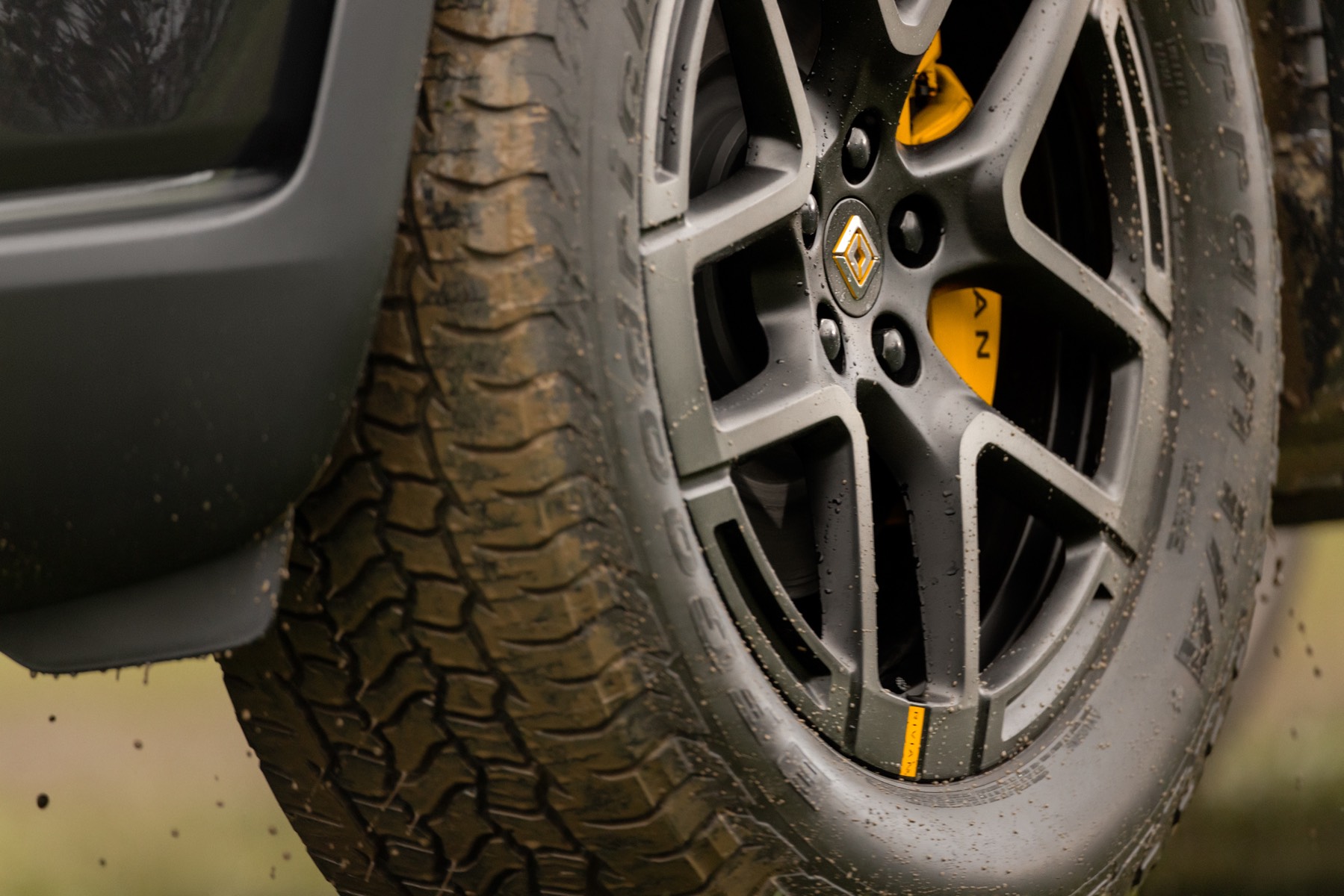
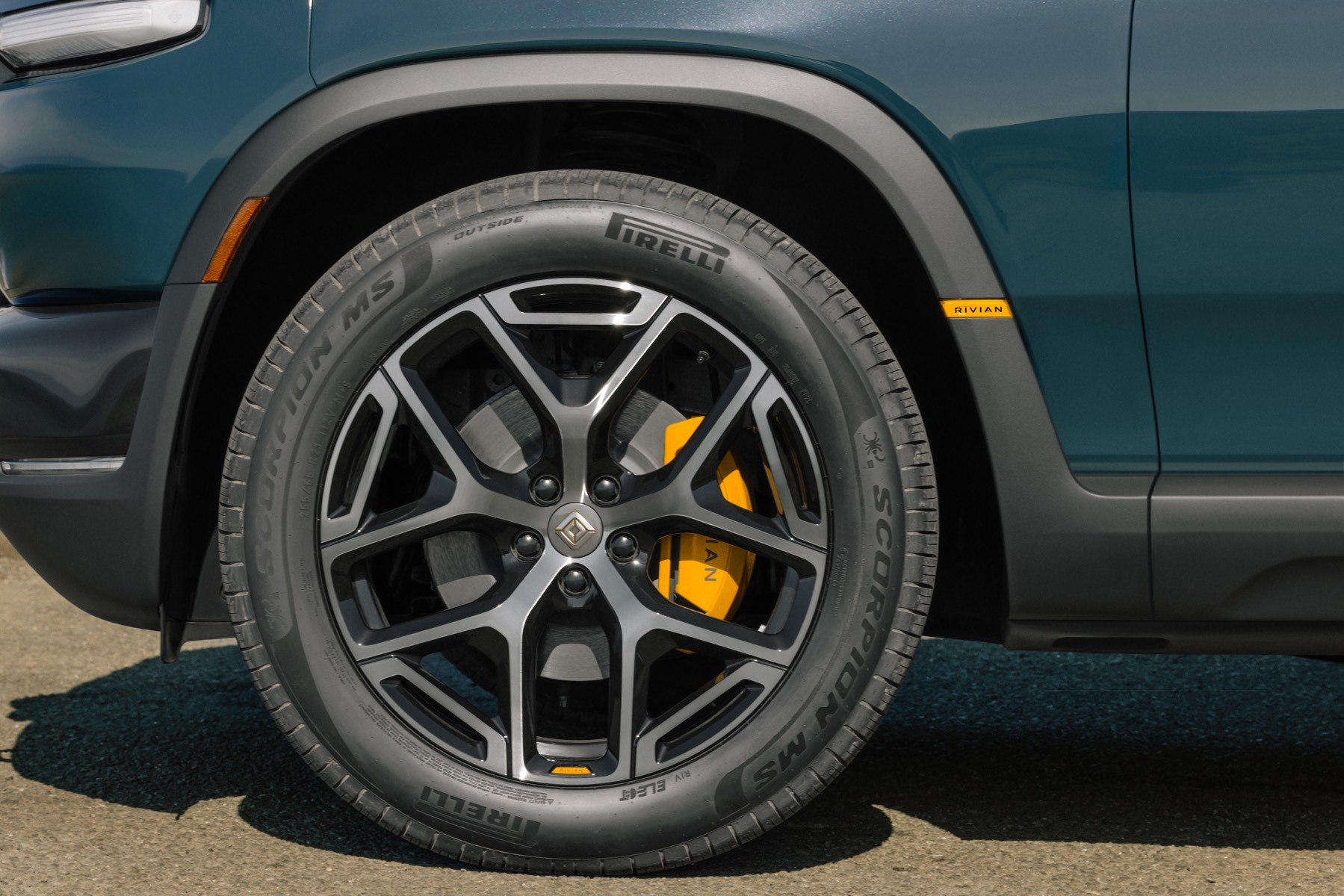
R2 Performance is EPA rated at 330 miles on the 21 inch all-season setup. That’s the number Rivian leads with and it’s the one most people anchor to. Pick the 20 inch all-terrain instead and you’re at 307. So you lose 23 miles before you’ve even driven anywhere, purely on the wheel choice. I made the case for the 20s anyway, because the tire situation is worth the trade for a lot of people.
And that 330 covers the Performance and the Premium, which is not where the longest-range R2 actually lives. The Standard splits three ways now. The cheapest one, the $44,990 RWD, runs a smaller battery and lands at 275 miles. Move up to the Standard RWD Long Range at $48,490 and you get the range champ of the whole lineup, 345 miles, more than the Performance for nearly ten grand less. The AWD Long Range sits in the middle at 330 for $51,990. So range does not track price in a straight line. The bargain trim is actually the short-range one, and the 345-mile champ is that mid Standard, not the cheapest and not the priciest.
Now the part I could not write back in June, because I had not run it yet. I took my own R2 Performance out on Interstate 64 in North Carolina with Kyle and the Out of Spec crew, held a GPS-verified 70 mph from a full charge until it could not hold the speed anymore, and it went a corrected 253 miles. Against a 330 mile rating that is a 77 mile gap, and it was a bigger gap than I expected walking into it. A Model Y Performance ran the same route at the same time and covered 317.8 miles against its own 306 mile rating, so it beat its sticker while the R2 fell well short of ours. The full test writeup is here.
Before anyone panics, some context that matters and that got lost in a lot of the coverage. The 330 is a combined city and highway figure. The R2’s actual EPA highway rating is closer to 301, so a flat-out 70 mph run was never going to hit 330 and comparing against the combined number overstates the miss. The R2 is also a boxy vehicle and that shape costs you at highway speed in a way it does not cost you around town. The car pulled 89.3 kWh in the test, which is more than the 87.9 Rivian quotes as usable, so the pack delivered. Worth knowing too, in Conserve mode it showed 334 miles at full charge, four above the EPA number. I dug into why the rating and the real world drift apart in the MPGe breakdown, and the short version is that this says more about how EVs get rated than it does about Rivian. Plan highway trips around roughly 250 to 260 miles at 70 and you will not be surprised.
One more thing I noticed during that run and that other owners have echoed. Once the battery drops into the teens and single digits, the indicated range falls away quickly. It is not that the miles are not there, it is that the estimate gets pessimistic in a hurry at the bottom, which is worth knowing before your first long trip.
One thing that helps cold-weather range and never makes the headline number, the R2 gets a heat pump standard across the whole lineup, Launch Edition included. Gen 1 R1T and R1S didn’t have one, they ran resistive heating, and Gen 2 added a heat pump in the 2025 refresh. The R2 carries a newer redesigned version, and Wassym confirmed it wasn’t held back for the top trim or turned into an upsell the way you might worry about on a car built to hit a price, it’s standard everywhere. That unit also keeps the cabin comfortable during a hot-weather fast charge, which anyone who’s sweated through a summer charging stop will appreciate.
Price and what gets cut as you go down the lineup
Five real configs span $44,990 to $57,990. Going down the lineup you lose power and the semi-active suspension first, and the Standard’s price rides mostly on which battery you pick.
Performance Launch Edition is $57,990. Premium lands later in 2026 at $53,990. Then the Standard, which is really three cars. The base RWD is $44,990 and arrives Summer 2027, the RWD Long Range is $48,490 in Spring 2027, and the AWD Long Range is $51,990, also Spring 2027. The long-promised sub-$45k R2 is finally real and finally priced. Full lineup breakdown is here.
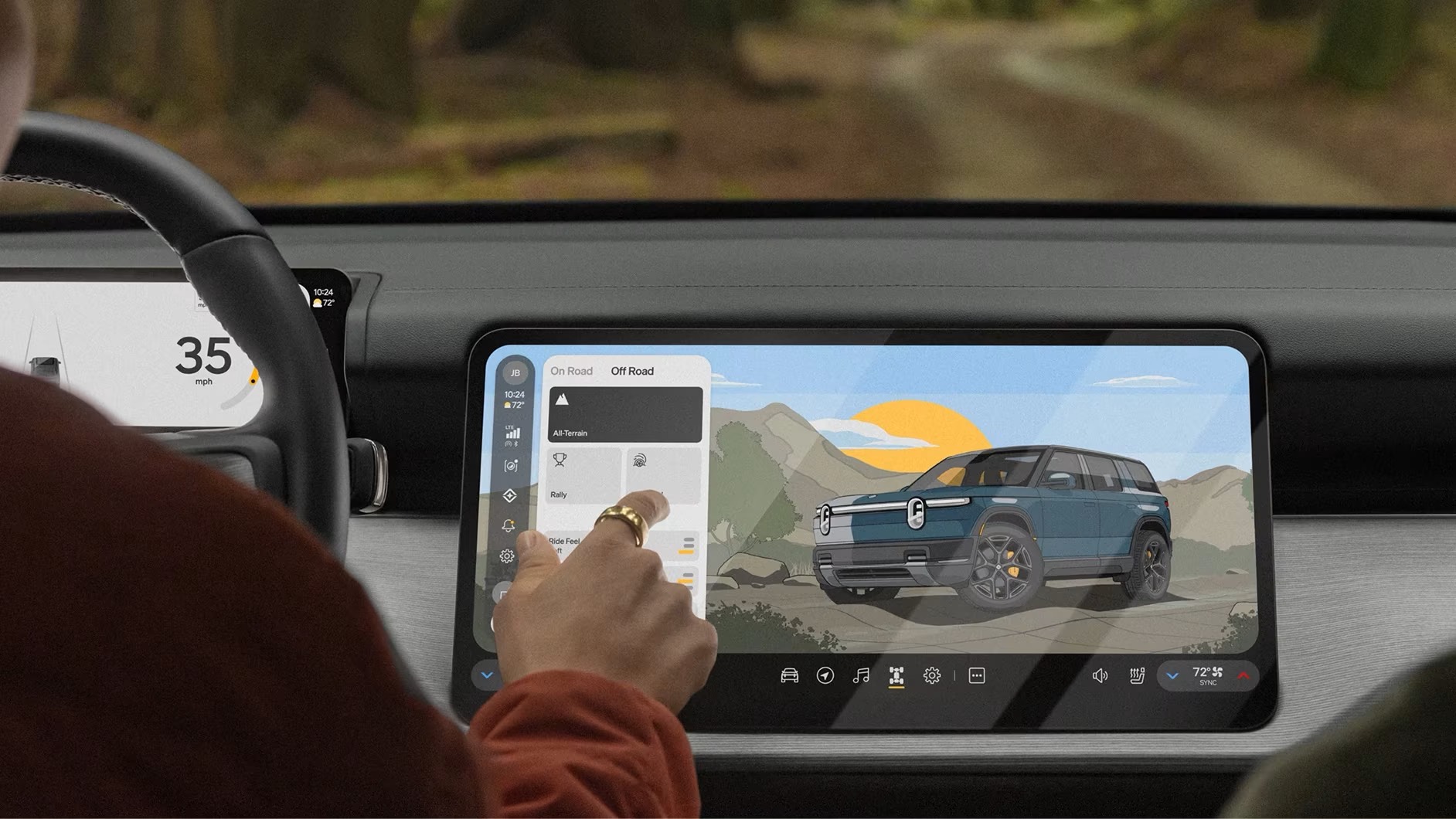
One reader said the smart move is to find what got cut at each step and work back from your own minimum, which is the right way to think about it. Premium drops from 656 hp to 450 and loses the semi-active suspension entirely, that one’s Performance only. You also give up a couple of drive modes like Rally and Soft Sand. Same battery though, same 330 miles, same drop glass and the 975W audio. Standard drops to a single rear motor at 350 hp. What actually varies in that tier is the battery, which is where the 275 versus 345 mile split comes from.
The part people keep noticing is how close the top Standard gets to the Premium. The AWD Long Range Standard is $51,990 against the Premium’s $53,990, so two grand and a feature list separate them, at least on the US site. And if you’re in Canada, none of these numbers are your numbers. The pricing story up there is its own thing, and order invites are now pointing at 2027, so it is worth waiting on.
The Premium versus Performance question is the one I’ve written about the most, mostly because that $4k gap is misleading the second you count what the Launch Package throws in. I broke down why the Launch Edition is the value play, and then turned around and argued the other side, why you might want to wait for the LiDAR car. Both are worth a read before you lock anything in.
R2 trims compared
Rivian R2 trims compared
Performance Launch Edition, Premium, and Standard side by side.
Which R2 is right for you?
Most range for the money
Standard RWD Long Range
The range champ of the whole lineup, nearly $10k less than the Performance. Rear-drive only, and no tow package available.
Want it now, want it all
Performance Launch Edition
The only trim you can get today. 656 hp, every feature, lifetime Autonomy+, and the Launch Package shrinks the price gap.
Cheapest way in
Standard RWD
The sub-$45k promise delivered. Smaller battery, longest wait, no hitch option, but the lowest price of entry.
Best AWD value
Standard AWD Long Range
All-wheel drive for $2k less than the Premium, same range, and the only Standard that can tow. The sweet spot if you want AWD without paying Premium money.
Power, charging, and the NACS question
Every trim charges the same, about 29 minutes, native NACS, Supercharger ready. The real fork is single-motor RWD on the Standard versus dual-motor AWD above it, and AWD costs roughly 15 miles of range.
Performance is dual-motor AWD, 656 hp, 609 lb-ft, 3.6 to 60. Premium keeps AWD but dials it back to 450 hp. The Standard starts as a single-motor rear-drive car at $44,990, 350 hp, on the smaller battery. Move up to the Long Range battery and it’s $48,490 for 345 miles, still rear-drive. Adding the second motor on top of that runs $51,990 for the AWD Long Range, the same $3,500 jump for all-wheel drive, and it trims range back to 330. AWD versus RWD came up a lot in the replies, usually next to range, and that is the tradeoff in plain numbers. The dual motor costs you about 15 miles, and it is also the only way to get a hitch, which I will get to.
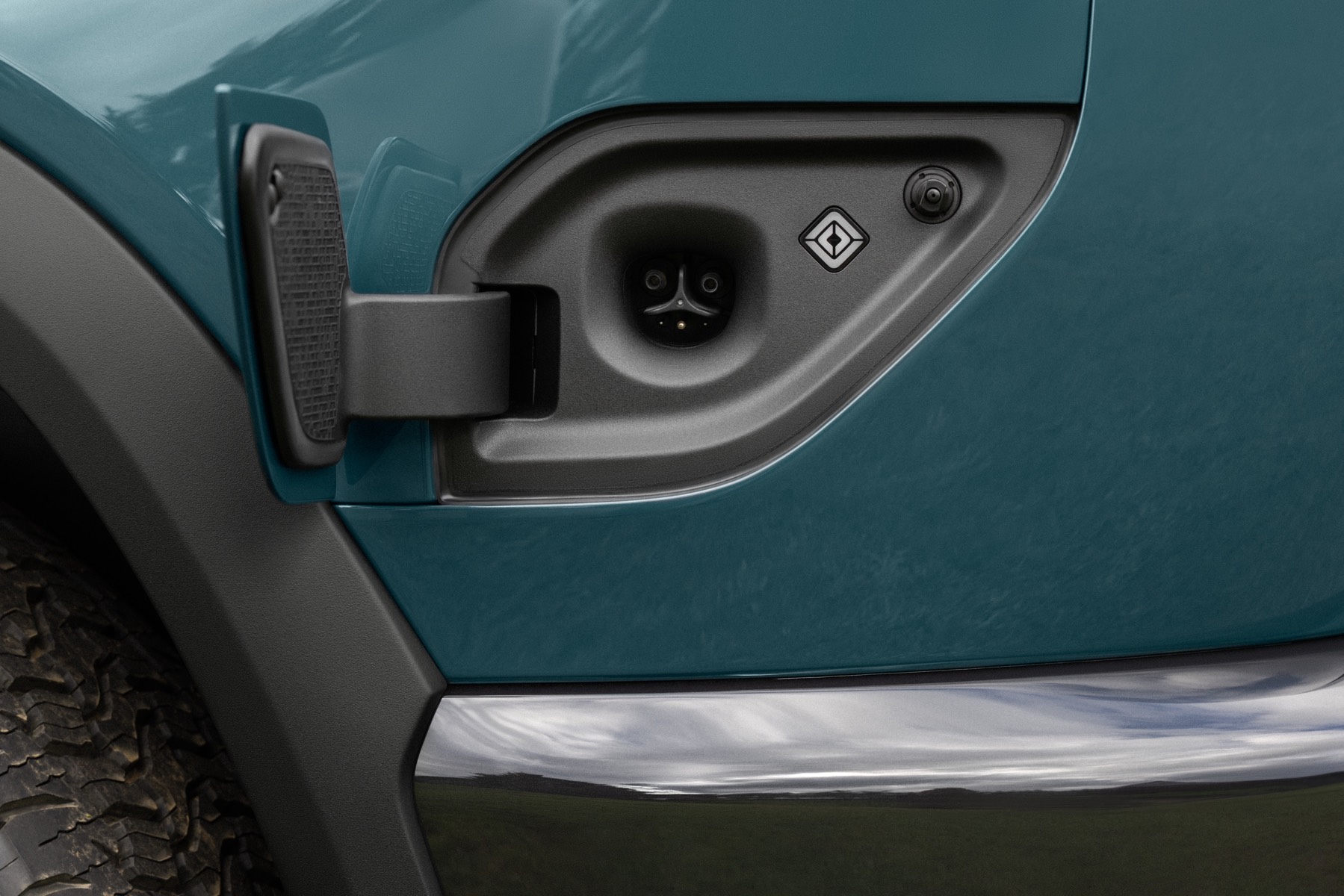
Charging is an 87.9 kWh pack on a 400 volt architecture, 10 to 80 in around 29 minutes. The NACS port is native, so the Tesla Supercharger network is open to you out of the box, and there’s a CCS adapter in the bin for everything else. For the couple of Tesla owners who replied saying they’re switching over, that native NACS bit is probably the part that makes it painless.
Now that I have actually put mine on a fast charger and watched the curve, the charging is the part of this car I am most impressed by. It held a flat 600 amps all the way to around 32 percent and peaked near 229 kW, and it still wanted more than the charger was willing to give it. For a 400 volt pack that is genuinely strong, and it goes a long way toward covering for an efficiency number that does not quite keep up on the highway. You lose some range at speed, but you get it back faster than the spec sheet suggests.
The stuff the spec sheet skips
What Rivian won’t put on the comparison page: the tow package is all-wheel drive only, 21 inch tires are hard to source, the R2 is RAV4-sized and cannot be lifted, and whole-home backup needs hardware that is not out yet.
Half the questions in my replies were about stuff Rivian doesn’t even put on the comparison page.
The frunk one comes up constantly. Somebody said being able to fit golf bags in a frunk has spoiled them and I get it. Total enclosed storage on the R2 is 90.1 cubic feet front to back, 28.7 of that behind the seats. The R1S still beats it overall and has the bigger frunk, but the R2 folds its rear seats dead flat, which is the whole air-mattress camping thing Rivian keeps showing off. The full dimensional comparison is here.
Tires are a sneaky one and bigger than they look. That 21 inch wheel runs a 255/55R21, which is a pain to find aftermarket right now, same trap early R1 owners hit with the 21 Aero. The 20 inch all-terrain is a 255/60R20, a common size with real options behind it. So if not waiting on Rivian’s supply to replace a set matters to you, that’s another mark in the 20s column. I keep the running list of what fits in the Tire Guide.
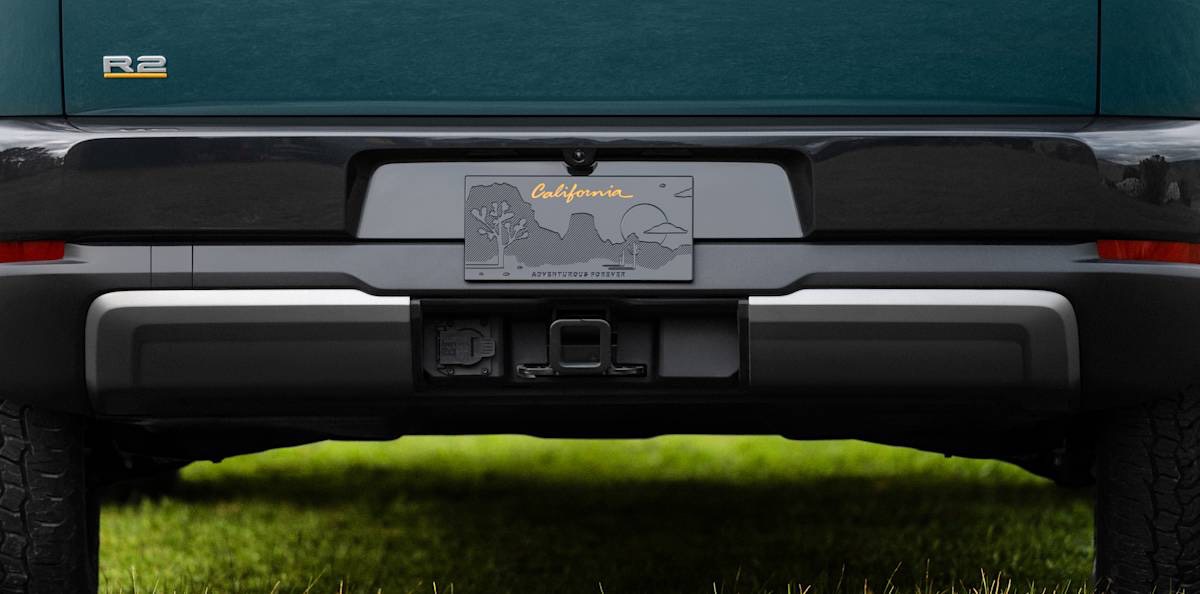
The tow hitch question came up a few times in the replies, and not for towing, for a bike rack, and this is the answer that changed since I first wrote this page. The tow package is all-wheel drive only. If you order the base Standard RWD or the rear-drive Standard Long Range, you cannot get a hitch at any price, which is going to catch out anyone buying the cheap R2 and planning to hang bikes off the back. Step up to the AWD Long Range Standard and the package becomes available, but the rating drops to 3,500 pounds. Premium and Performance both carry the full 4,400 and the package runs $950, or it comes bundled in the Launch Package.
On the towing itself, we ran mine at the full 4,400 pounds on a car hauler with Out of Spec, three grown men in the cabin, right at the edge of what Rivian says the thing can do. It handled it better than I expected, and the semi-active suspension on the Performance is doing real work there, settling the whole car in a way I would not want to give up if I towed regularly. The numbers to know are a 6,173 pound GVWR and 1,168 pounds of payload on the Performance. Take roughly 440 pounds of tongue weight off that at max tow and you have about 718 pounds left for people and gear, which three adults and some luggage will eat through fast. Full breakdown in the R2 towing guide. If you tow heavy or far, a used R1 is still the more sensible tool.
V2L and V2H finally got a straight answer, which I appreciated because the home-power question never seems to get one. The R2 can run tools, camp gear, whatever you’d plug into a wall, right out of the gate through the Rivian Field Outlet. It plugs into the NACS port and gives you regular 120V outlets, so the car doubles as a mobile power station from day one. That covers the V2L side. Whole-home backup, the V2H part, comes later and takes more than the car alone. Rivian’s bringing a residential charger and a metering device down the road, because the R2 can only do half the job here. It has the bidirectional hardware built in, but you still need the right gear at the house to safely push power into your panel during an outage. Wassym confirmed it’s coming, just no firm date yet. Different topic, but for the person whose first check is the stereo, the 975W premium audio lands on Performance and Premium.
Color is the one a lot of you are quietly annoyed about. The palette skews dark and Launch Green is locked to the Launch Edition, and it’s a $2,000 add on top of that, which rubbed people the wrong way. Want actual color, your trim and your timing both matter, and I pulled the full color picture apart by trim separately. Black Crater Signature is the included interior, and the lighter Coastal Cloud Signature comes in August 2026, so the very earliest Performance buyers wait a bit for it. On the outside, more options trickle in across the year too, Forest Green in August 2026 and the purple Borealis in September 2026, so if your color is not there on day one it may just be a timing thing.
On size, the R2 is 185.9 inches long, closer to a RAV4 or an Outback than to the R1S, sitting about 10 inches lower on a fixed 9.6 inches of clearance. It has no air suspension, so you can’t lift it for the trail the way you can an R1S. The R1S keeps clearance and cargo. The R2 is easier to park and somehow has more rear legroom. There’s a full R1S versus R2 side-by-side if you’re stuck between them.
Software and what ownership actually looks like
Software is catching up fast. 2026.24 brought Pet Comfort, Gear Guard, Launch Mode, garage door pairing and the WiFi hotspot, and the R2 is still filling in features R1 owners take for granted.
This section did not exist when I first published this page, because there was nothing to say yet. Now that I have lived with one for a while, there is.
The R2 shipped missing a pile of things R1 owners take for granted, and Rivian has been filling those in over the air at a decent clip. Software 2026.24 brought Pet Comfort, Gear Guard, Launch Mode, garage door pairing and the in-vehicle WiFi hotspot, along with a long list of fixes across charging, vehicle access and infotainment. Camp mode is still not here. If you are the kind of buyer who wants the car to be finished on day one, that pattern is worth understanding before you order, because the R2 is going to keep arriving in pieces for a while. I track every release in the software update notes.
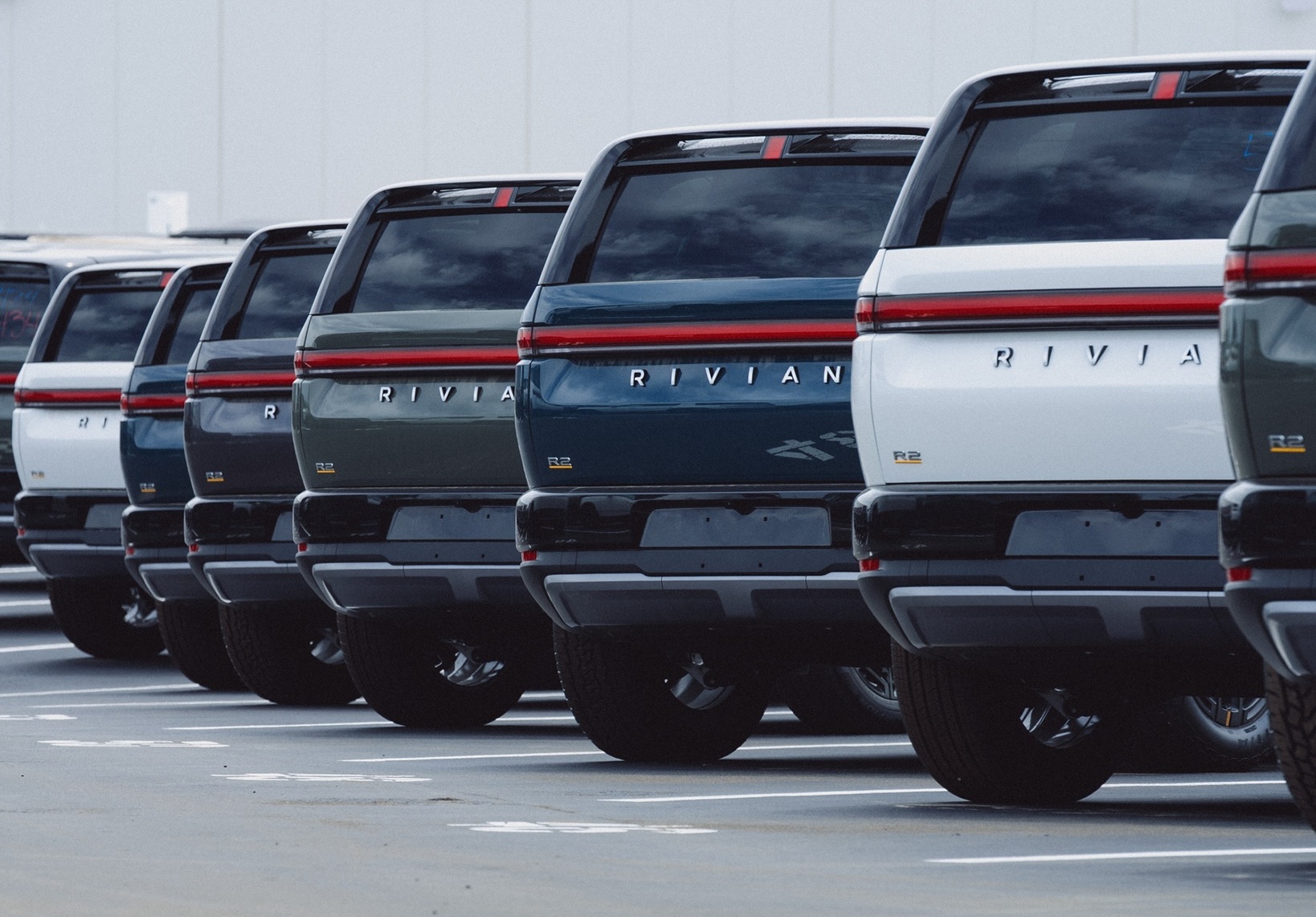
The other thing worth setting expectations on is delivery timing, which has been genuinely unpredictable so far. VINs are getting assigned well ahead of actual handovers, and there are a lot of finished R2s still sitting in Normal. If you are early in the queue, patience is going to be part of the deal.
For what it is worth, I drove mine 2,500 miles home from the factory and the thing was excellent on that trip. Bugs and all, I would order it again.
What people are actually cross-shopping it against
There’s no single rival. Buyers weigh the R2 against premium EVs like the BMW iX3 and Volvo EX60, adventure rigs like the 4Runner and Defender, and value SUVs like the RAV4 and CR-V. Three very different reasons to buy.
The replies sorted themselves into a few piles, which tells you a lot about who the R2 is for.
The premium EV crowd is looking at the BMW iX3, Volvo EX60, Mercedes GLC EQ, Polestar 3, Lexus RZ, and the Model Y. The iX3 and EX60 came up the most by far. A couple people pointed out the iX3 landed roughly $10k higher, which reframes that whole comparison pretty quickly.
The Model Y one deserves a note now that I have run them head to head. On paper the R2 wins, it beat the Model Y Performance on EPA range. In the real world at 70 mph the Model Y went 317.8 miles to the R2’s 253, which is not close. If your driving is mostly long highway hauls, be honest with yourself about that. If it is mostly around town, the gap shrinks a lot and the R2 is the far more interesting vehicle to own.
Then there’s the adventure pile. R1T Gen 1, Land Cruiser, 4Runner, Defender, the Tacoma Trailhunter, the Scout Terra. Different reason to buy entirely, more about capability and stance than efficiency.
And the value pile. RAV4, CR-V, Tucson, the PHEV versions of those too. One reader put the problem really well. Those sticker around $35k to $42k, low fifties for a loaded PHEV, and that’s a big gap to ask gas savings alone to cover. The R2 isn’t going to win that fight on a spreadsheet. The pitch has to be that you’re stepping up to a much better car, which is a tougher sell than a smaller monthly payment but it’s the real argument. I think that comparison deserves its own piece, so I’m writing one.
There were strays too. Ioniq 5, ID.Buzz, a Mach-E GT, somebody eyeing a used Lucid Gravity. Mostly that just tells me the R2 doesn’t have one clean rival the way the Model Y kind of defines its own slot. People are measuring it against all sorts of stuff.
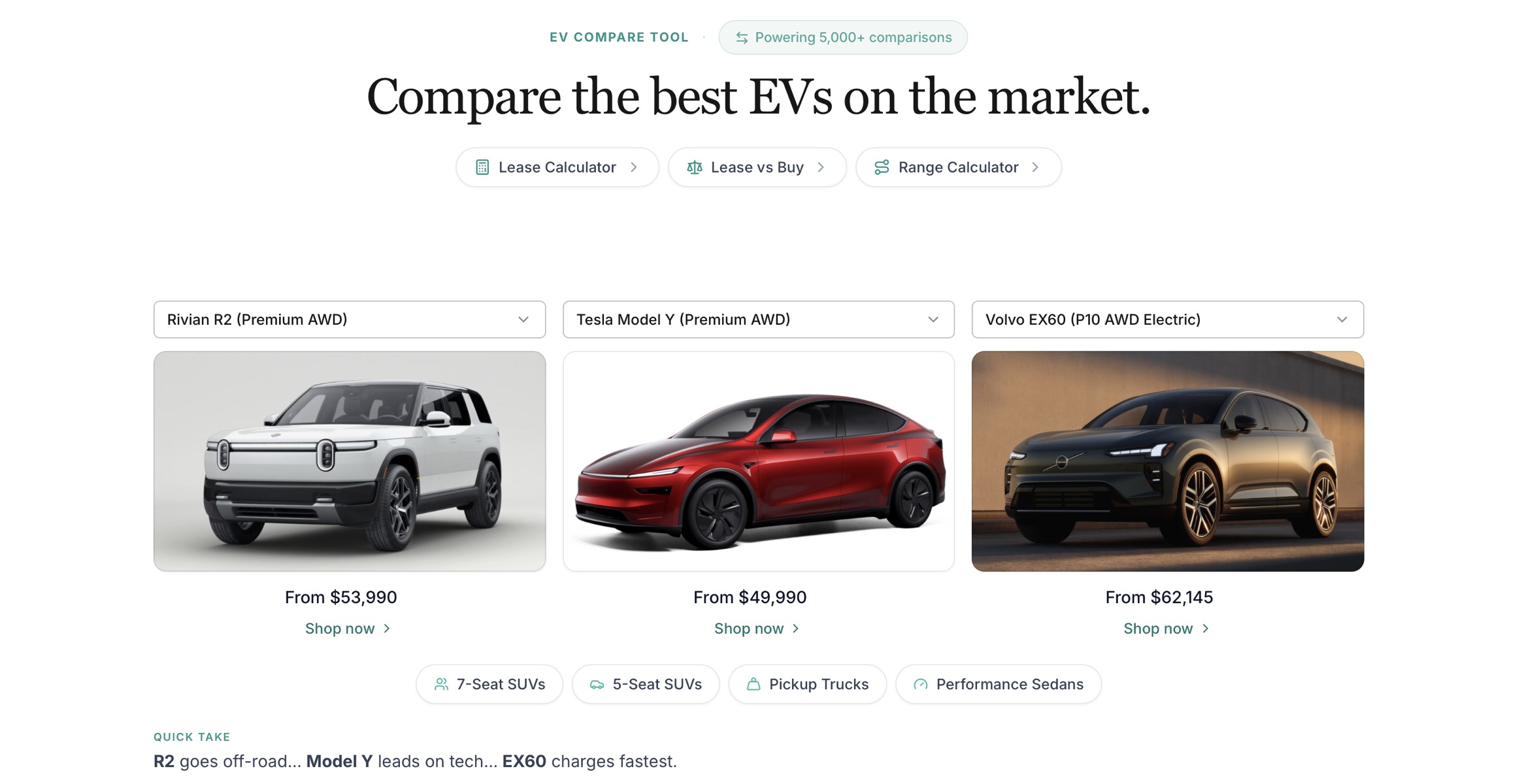
If you’d rather see these lined up than flip between a dozen spec pages, my friend Travis Ketchum built an EV comparison tool that does exactly that. The link drops you straight onto the R2 Premium AWD next to a Model Y and a Volvo EX60, which is most of what people kept naming in the replies anyway, and you can swap in whatever else you’re weighing from there. Travis knows his stuff on EVs and the tool’s actually useful, worth a look before you lock in a config.
Ordering, timing, and the buy versus lease call
Performance Launch Edition is ordering and delivering now, though timing has been unpredictable. For most people leasing makes the most sense, because Gen 3 and LiDAR hardware arrives in 2027 with no retrofit for earlier cars.
Ordering opened June 9 and customer deliveries have been running since, Performance Launch Edition first. Your reservation timestamp and where you live carry most of the weight on when your invite shows up, and living near a Service or Demo Center seems to help. R1 owners get pulled forward some. Ordering details are here.
Timing has been the frustrating part. VIN assignments have climbed into the 4100s while actual handovers lag well behind, and there is a visible stockpile of finished R2s sitting at the factory. Rivian appears to be delivering in batches with pauses in between, which is a normal way to run a launch but a maddening one to wait through. Set your expectations accordingly, and do not read too much into a VIN showing up. I track the VIN assignment ranges here.
One bit of housekeeping, since this is the page people tend to land on right before they actually order. If the reference helped and you go through with it, my referral code JOSE1715716 gets you up to 500 points plus 3 months of free RAN charging, and it helps keep the site going. Order either way, no pressure.
A lot of you said you only ever lease EVs because the tech moves too fast, and with the LiDAR Gen 3 hardware landing in late 2026 and early 2027 with no retrofit path for early cars, that instinct isn’t wrong here. The opening lease numbers came in at Model Y money, the Performance runs about $829 a month on a 36 month, 10k mile term, the first time you can lease a new Rivian for what a Model Y costs. I broke the whole lease down here and argued the buy versus lease call separately. Short version, leasing makes sense for most people for exactly that reason. Demand is real too, a used R2 Performance already hit the market asking more than sticker, which tells you something about where resale sits right now.
Rivian R2 FAQ
Which Rivian R2 has the longest range?
What is the real world range of the Rivian R2?
What is the cheapest Rivian R2?
Can the Rivian R2 tow, and which trims can get a hitch?
Does the Rivian R2 use NACS?
How much is the Rivian R2 Performance?
How do the R2’s 20-inch and 21-inch wheels affect range?
Does the Rivian R2 have a heat pump?
Should you buy or lease the Rivian R2?
I’ll keep adding to this as the Premium and Standard trims certify, as the color and interior timing settles, and whenever Rivian puts a real date on the home backup hardware. If the spec you check first isn’t in here, tell me and I’ll fold it in.



Great Stuff as usual @JoseRivianTrackr. A lot to ponder about. You should start a podcast 🙂 . The wheel/tire size is an interesting take. I don’t think I would put 50k miles on the 21s for like 3+ years, I drive, but my commutes are not long, and I do commute by bicycle a couple of times a week. What would worry me is the occasional flat tire, or irreparable damage to one of them. But that has not happen to my current set of tires for over 50k miles. I do go off road occasionally, camping and such, but I don’t really see the need for all-terrain. I get it though. Oh well, we will see.
Thank you Jose!
-Roberto
“The R2 is easier to park and somehow has more rear legroom.”
Two rows tend to have more space as they’re not packing three. It was a major challenge trying to find spacious 3 rows, R1S is the biggest.
Supercharger access comes with a big-ass caveat: only V3 and above.
Both of my regular road trip destinations are only served by V2. Hitting a V3 is a bit out of the way.
I’d like to see a wheel downgrade option. 19 inch wheels can only be had on the lowest level model.
I could see that being offered in the future. Right now for simplicity they are only offering 2 wheel options.
Is it confirmed that all launch R2’s are getting XMM3 (infotainment upgrade) before RAP1 later in the year or early 2027? I care way more about the infotainment computer, but I can’t find a 100% concrete answer on this anywhere.
same q for me
Dumb question, but if you go with the performance 21”, can’t you just replace them when needed with easier to find 20” set? Thanks!
Yes you can!
Any idea how much replace the wheel set for 4 wheels & tires? Lol
Subaru Trailseeker comparison for the value crowd? Obviously a different tier of EV (range, charging, autonomy) but still checks a lot of boxes (AWD, ground clearance, cult-like following).
As you know, or didn’t, brembo calipers won’t be used. They will be front 2 piston, floating calipers. The rear will be a one-piston floating caliper.
I’m trying to decide b/t 20″ and 21″ R2 wheels/tires…does anyone know if the RIV2 spec tires have foam? BFG 20″ and Pirelli 21″ websites caveat that tires made for specific car manufacturers may have different specs than standard. I have a MYLR and I’ve had to replace two good tires due to nails/screws in the last six months b/c of the damn foam and at $500+/tire. I am leaning towards the 20″ tire for better sidewall and off-road ability, but hate losing the range. Apologize if I missed this in one of the messages or replies here.
As far as I can tell, all R2 Test Rides are currently only available on Performance models. Is there any data or speculation available for how the ride will be potentially degraded on a Premium without the Semi-Active Suspension? My use case will be local around town driving with occasional highway stretches. I do not anticipate the need to go off-road. I am accustomed to Air Suspension in my Grand Cherokee, and don’t need that per se, but if the Premium rides significantly different than the Performance, that would be nice to know.
I am dealing with pretty significant hearing loss and have hearing aids, which, when sound is streamed through them, I can understand conversations and enjoy music. Do you know if there is any say to get audio out from the R2’s system? Either some type of audio out plug or even Bluetooth?
You are perpetuating a common misconception when you say “ Plan highway trips around roughly 250 to 260 miles at 70 and you will not be surprised.” There is no need to ever think of “miles” in a Rivian, when planning a trip. All one should do is put the destination in the app, and the app will fully plan the trip. Set the parameters for charger preferences, and filters, then click plan. Never, ever have I needed to think of “miles”. He computer does all the work and all I need to do is trust the system, which has never let me down. Easy peasy.