
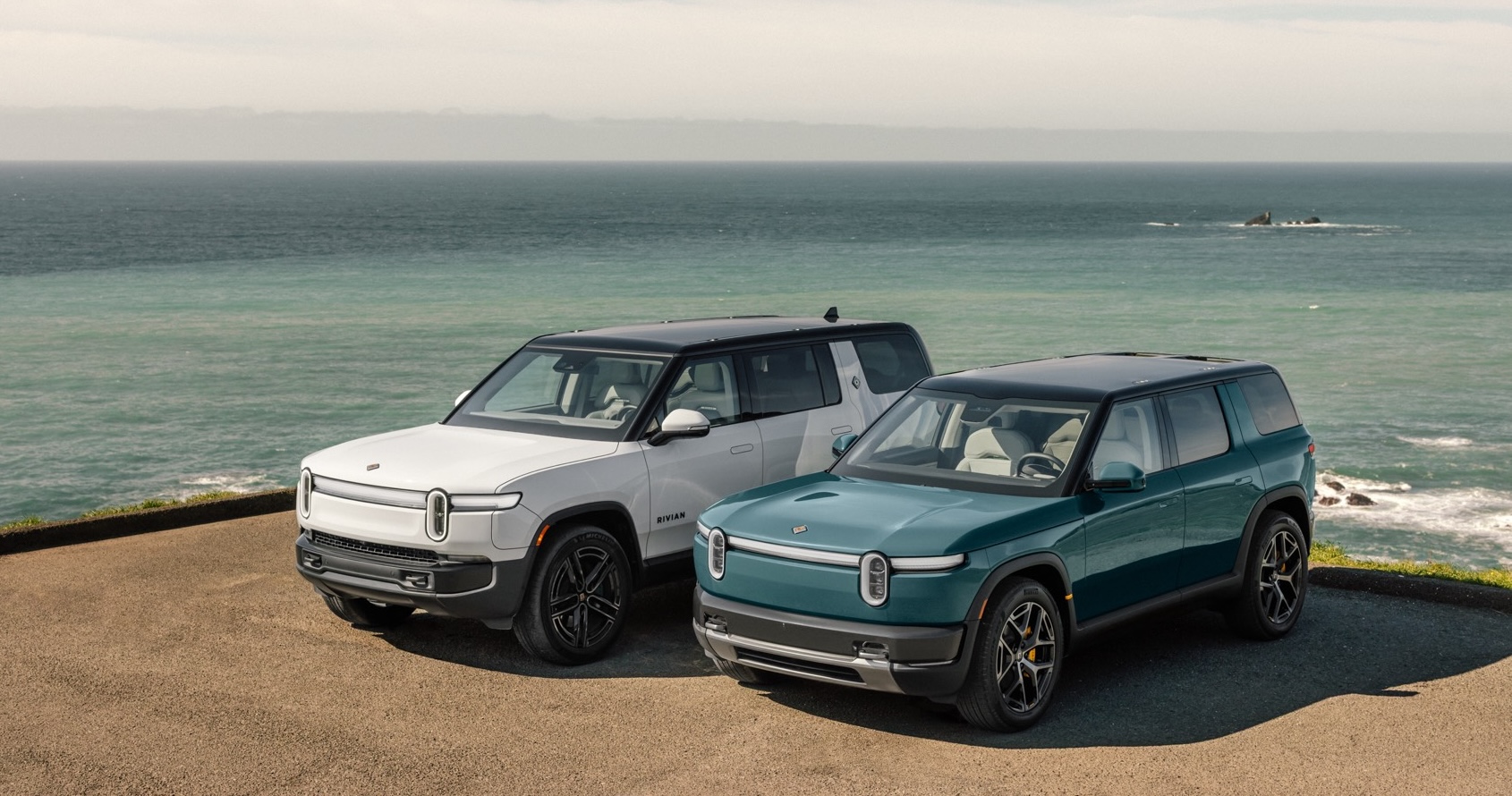
The R2 is a meaningfully smaller vehicle than the R1S, and the numbers actually tell a more interesting story than people usually give them credit for. It is not just a slightly shrunken R1S. It is a genuinely different size of SUV that lives in a different part of the parking lot, and once you see it written out, the gap between the two is bigger than most people assume.
The quick version is this. The R2 is about 15 inches shorter end to end, sits over 10 inches lower, and rolls on a wheelbase that is roughly 5.5 inches tighter than the R1S. None of those numbers are huge on their own, but stacked together they push the R2 into a different category of SUV entirely.
Length is where it starts. The R2 measures 185.9 inches versus 200.8 for the R1S, which puts the R2 closer in footprint to a Subaru Outback or a RAV4 than to anything truck-shaped. It is a normal mid-size SUV. The R1S, by comparison, has always been a big vehicle and owners know it. Older garages can be a problem, parallel parking is a thing you have to think about, and the R2 is going to feel almost weightless to maneuver after spending real time in an R1S. Width follows the same pattern. The R2 is 84.7 inches wide with mirrors out and 78.1 with them folded, which is roughly four inches narrower than the R1S in either case. That is the difference between thinking about a tight drive-thru and not thinking about it.
Height is where it really separates. The R2 is 66.9 inches tall and the R1S is 77.3. Ten and a half inches is a massive difference for two vehicles that both wear a Rivian badge. It changes how you load roof gear, whether the vehicle clears a standard garage door without a second thought, and how easy it is for shorter passengers and kids to get in and out. The R1S has a real climb-in feel to it, especially in lowered settings. The R2 is more of a step-in.
The wheelbase tells a similar story. The R2 sits at 115.6 inches versus 121.1 on the R1S, which contributes to a tighter turning circle and a more nimble feeling overall. You notice it the first time you do a U-turn in a parking lot.
Ground clearance is the one spec where the R1S still walks away with a clear win. The R2 has a fixed 9.6 inches and the R1S can lift to 14.7 thanks to its air suspension. That is a big delta if you actually use it, and it is one of the only spots where the R1S is uncatchable. The R2 does not have air suspension, so what you get is what you get. 9.6 inches is still solid for a unibody SUV, and Rivian is calling it class-leading for the segment, but if you are someone who genuinely uses 14 inches of clearance on weekends, the R1S is still your truck. Same story with the approach and departure angles. The R2’s geometry is fine for the kind of light off-road stuff most owners will actually do, but it is not in the same league as an R1S sitting at max ride height.
Where the story flips is on the inside. The R2 actually has more rear legroom than the R1S, 40.4 inches versus 36.6, which is a genuinely surprising stat for a vehicle that is 15 inches shorter end to end. RJ confirmed it on stage at the R2 reveal and the spec sheets back it up. Rivian apparently spent a lot of design time pushing the R2’s wheels to the corners and giving the second row real space, and it shows. If you have ever sat in the back of an R1S behind a tall driver, you know the rear seat is fine but not exactly cavernous, so the R2 closing that gap (and then some) is a real engineering flex.
Cargo is where the R1S does what you would expect a bigger SUV to do. The R1S frunk is 11.1 cubic feet versus 5.2 in the R2, and with the R1S third row folded you get 48.6 cubic feet behind the second row compared to 28.7 in the R2. With all rear seats folded the gap holds, with the R1S landing at 90.7 cubic feet versus 79.4 for the R2. The R2 closes some of that back through its under-floor sub-trunk and frunk, which combine for almost 10 extra cubic feet of enclosed storage, but if you actually need a flat cargo floor for big stuff, the R1S still wins.
What all of this adds up to is that the R2 is a vehicle you can use without thinking about it. It fits in a normal garage, parks in normal spots, and does not require the constant low-grade situational awareness that comes with daily driving something the size of an R1S. People who have owned both Gen 1 R1 vehicles and a smaller crossover before will probably recognize the R2 as the size that just works.
The R1S still wins where you would expect. Three rows. Air suspension. A bigger frunk and more space behind the second row when you actually need it. If any of those actually matter to you, the R1S is still the right pick and is not going anywhere. But for a lot of people, the R2’s smaller footprint is going to be a feature, not a compromise, especially once you find out the back seat is actually roomier than the bigger vehicle. Rivian’s whole pitch on the R2 is that it carries the soul of an R1 in a more usable package, and the dimensions are where that pitch starts to actually make sense once you sit with the numbers.



How does the R2 magically gain 62 ft.³ when the second row is folded down?
How does the R2 magically gain 62 ft.³ of storage with the second row folded down?
It’s wild that the smaller R2 actually has more 2nd-row legroom than the R1S. I hope Rivian finds a way to bring that extra space to the R1S while keeping the 3rd row usable. Whether it’s through deeper seatback cutouts or finally adding a captain’s chair option, that extra bit of knee room would make the R1S the ultimate family hauler.
One thing to consider regarding the legroom difference: the extra height of the R1S allows you to sit more upright, which somewhat reduces the legroom needed.
Ive asked this a few times at the Rivan website and no specific answer. Q …..WHAT is the distance from driver seat to the drivers door frame.? i know the headroom is 40 inches. But getting in and out can be a challenge for taller folks. only answer i got from rivian was, DONT KNOW. Really? Put the seat down an back and Measure