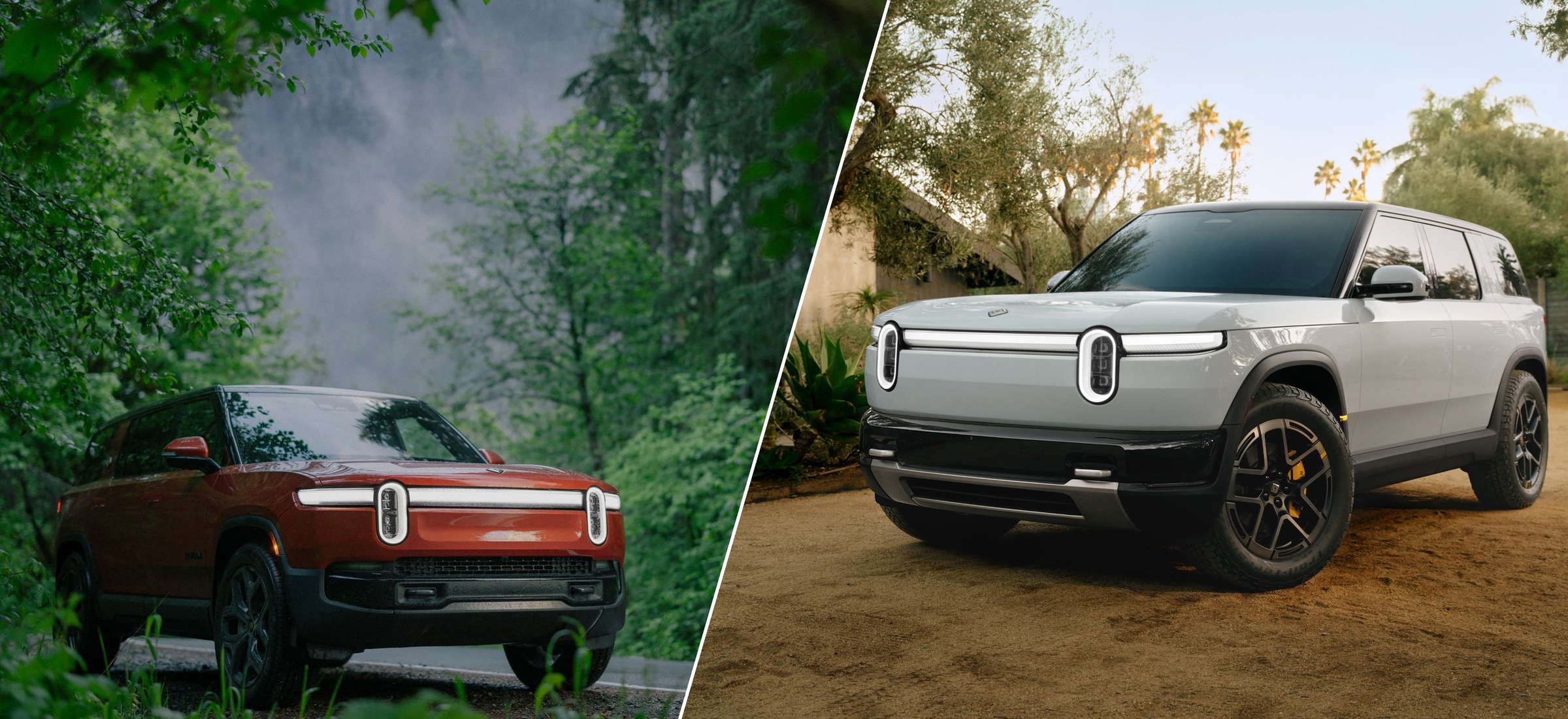
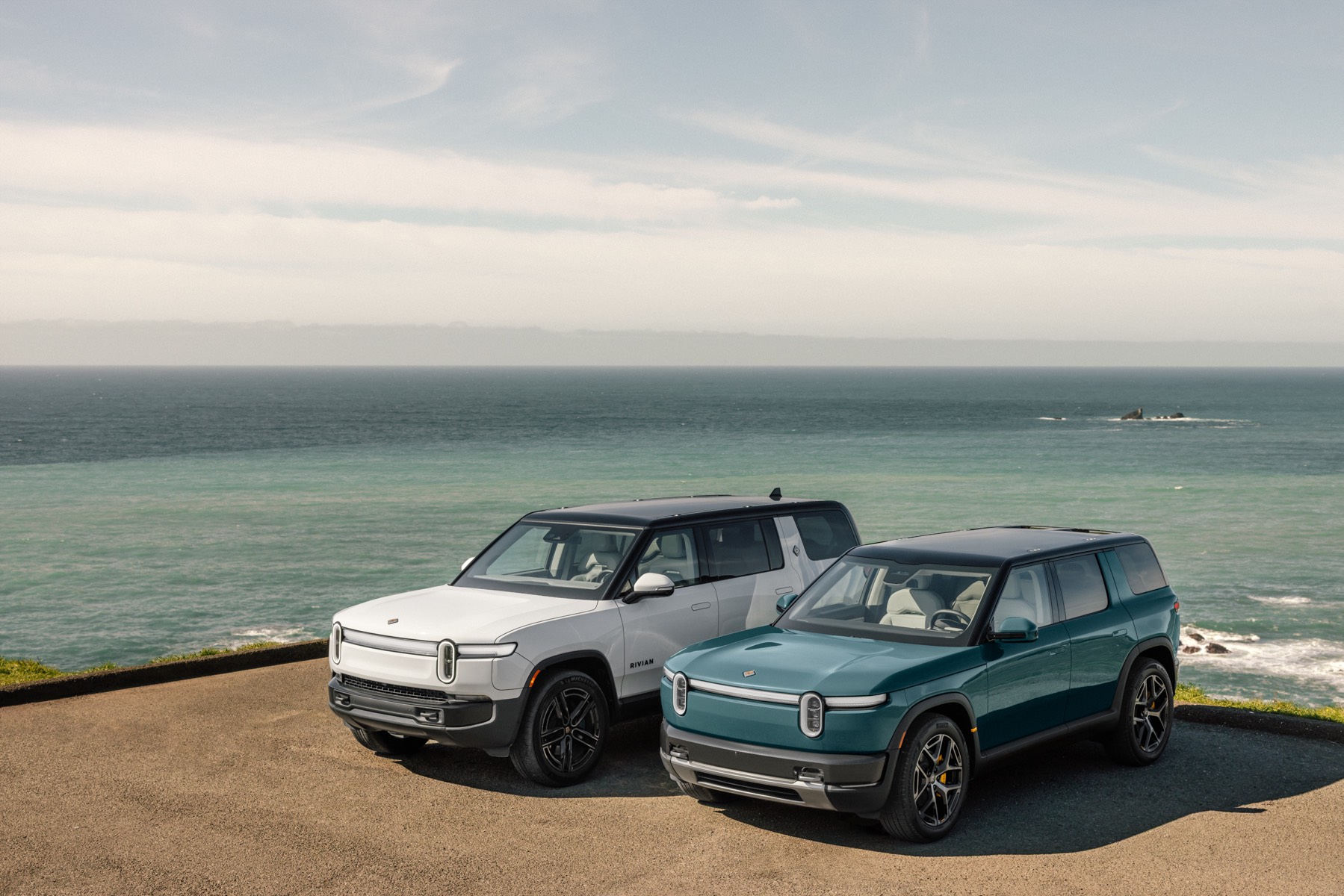
Rivian now has two SUVs in its lineup and the question a lot of people are asking is pretty straightforward: should I buy the R1S or wait for the R2? The answer really comes down to what you need out of your next vehicle, because these two are different enough that it is not as close of a call as it might seem on paper.
For this comparison we are putting the R1S Dual Large up against the R2 Performance with the Launch Package. These are arguably the two most cross-shopped configurations in the Rivian lineup right now, and they make for a really interesting head-to-head because on paper they are closer than you might expect.
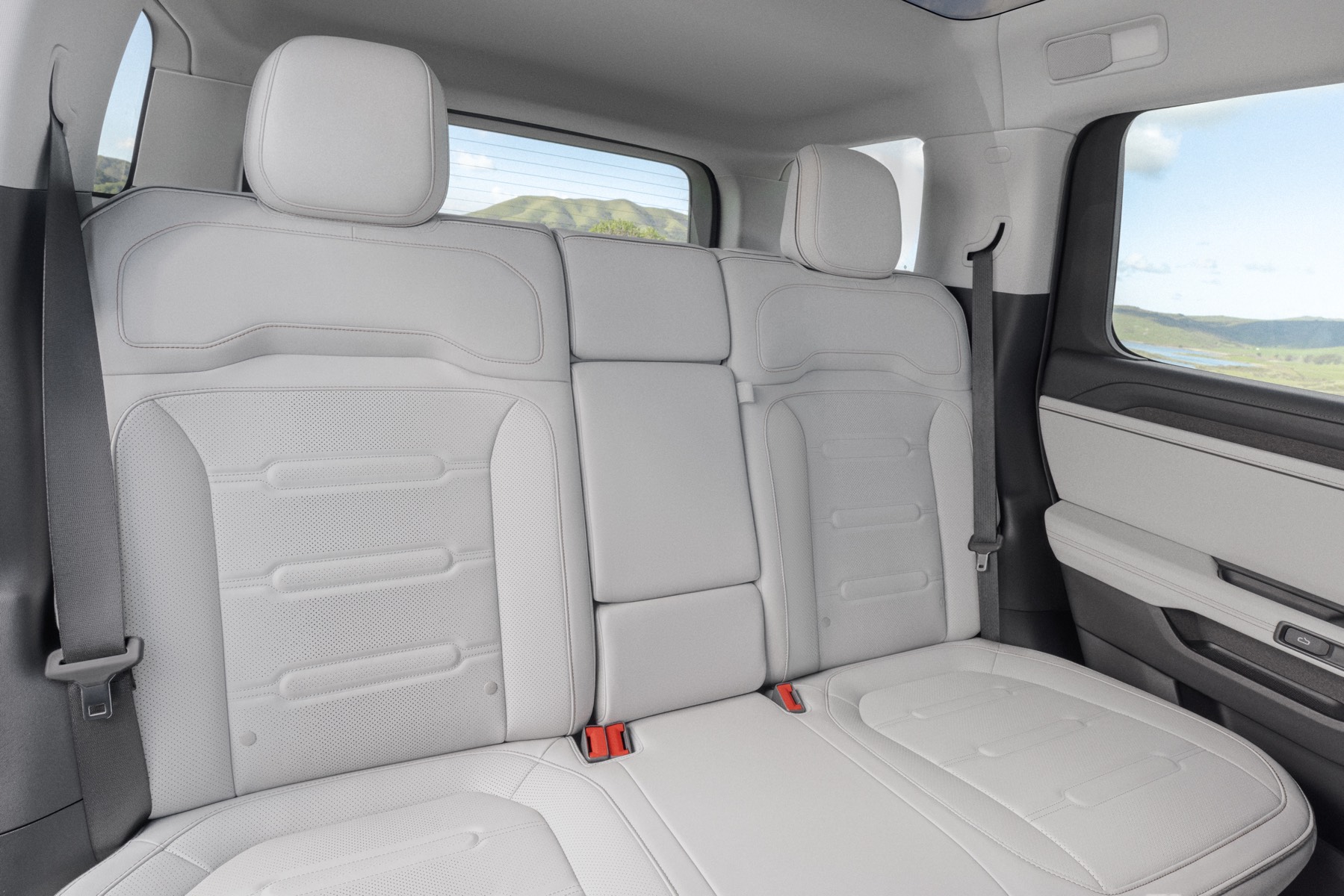
The most obvious difference is size and seating. The R1S Dual Large is a proper three-row SUV with room for seven. It is 200.8 inches long, stands 77.3 inches tall, and has the kind of presence that makes it feel like a real family hauler. The third row is tight for adults but works great for kids, and just having that flexibility matters when your life requires it. The R2 Performance is a two-row, five-passenger SUV that comes in at 185.9 inches long and only 66.9 inches tall. Think closer to a Subaru Outback in terms of overall footprint. If you do not need that third row, the R2’s smaller size is actually a benefit because it is easier to park, easier to maneuver, and lower to the ground for anyone who does not love climbing up into a tall truck.
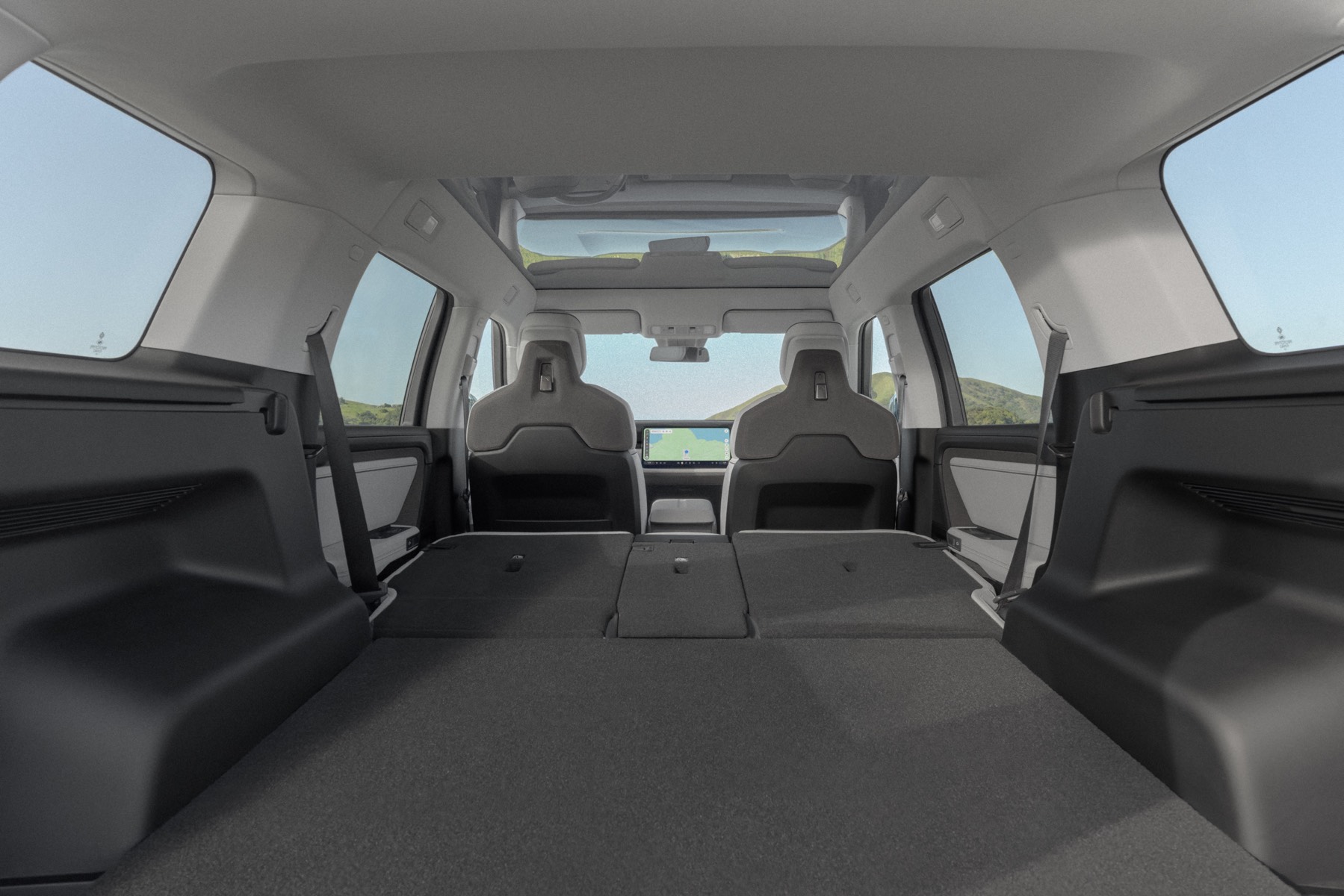
On cargo, the R1S takes it with up to 104.7 cubic feet when the second and third rows are folded, plus an 11.1 cubic foot frunk that is genuinely useful for groceries or gear. The R2 is not far behind at 90.1 cubic feet total, and Rivian designed it so the rear seats can fold completely flat for an air mattress setup when camping. The R2 also finally brings two glove boxes to the Rivian lineup, push to open, no screen interaction needed, which is a small detail R1S owners have been asking about for years.
Towing is one of the biggest separators between the two. The R1S Dual Large can tow up to 7,700 pounds, which is enough for a boat, a camper, or a pretty serious trailer setup. If towing is part of your lifestyle, the R1S is the clear choice and it is not particularly close. The R2 Performance maxes out at 4,400 pounds with the tow package that comes included in the Launch Package.
Range is where this matchup gets surprisingly close. The R1S Dual Large gets 329 miles on its 108.5 kWh battery pack. The R2 Performance gets an EPA-estimated 330 miles on its 87.9 kWh pack built on the newer 4695 cells. Essentially a dead heat. Both vehicles charge from 10 to 80% in roughly 30 minutes and both use NACS ports for direct Supercharger access. Where the R1S pulls ahead is if you are willing to step up to the Max battery pack, which pushes range all the way to 410 miles. There is nothing in the R2 lineup that can match that, but it does come at a significant price premium. On the R2 side, the upcoming Standard Long Range trim is rated at 345 miles for $48,490, so if range per dollar is your priority, that model might end up being the sweet spot when it arrives in early 2027.
Performance is where this comparison gets fun. The R1S Dual Large makes 533 horsepower and gets to 60 in about 4.5 seconds. You can add the $5,000 Performance Upgrade to bump that to 665 horsepower and a 3.4 second 0-60 time, but that is an extra cost on top of an already more expensive vehicle. The R2 Performance makes 656 horsepower out of the box and hits 60 in 3.6 seconds. It also weighs significantly less than the R1S, which means it should feel more agile and nimble in real-world driving despite having less total mass to push around. The R2 Performance also gets semi-active suspension and exclusive drive modes like Rally, Soft Sand, and Launch Mode. For serious off-roading the R1S still wins thanks to its adjustable air suspension and up to 14.9 inches of ground clearance versus the R2’s 9.6 inches. But for spirited on-road driving and light trail use, the R2 might actually be the more fun vehicle to throw around. If you want even more out of the R1S, the Tri Motor at $106,990 makes 850 horsepower and the Quad at $125,990 pushes past 1,025 horsepower with a 2.6 second 0-60 time, but those are in a completely different price tier.
Now for the number that matters most to a lot of people. The R1S Dual Large starts at $83,990 before destination. The R2 Performance with the Launch Package starts at $57,990. That is roughly a $26,000 difference for two vehicles that have nearly identical range, and the R2 actually makes more horsepower in its base configuration. That price gap is massive and it is the single biggest factor pushing people toward the R2. On the R2 side, Rivian also has the Premium coming at $53,990 later in 2026, the Standard Long Range at $48,490 in early 2027, and a confirmed $45,000 base model arriving in late 2027. So the R2 lineup will only get more accessible over time.
So who should buy what? If you need a third row, the decision is already made. The R2 does not have one and never will. Beyond that, the R1S Dual Large is the right call if you regularly tow heavy loads, want the option to upgrade to the Max battery for 410 miles of range, need serious off-road capability with air suspension, or just want the most premium Rivian experience available. It is bigger, more capable, more luxurious, and the price reflects that.
The R2 Performance is for people who love what Rivian is doing but do not need or want the size and cost of the R1S. If your household is two adults with a kid or two, if you mostly use your SUV for commuting and weekend adventures, or if you just want a fast and capable EV that does not cost $80,000 or more, the R2 Performance makes a seriously compelling case. It matches the R1S Dual Large on range, beats it on horsepower, and costs $26,000 less. It still has real off-road ability with 9.6 inches of ground clearance, it charges fast, and it carries the same Rivian DNA that made people fall in love with the brand in the first place. It also brings a few things the R1S does not have, like the rear drop glass, flat-folding seats for camping, and new haptic halo steering wheel controls that could end up being a real improvement in daily usability.
These are not competing vehicles. They are complementary ones built for different needs at different price points. The R1S Dual Large is still the more versatile family vehicle with more space, more towing, and more room to grow into higher performance tiers. The R2 Performance delivers a shocking amount of what the R1S offers for significantly less money, and for a lot of buyers that value equation is going to be hard to ignore. Either way, having two strong SUV options in the Rivian lineup is a good problem to have, and it is only going to get more interesting when the R3 enters the picture.