
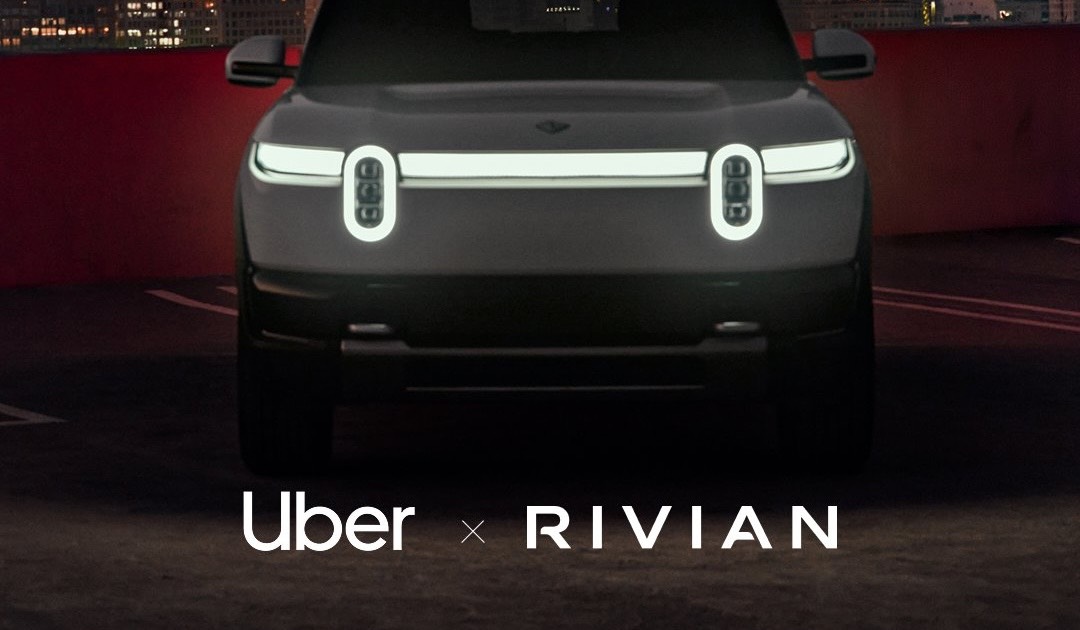
Rivian and Uber are teaming up to deploy a fleet of fully autonomous R2 robotaxis, and the scale of this deal is hard to overstate. Uber is committing up to $1.25 billion in Rivian through 2031, with an initial $300 million locked in right after signing. In return, Rivian will build autonomous R2s that deploy exclusively through the Uber platform, starting with 10,000 vehicles. We can expect to see most of those in San Francisco and Miami by 2028 and expanding to 25 cities by 2031.
This wasn’t on anyone’s bingo card. Rivian has been talking up its autonomy stack for a while, but a fully autonomous robotaxi partnership at this scale feels like a significant leap from where the company was even six months ago.
Dara Khosrowshahi’s comments on the deal are telling. He specifically called out Rivian’s vertical integration as the reason Uber has conviction here. Designing the vehicle, the compute platform, and the software stack together, while controlling manufacturing in-house, is exactly the kind of end-to-end control that makes scaling a robotaxi fleet more predictable. Uber has tried partnerships with third-party AV companies before. This one feels structurally different.
There’s also a financial angle worth noting. Uber’s investment is milestone-based, which means Rivian has to actually hit autonomous deployment targets to unlock the full $1.25 billion. That structure keeps both sides accountable and gives Rivian a meaningful funding runway tied directly to proving out the technology.
The deal also includes an option to negotiate an additional 40,000 autonomous R2s starting in 2030, which signals just how seriously both companies are treating the long-term scale of this thing.
For Rivian fans, this is a legitimately exciting development. It validates the autonomy platform, adds a significant capital partner, and gives the R2 a commercial deployment path that no one was expecting. The consumer R2 and the robotaxi R2 are going to share the same hardware DNA, which means every mile driven by an Uber robotaxi is feeding the same system that will eventually improve the experience for regular R2 owners too.
2028 is still two years away and a lot can change, but Rivian just made its autonomy ambitions a lot more concrete.



Could this be the next step in taking on Tesla? Tesla has been talking about robo taxis for years and now that every other electric company is trying to race in (Zoox, Waymo,Lucid Motors), Tesla might be in trouble. Depending on if Rivian can deliver, I could definitely see a boost in Rivian’s ongoing quest to take on the giant Tesla. Given the choice between a two seat robo taxi and a 5 seat one with more storage, which would you choose for your family, group of friends, or just you and your partner? I would choose the second one. If Lucid (the only other taxi that could probably hold a chance) has in my opinion a very ugly sad design when compared to the Rivian. The real question I have though is: What will happen to Tesla’s idea of a huge electric robo taxi service that depends on only one company, or the huge new entity of multiple electric companies coming together to make uber a way larger different company.
I think having multiple robotaxi options is a huge win for the consumer and based on what type of vehicle Tesla is building versus the R2, they are completely different. I can see Cybercab being great around a city center where an R2 would be great to take from the airport to Disney World for example.
Any idea why UBER will be using Nvidia chips in the R2 Robotaxis, instead of Rivian’s RAP1?