
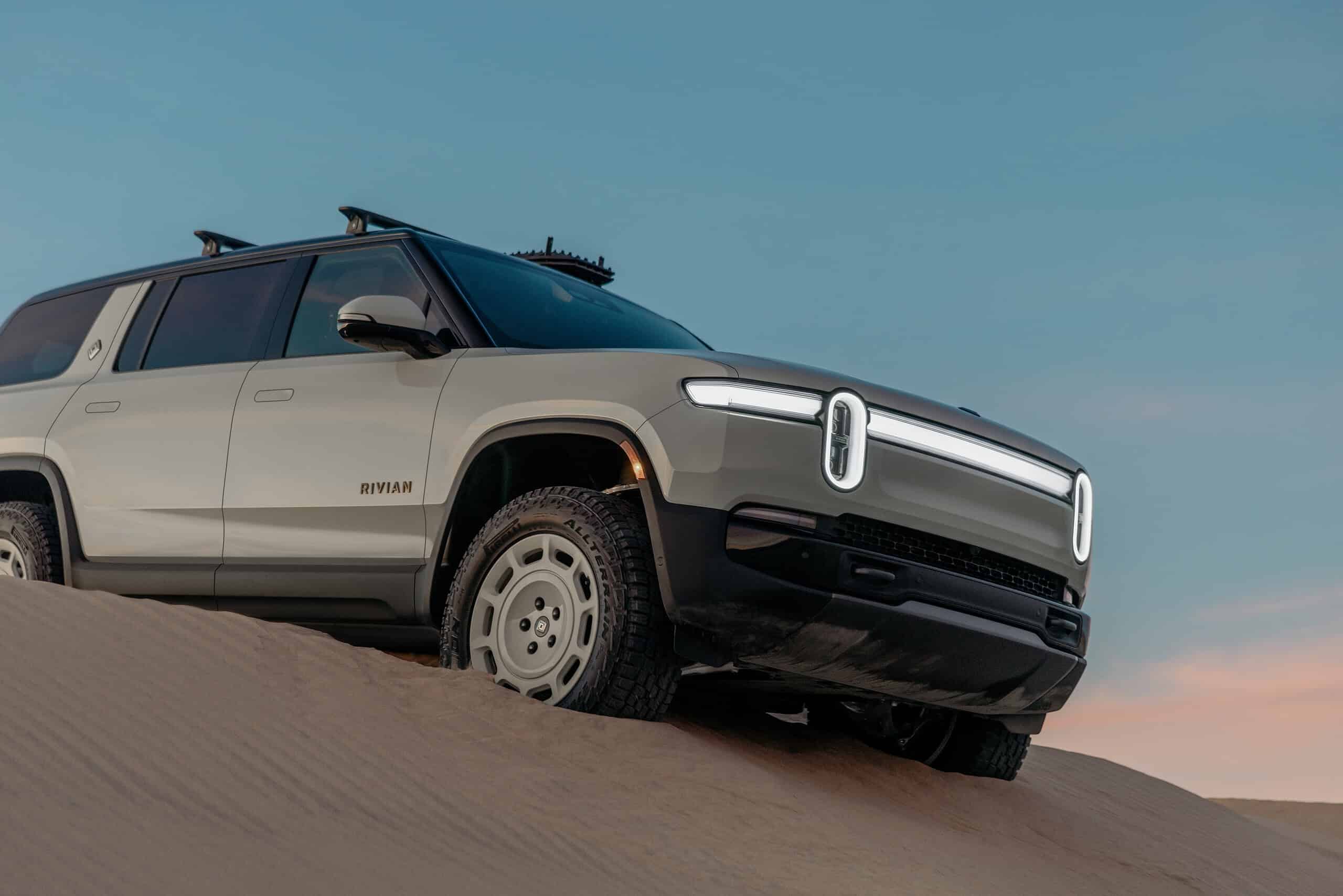
Volkswagen just became Rivian’s biggest shareholder. After buying $1 billion worth of shares at the end of April, VW now owns 15.9% of the company, bumping Amazon out of the top spot for the first time since Rivian’s 2021 IPO. That headline alone might sound a little scary if you drive a Rivian, and it’s no surprise that people online immediately started speculating that VW is planning to gobble up the whole company. But honestly, I don’t think that’s what’s really going on. If you look at how this deal came together, it tells a different story.
What most people freaking out about this miss is what it says about Volkswagen. VW is one of the biggest carmakers in the world, and it’s spent years (and a truly wild amount of money) trying to build its own EV software through its Cariad division. It did not go well. Cariad got downgraded to just coordinating stuff, and deadlines kept slipping. The whole point of this Rivian partnership is that VW finally admitted it couldn’t pull this off on its own. So, the company cutting these billion-dollar checks? It’s not flexing its muscles. It’s admitting it needs what Rivian’s already built.
That’s important for all the takeover talk, because the way VW got this stake doesn’t look anything like a company scheming for control.
VW didn’t just wake up one day and decide to snatch up a bunch of Rivian stock. This happened because of a milestone. Back in November 2024, the two companies set up a joint venture worth up to $5.8 billion, but that money doesn’t show up all at once. It comes in $1 billion chunks when the partnership hits certain goals, and this most recent billion landed after the team finished winter testing on the new architecture for VW’s ID. Every1. So, that jump in ownership? It’s just a byproduct of the deal working, not some sneaky power move.

Also, owning 15.9% doesn’t mean you’re running the show. It’s a big minority stake in a company with a pretty complicated share and voting structure. Being the biggest shareholder and actually being in control are two totally different things. A lot of people tend to forget that as soon as a big name pops up on the list.
There’s something else I keep thinking about: the joint venture only covers electrical architecture and software. It deliberately omits topics like AI and self-driving tech. Basically, these are the exact areas where Rivian is dumping tons of money and clearly wants to stay in control. If VW was trying to slowly take over, Rivian wouldn’t be protecting its most prized projects while giving VW access to everything else. That’s just not what’s happening here.
This kind of thing isn’t new, either. Toyota and Mercedes both invested in Tesla years ago. Even Ford owned a stake in Rivian for a bit. None of those turned into takeovers. Usually, a car company buys in, gets what it needs, and eventually moves on. There’s nothing about this deal that makes it look any different.
And honestly, VW isn’t even in a position to buy anyone right now. Its finances are a mess, and it’s burning through cash as it tries to switch to electric. Plus, it owns Scout Motors, which will be going head-to-head with Rivian in the US. A company with that much on its plate isn’t about to buy out the same partner it desperately needs for software.
Of course, that doesn’t mean things can’t change. VW has already spent about $3.3 billion of the $5.8 billion, and if it puts in the remaining $2.5 billion, its stake could exceed 20% by 2027. So, yeah, having someone own more than a fifth of your company is definitely something to watch. But just because the number’s going up doesn’t mean it’s a takeover. Right now, this looks a lot more like a giant leaning on Rivian than one getting ready to swallow it. Whether that holds true probably depends on whether VW actually gets this software into its cars. We’re still a long way from knowing how that’ll turn out.



No matter how you explain it… some folks will still cling to their tinfoil hats and jump to conclusions. This conspiracy theory goes way back to the day the JV was announced. And before that an even more unlikely theory on Apple buying and taking over Rivian. They just can’t imagine anyone could possibly start a new car company and survive on their own (even though the failure rate is high, Tesla clearly has done it).
“Plus, it owns Scout Motors, which will be going head-to-head with Rivian in the US. A company with that much on its plate isn’t about to buy out the same partner it desperately needs for software.”
I don’t follow that argument.
If Scout were important enough to VW, and Rivian were affordable enough to VW they would absolutely buy Rivian to ensure Rivian’s resources were focused enough on the software Scout needs/wants to get the job done.
Much like say Apple bought Fingerwerks prior to bringing the iPhone to the market (I think all the gesture recognition tech comes from there), or bought out the company that made the TouchID hardware (and most of the TouchID software, the part that wasn’t written by my coworker down the hall).
A buyout doesn’t always mean products go away either, Apple bought out Beats and they still exist (although they no longer have an independent Music app, and I imagine what people liked about the Beats app is not present in Apple’s “Music app” (I’ll always think of it as iTunes), but Betas still exists as a brand and they still have their own hardware line that is much like the old hardware line not just a pale shadow of Apple’s headphones).
You other argument about VW not being able to afford to buy out Rivian is more compelling.
Jose isn’t wrong here but he is missing a few pieces. Currently RJ has a significant number of class B shares that have a 10:1 voting ration with class A shares (which is what VW owns). Based on his original ownership of class B shares RJ would have enough shares to control major decisions, except that he transferred enough shares due to a divorce that his voting rights are now under 50%. That doesn’t mean he can’t exert significant influence over decisions but he has lost veto power. Additionally, the class B shares that he depends on have a limited life. They are set to “expire” and lose those 10:1 vote five years after the IPO date which is this November.
So while VW may currently hold a minority stake after November when the voting structure changes VW will go from being a strong minority shareholder to, while not a majority shareholder, a dominant voting block. Especially if combined with Amazon’s stake, the two of them will control between 25 and 30% of voting rights. A significant (but not majority) block. While they won’t be able to just have their way, they will be able to exert significant influence over major decisions.
I’m not convinced this is a bad thing either. I have not been super impressed with the way things are running at Rivian, especially around service times (which are still a nightmare in the Northeast, at least in my experience) and treatment of existing customers. Having some pressure might be a good thing. Or might not depending on VW’s and Amazon’s intentions.