
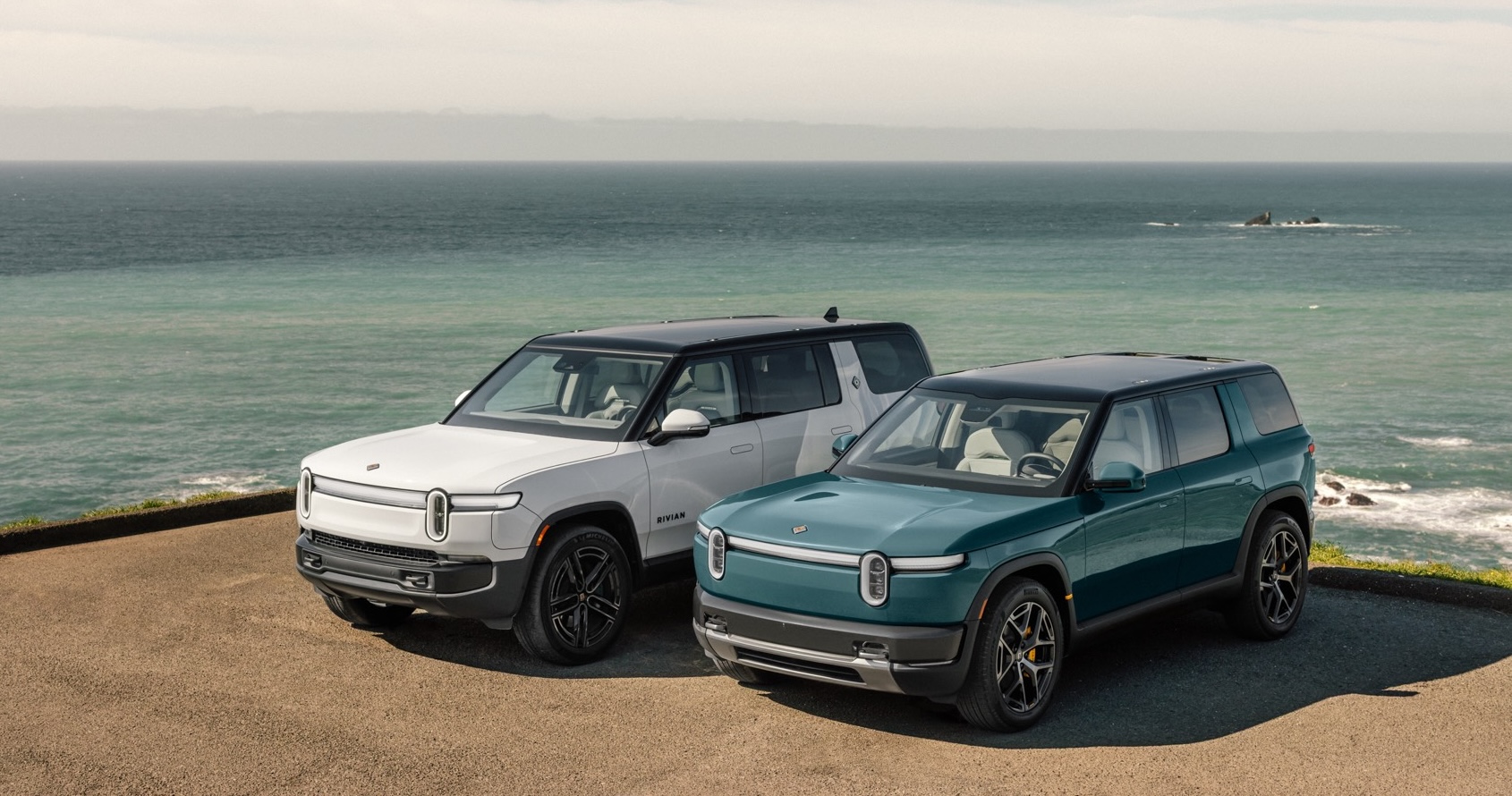
If you’re comparing the R1 and R2, the real reason to choose the R1 is simple: capability. It’s not about flashy tech. It’s about everything tech can’t deliver.
This all started with a good question from Michael Beinenson on X. It pokes at something most people get wrong: R2 is the new platform, so it must be the better buy, and picking an R1 now means paying new prices for old hardware. I get why people think that, but that idea doesn’t hold up once you look at what actually carries over.
Let’s start with software, since that’s where the “R2 is smarter” buzz comes from. Most of those features don’t stay exclusive for long. RivianOS 2.0 is launching on the R2, but R1 will get it later this year. Universal Hands-Free and the Autonomy+ suite are already on the Gen 2 R1T and R1S. Audio upgrades come over the air, so R1 gets those too. All current Rivian vehicles also get Rivian Assistant.
What doesn’t carry over is the hardware. The R2 gets a beefier infotainment chip (about 200 TOPS), plus a newer camera and radar setup, with LiDAR coming later this year. You can’t update a Gen 2 R1 to get that chip. It’s a real difference, but it’s a small one. We’re talking about the chip behind the screen, not the reasons most people buy a Rivian in the first place. That difference is pretty minor compared to everything else that separates the two.
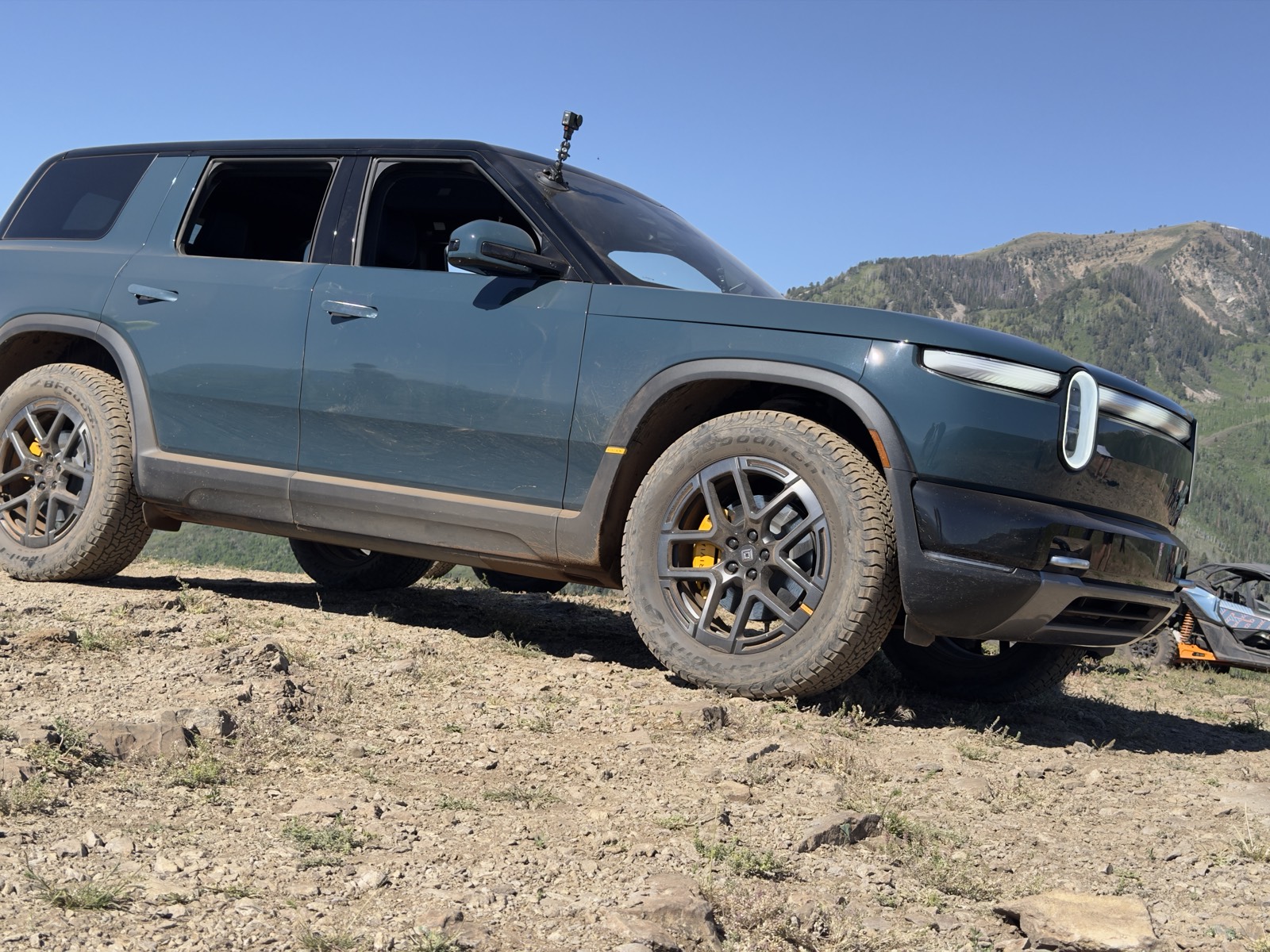
But here’s what the spec sheet makes obvious: the R1 is simply a bigger, more capable vehicle. No amount of software updates can change the size of what’s parked in your driveway.
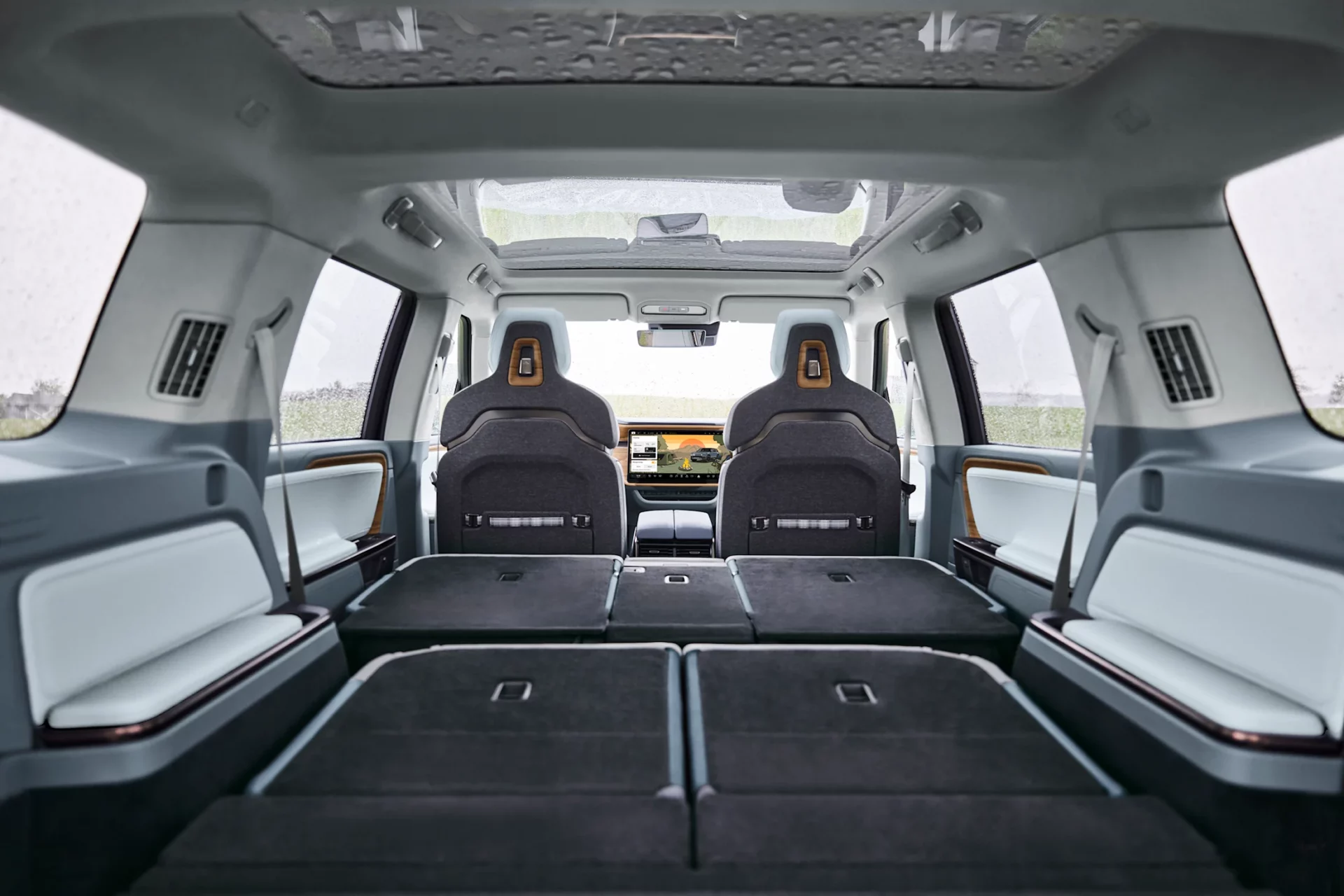
The R1S is a true three-row SUV: seven seats, over 200 inches long, with room for a whole family and their gear (no arguments over cargo space). The R2? It’s about fifteen inches shorter and seats five in two rows. That’s not a dig at the R2; it’s just built for a different purpose. If you need that third row, your decision’s basically made, since the R2 doesn’t have it.
Towing is another big difference. The R1S Dual Large can tow up to 7,700 pounds (enough for a real boat or camper). The R2 maxes out at 4,400 pounds with the tow package. That’s the difference between bringing the trailer or leaving it behind. Same story with range: the R1S can go up to 410 miles (with the Max pack), while the R2 gets about 345. For folks who take long highway trips, that extra range really matters. And once you stack those numbers together, the gap gets hard to ignore.
Then there are things the R2 just can’t match, no matter how much you spend. The R1S has air suspension and up to 14.9 inches of ground clearance (the R2 is under ten). There’s quad-motor power that gets a full-size SUV to 60 mph in about 2.5 seconds. The R1T’s gear tunnel, water fording, and the whole adventure-ready vibe are what made people love these vehicles long before anyone cared about the chips inside. Cargo is the same story: the R1S offers up to 104.7 cubic feet behind the seats and an 11.1-cubic-foot frunk, compared to 90.1 and 5.2 in the R2. The R2 makes good use of space, but the R1 just has more of it. Taken together, these features make the difference feel even bigger.
None of that comes through in an update, and you can’t squeeze it all into a Model Y-sized body.
So here’s the honest truth: if you need the size, the seats, the towing, the range, or the off-road chops, the R2 just isn’t the same vehicle, no matter how good its chip is. And if you don’t need any of that, you were probably leaning R2 anyway. The $26,000 difference between an R1S Dual Large and an R2 Performance is what really drives this whole debate, and that’s a perfectly fair reason.
There’s also a catch if you’re eyeing the R2 for its autonomy hardware. The early R2s don’t actually get the fancy new gear yet; they launch with the same Gen 2 Autonomy Computer your R1 already has. The new processor, Gen 3 computer, and LiDAR won’t show up until late 2026.
Which brings up a question Rivian hasn’t really answered: Why not refresh the R1 with the new chip and call it Gen 3? They could put the RAP1 and new perception tech into the flagship, so it doesn’t fall a step behind the cheaper car. Most automakers do a mid-cycle hardware refresh for this reason: to keep their main model up to date while the newer, more affordable one gets all the attention. It’s surprising Rivian hasn’t done the same.
So if it were me, I’d order the R1 for what it is and not worry too much about what it might miss. The real reason to buy one is the capability, and that’s not going away. If Rivian gets a breather from launching the R2 and building the new plant, a Gen 3 R1 with the new chip seems like the appropriate next step. Maybe it shows up sooner than we think. Maybe they let the R1 coast another year and lean even harder on software updates. Either way, the big reason to get an R1 today has never been the chip. It’s the space, the capability, and the freedom to actually use it. That was true long before anyone started arguing about sparse TOPS.



Jose, we have a R1S-quad, 1st Gen. The one thing Rivian can fix is the rear climate control. It goes off every time you restart the vehicle. Locking the controls with your custom setting would be great. I have “0” complaints about performance or the R1 platform, and that is for a Gen 1 vehicle.
Didn’t you trade in your R1T for the R2?
In the process but yes! Still keeping out R1S.
Gen 2 R1T DMP Max. Absolutely. I replaced a Ram Diesel because I use a truck. The R2 can’t do that.
Now, if I can convince my wife to replace her Forester . . . . 😉
I have a Tri-Motor R1S and the other thing that the R2 doesn’t match is the Ascend interior.