
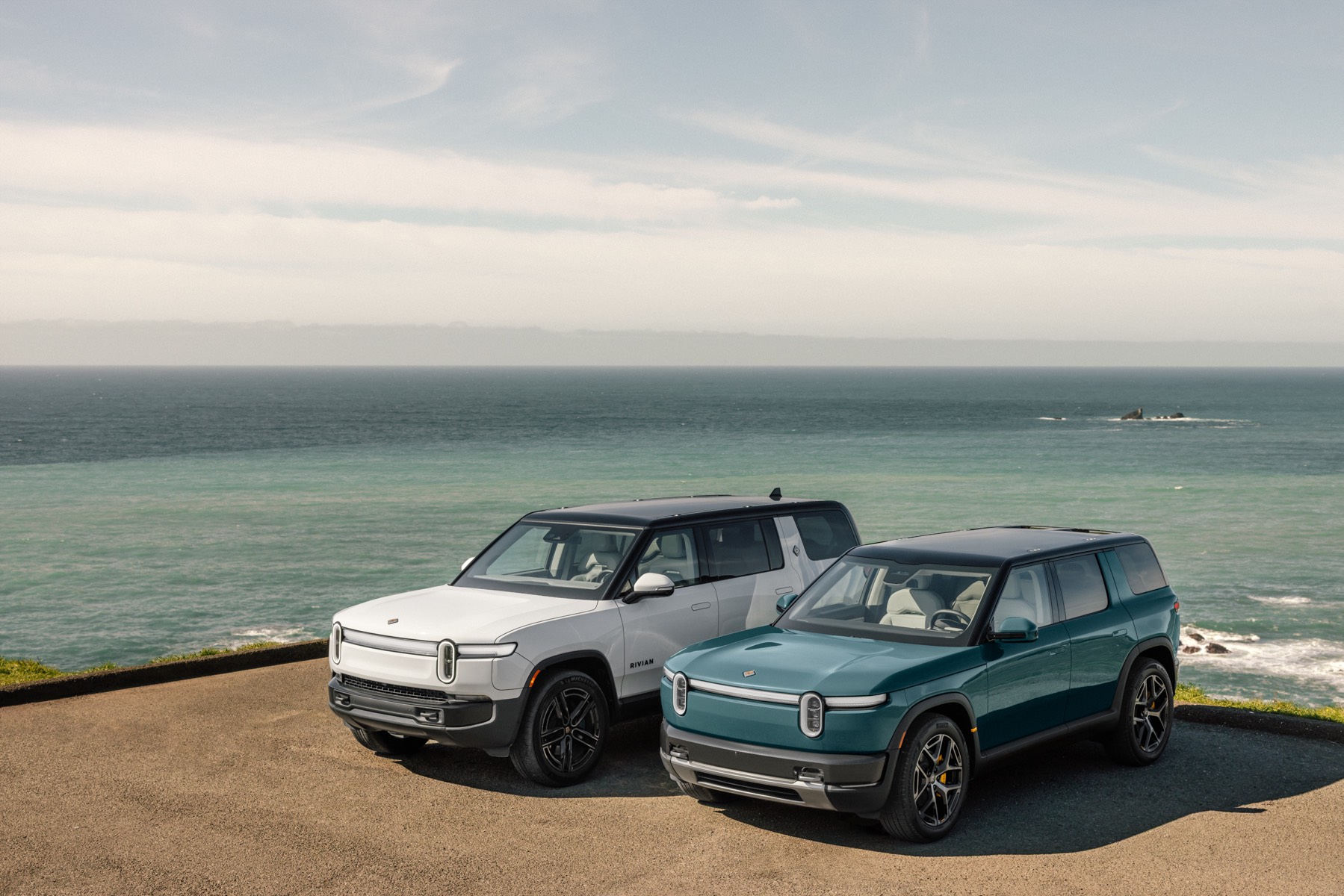
If you’ve been paying attention to the auto industry lately, you’ve probably noticed something strange happening. On one side, you’ve got companies like Rivian unveiling the R2 to massive excitement, Tesla still pumping out Model Ys at scale, and EV adoption numbers continuing to grow globally. On the other, you’ve got an avalanche of cancellations, pauses, and writedowns that makes the whole thing feel like it’s falling apart.
Both things are true at once, and that’s what makes right now such a weird moment for EVs.
Let’s start with the good. Tesla’s Model Y has now been confirmed as the world’s best-selling car for three consecutive years, 2023 through 2025, according to data from Focus2Move. To be fair, 2024 was essentially a coin flip with the Toyota RAV4, and 2025 was marked by a 9.3% sales decline. Tesla disputes none of that. The point stands, though: an electric car has outsold every gas and hybrid vehicle on the planet for three straight years. That wasn’t supposed to happen this fast.
And then Rivian rolls into SXSW and shows the world the R2 lineup, a genuinely attainable family of EVs starting under $50,000, made by a company that has actually figured out how to build cars at scale. That’s real momentum.
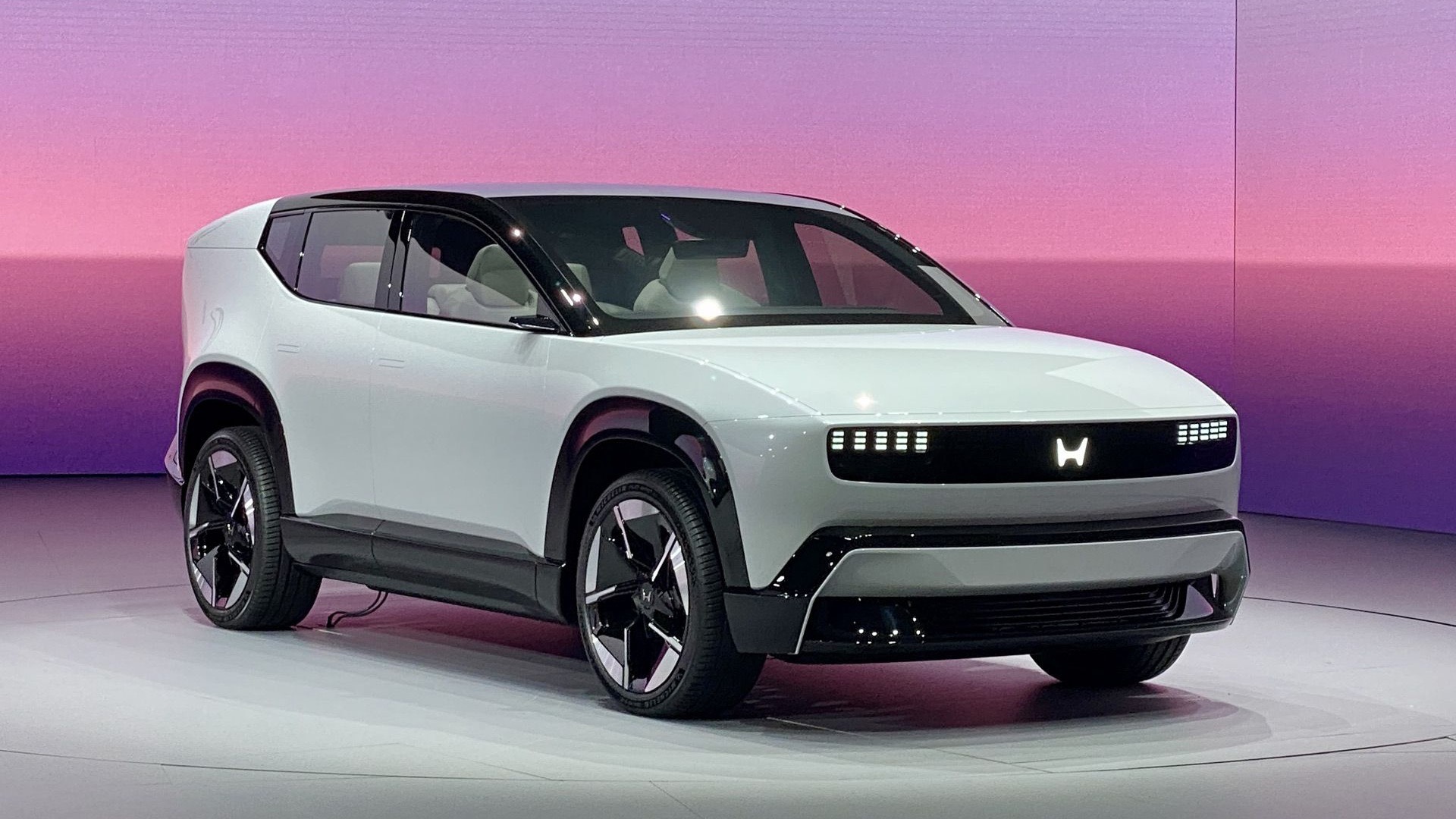
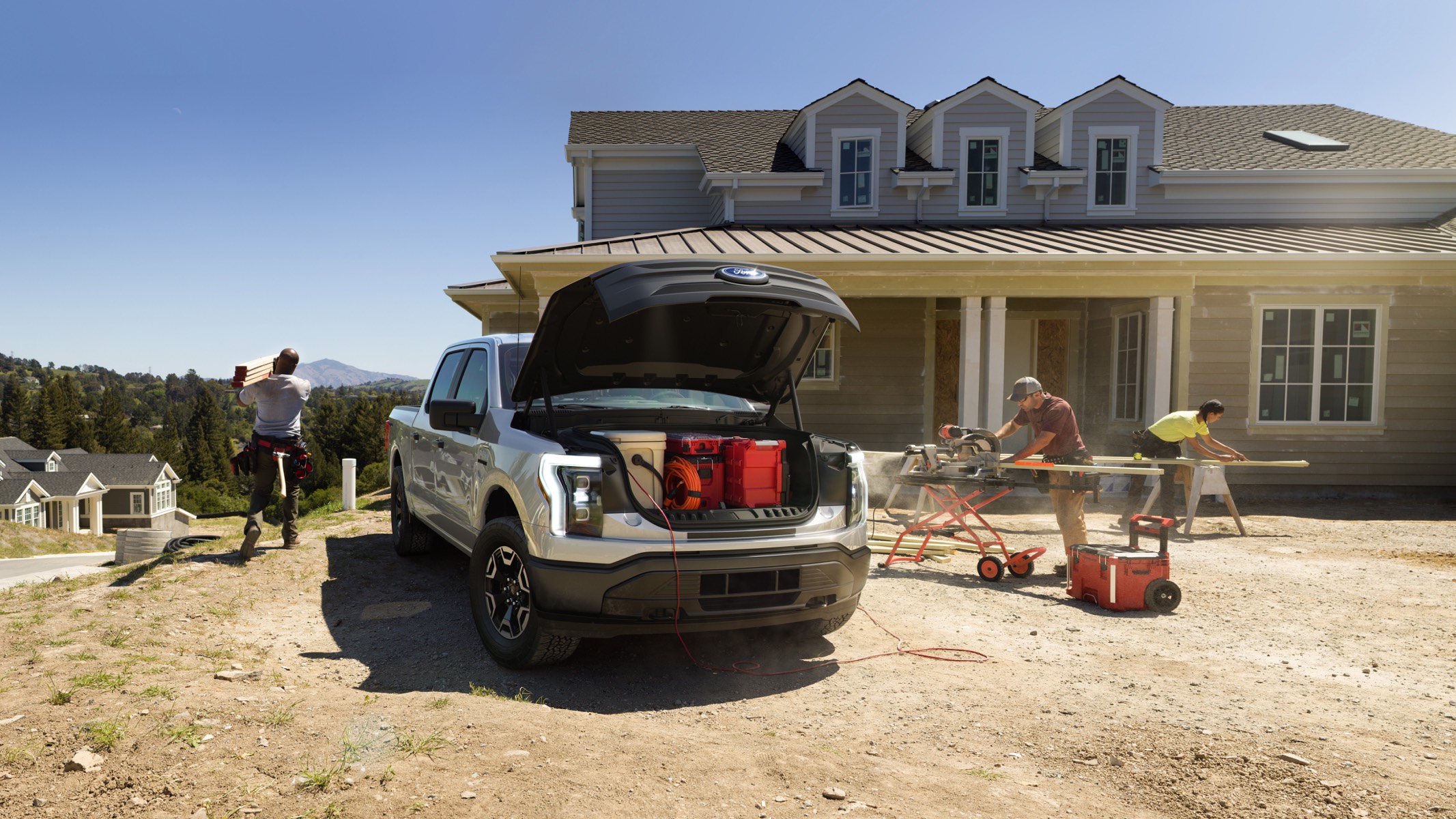
But the other side of the ledger is brutal. At least 18 automakers have now canceled, delayed, or scaled back EV plans in the U.S. Ford wrote off nearly $20 billion converting what was supposed to be a massive EV complex into a conventional truck plant and killed the F-150 Lightning. Honda canceled its 0 Series SUV and four-door sedan, taking a $15 billion hit in the process. Mercedes pulled the EQE, EQS, and their SUV counterparts from the U.S. market. Nissan axed the Ariya. VW paused the ID.Buzz. The list goes on.
The reasons are a mix of things converging at the worst possible time. The Trump administration eliminated the $7,500 federal EV tax credit at the end of September 2025, which hit demand almost immediately. Tariffs made imported EVs nearly impossible to price competitively. And frankly, a lot of these manufacturers built EV products that weren’t very good and hoped incentives would paper over the problems.
That’s the real story here. The companies pulling back weren’t committed to EVs in the first place. They were committed to EV optics. When the financial math stopped working, they folded. Honda’s 0 Series existed mostly as concept renders and press releases. The Mercedes EQ lineup never found its identity. The Nissan Ariya arrived years late and never justified the wait.
Meanwhile, Rivian is building a whole new platform from scratch, targeting real volume, and just announced a full lineup of vehicles that ordinary buyers might actually afford. That’s not a company hedging its bets. That’s a company that decided EVs are the only direction worth building toward.
The EV transition isn’t dying, it’s just sorting itself out. The manufacturers who treated electrification as a compliance checkbox are bowing out, and the ones who actually believe in it are doubling down. Where that leaves the market long-term, especially with policy headwinds still blowing hard, is the question worth watching.



It’s also important to understand that the legacy automakers aren’t completely walking away, despite the cancellations. Yes, Honda and Ford writing off $15B-20B looks bad because it is. However, nearly all legacy automakers are still investing in software and zone architectures that would allow them to produce software-defined vehicles, but now those vehicles are ICE. Most automakers are also still investing in batteries. Sure, ownership of those facilities might have shifted to other companies like LG and the batteries those facilities produce are earmarked for energy storage instead of vehicles. But the important thing is that battery factories are still being built and the tech is continuing to be developed. All of the legacy automakers are continuing to develop electric motors for use in hybrids and EREVs. Partnerships like Ionna continue to build out the charging infrastructure. In 3 years, when the idiot brigade is out of the White House, those legacy automakers can pick up where they left off. They will have software, batteries, and motors and the infrastructure will be even better than it is now. The legacy automakers know how to make cars; it won’t take them long to catch up if they really want to. In the meantime, Rivian has a genuine opportunity to firmly establish themselves like Tesla has.
Legacy has had time to figure it out, and they haven’t. Kia/Hyundai was the closest to figuring it out yet they also pulled back. Only the fully BEV companies know what they’re doing. Also, China is knocking on everyone’s door.
Yes. But one should also include among the committed: the Chinese. They seem motivated by national security and reducing dependence on foreign oil received through multiple vulnerable straits, or from geopolitical adversaries (Russia, etc.), which substantially increases their commitment, and their rate of advancement. Beyond batteries capable of megawatt charging in commercially available vehicles, there are also dark factories (highly automated), and a near monopoly on parts. Also committed seem to be the Saudis, whose Lucid Cosmos will first be built in Saudi, only later in Arizona. (Well, Lucid is effectively Saudi, almost a much as American, driven significantly by Saudi objectives.)
Multiple European automakers are already Chinese owned (MG, Volvo). As the Chinese make inroads in Australia, Canada, southeast Asia, maybe Latinoamérica, maybe the EU via plants in Turkey (0% tariffs to the EU), the Chinese automakers may flank the legacies until the legacies are restricted mostly to their home markets, and then bought out, like MG and Volvo.
BYD said no joint ventures, but I suspect that political niceties may mean that Chinese automakers relent, at least notionally…the Chinese buyer takes over the factories and design and models and brand name, and the legacy managers are sent over to a corner to smoke a joint.
VW, to their credit, seem to recognize the value of investing in, for instance, Rivian’s software and electronics technology. That could help them survive.
The automotive world in 5 to 10 years could potentially look quite different from 10 years ago, especially if, for instance, Canadians decide they really like inexpensive, well appointed cars from China. We seem to be living through interesting times.
I think the other thing that is contributing to traditional automakers shifting away from manufacturing EVs is the Trump administration unwinding the regulations around tailpipe emissions that required automakers to manufacture enough low or no emission vehicles to offset any high emission vehicles they produced, or pay hefty fines. Without that there’s less financial incentive for those automakets to continue investing in EVs at a higher cost over the much more profitable ICE vehicles they’ve spent decades figuring out how to manufacture efficiently and (relatively) cheaply.
Meanwhile, Chevy soldiers on with just enough to be ready for the future.
Making cars is a highly capital intensive, complex business with either major logistical requirements or lots of vertical integration. This is true for ICE or EV makers, and it’s no wonder trying to do both is overwhelming. Not one legacy auto maker has succeeded at designing, producing and selling both ICE and EV vehicles in volume though BMW , VW and GM look like they may do so and, at long last, maybe Toyota too.
To compound the difficulties, we’re entering a third generation of technical advance. First, it was making good, reliable, decent quality, hardware centric vehicles. Next, it was imbuing vehicles with decent electronics and electrical architectures, so-called software-defined vehicles. Now, we’re entering an age of autonomy and AI-defined vehicles. RJ keeps saying that Tesla, Rivian and some Chinese makers are at the third stage. He doesn’t mention BMW, VW, GM, Toyota or anyone else.
For a few years, maybe a decade, legacy makers can get onboard because most of the world – Africa, South America and much of Asia – isn’t ready for autonomy and AI-defined vehicles, but by the 2030s, autonomy and AI-defined vehicles will cost no more than ICE alternatives. Legacy auto makers can buy autonomy and AI-defined capabilities from Tesla, Rivian and a few others, so legacy makers can survive without developing those capital intensive capabilities in-house. But in order to survive auto makers will either do it themselves or buy it from those who’ve already done it. Doing it yourself isn’t easy and most legacy makers have built-in financial and organizational obstacles to doing so.
The motor vehicle market will likely split in two – low end, utilitarian vehicles, like Slate, Toyota HiLux, Nissan Navara, and middle-market and above vehicles with advanced hardware and software capabilities. At least that’s the way I see it going.
Objectively, much of the US market is EV resistant. We’d get a better market read if gas were properly taxed. For now, the sweet spot is plug in hybrid extended range vehicles. Full BEV vehicles are not mature for another decade when ranges extended and weights reduced. Plug in EREV/REEV vehicles more practical for versatility and peace of mind, and for those without easy cheap access to level 2 charging.