
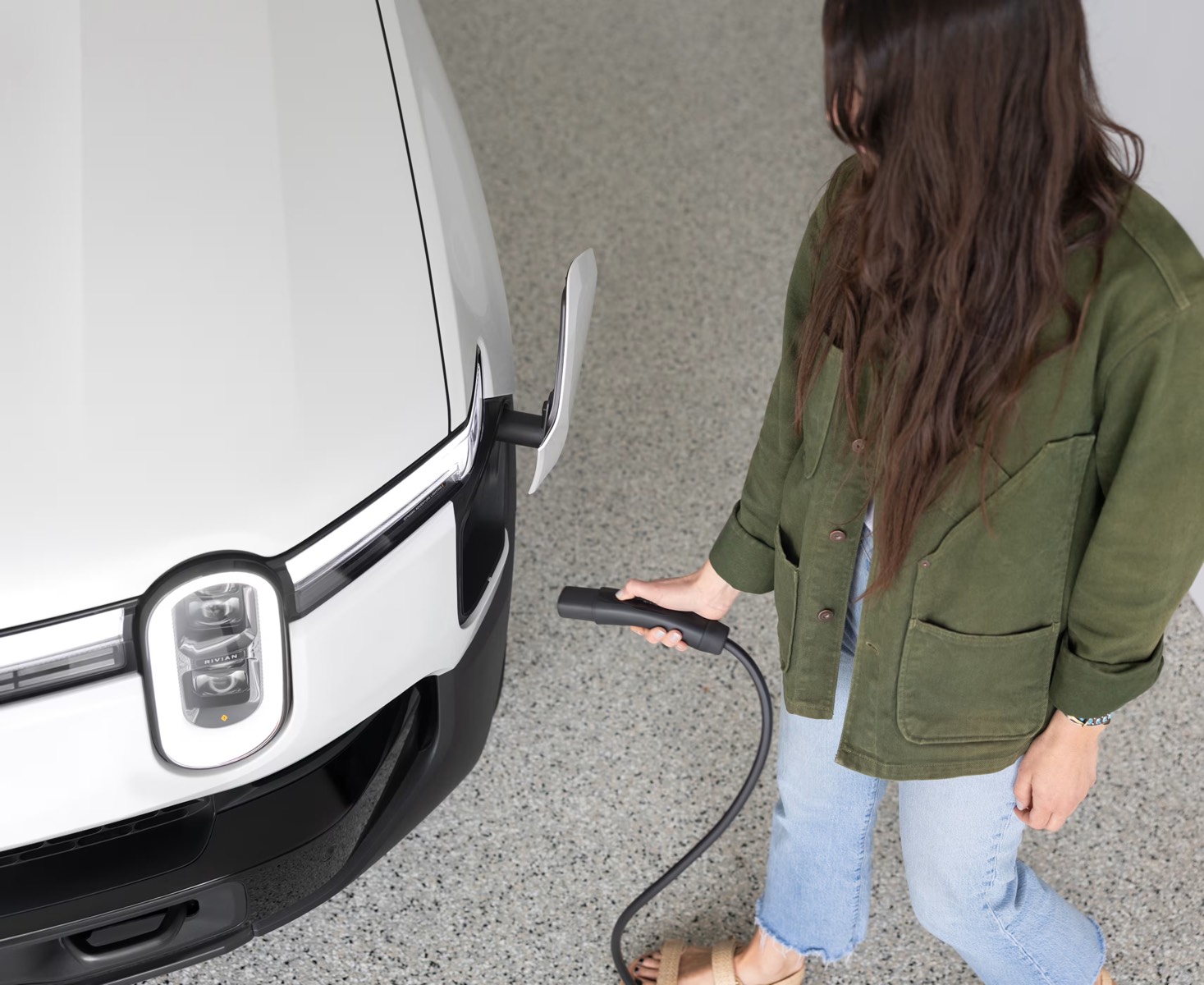
Rivian is partnering with ChargeScape to plug its vehicles into utility-managed home charging programs across North America, giving owners a new way to lower their charging costs while helping utilities keep demand under control.
The setup lets Rivian drivers enroll in participating utility programs through ChargeScape’s network. From there, utilities can shift charging toward periods of lower demand and ease off during peak hours, which helps balance the grid without owners having to manage much of it themselves.
Rivian points out that its vehicles already bring value to the grid thanks to their large battery packs. The ChargeScape integration is meant to make that flexible capacity easier for utilities to actually tap into.
ChargeScape was launched by automakers and is backed by BMW, Ford, Honda, and Nissan. Other brands use it too, including Tesla and Stellantis. The company describes itself as shared automotive infrastructure that lets utilities work directly with connected vehicles instead of building separate systems for each brand.
For owners, the practical part is that enrollment and charging controls stay inside the Rivian app. You connect to ChargeScape, opt into a managed home charging program, and keep using the same app experience you already have. The companies say that keeps participation simple for drivers while handing utilities more flexible energy to draw on.
ChargeScape CEO Joseph Vellone framed it as a step toward automakers lining up behind a common platform. He said the partnership brings some of the largest batteries on the road onto industry-owned infrastructure, and tied it to the financial side for drivers dealing with inflation and high gas prices.
Andrew Peterman, Rivian’s director of advanced energy solutions, said the company’s software-defined vehicles are a good fit for this kind of work. He called them a nimble partner for balancing the grid, and added that these solutions can help lower electricity costs and support a more resilient grid even for people who do not own an EV.
This is not the first time Rivian has gone down this road. Back in June 2025 the company announced a similar collaboration with WeaveGrid, another smart charging platform that connects drivers to utility-managed programs and pays them for charging at the right times. The basic pitch was the same, shift charging to cheaper and cleaner hours, keep the owner in control of their charge level, and let the utility handle the orchestration in the background. ChargeScape covers a lot of the same ground, so the two together start to look like Rivian spreading its bets across more than one platform rather than locking into a single provider.
The timing tracks with what utilities are dealing with right now. Electricity demand is rising fast, a lot of it driven by AI data centers, and managed charging is becoming an attractive lever because it can move demand around. With nearly 7 million EVs now on US roads, that flexibility lets utilities shift load without building new power plants or upgrading the grid.



Interesting their site shows Tesla but it takes me to a demo home. Maybe this is the backend for Tesla?
It’s pretty good that it’s all done for you.