
So the House dropped a big transportation bill last week and tucked inside it is a $130 a year federal fee on EV owners. I’ve seen a lot of people react to that number like it’s a punishment, and I get the instinct, but once I actually sat down with the gas-tax math the fee itself is more reasonable than the outrage suggests. What’s not reasonable is how they decided to charge it.
Quick version of what’s in the bill. It’s called the BUILD America 250 Act, a roughly $580 billion surface transportation package, and the EV part lives in Section 1129. EV owners pay $130 a year. Plug-in hybrid owners pay $35. Gas cars pay nothing new. Starting in 2029 both fees creep up $5 every two years until they cap at $150 for EVs and $50 for hybrids. It’s set to kick in October 1 of this year and sunset in 2036. Your state collects it, and if a state refuses to play along the feds claw back 125% of what’s owed from that state’s highway money, so there’s a real gun to the head built in there.
Now the comparison everyone actually wants. The whole reason this fee exists is that EVs don’t buy gas, and gas is what funds the federal Highway Trust Fund through that 18.4 cent per gallon tax that hasn’t moved since 1993. So what does a normal gas driver actually put into that fund? Take the average person driving around 11,500 miles a year in something getting roughly 22 mpg. That’s about 515 gallons, which lands somewhere around 95 to 100 bucks a year in federal gas tax. The Federal Highway Administration’s own math assumes about 550 gallons, which puts you right around $101.
So $130 is more than what the average gas car pays, but it’s not double, it’s more like one and a third times. To actually owe $130 in federal gas tax you’d have to burn close to 700 gallons in a year, which means driving something genuinely thirsty. Most normal gas sedans never get there. So yeah, EV owners would be paying a premium, but it’s a premium, not a mugging.
And honestly we should be a little glad it landed at $130, because the earlier versions of this were ugly. Sam Graves had floated $200, and a draft before that went all the way to $250. At $200 you’re paying the gas-tax equivalent of over a thousand gallons a year, which is something like 100,000 miles of driving. Nobody drives that. So the climbdown to $130 is real, and it’s probably what got enough Democrats on board to make this thing bipartisan, which it is.
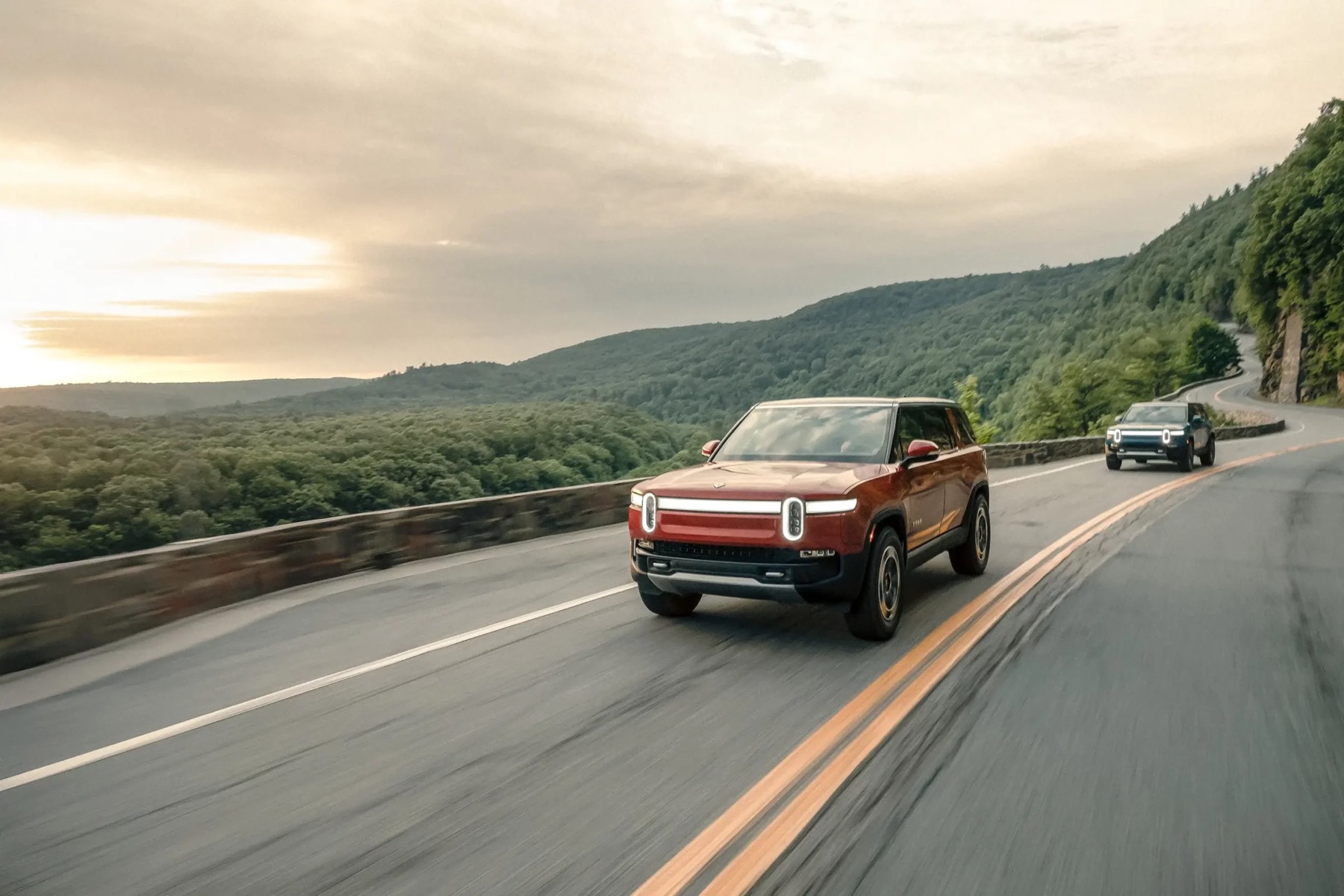
Here’s the part that actually bugs me though. It’s a flat fee. Whether you drive your R1S 3,000 miles a year babying it around town or you’re stacking 25,000 miles on it road-tripping every other weekend, you pay the same $130. That’s backwards. The gas tax was never elegant but it at least tracked how much you used the roads, because more driving meant more gallons burned meant more tax paid. A flat fee throws all of that out. The light-footed owner overpays and the road warrior gets a discount, which is the exact opposite of what you’d design if the whole point really was making people pay for the wear they put on the pavement.
Gas tax figures are approximate, based on 18.4 cents per gallon and an assumed 22 mpg. Breakeven sits around 15,000 miles a year.
For those of us in Florida this also hits a little different, because Florida is one of the states that doesn’t currently charge a dedicated fee on EVs. So for a lot of us here this $130 would be the first EV-specific charge we’ve ever paid, while owners in a place like Washington are already stacking a $150 registration fee plus a $75 electrification fee before the feds even show up. That stacking is the thing to keep an eye on. The federal $130 doesn’t replace your state’s fee, it just sits on top of whatever you’re already paying.
And the bigger picture, the one that never makes it into the soundbites, is that the Highway Trust Fund isn’t short because of EVs. It’s short because basically every car got more efficient over thirty years while the gas tax stayed frozen at 1993 levels and Congress never had the stomach to raise it. EVs are maybe 10% of new sales right now. We’re a convenient target, not the cause. There’s also something almost funny about the timing, with gas prices pushing past $4.50 after the Iran mess and the administration floating a gas tax holiday to take the edge off, while Congress turns around and proposes a brand new fee on the one kind of car that doesn’t care what gas costs.
If they actually wanted to do this right, there’s a model sitting right there in front of them. Oregon’s been running OReGO for years now, charging EV drivers by the mile, and Utah and Hawaii run their own versions of the same idea. That’s the design that mirrors what the gas tax was trying to do in the first place. You drive more, you pay more. It’s more of a pain to administer and it makes people nervous about getting their miles tracked, which is exactly why nobody in Congress reaches for it and everybody reaches for the lazy flat number instead.
The bill went to markup on the 21st so the $130 could still move before any of this becomes law, and given how many times some version of an EV fee has been pitched and quietly died on Capitol Hill, I wouldn’t bet the house on the current number surviving in one piece. The thing worth watching isn’t really the digit. It’s whether anyone in that room bothers to fix the structure, or whether they just haggle over the number and call it a day.



Fair and equitable tax for all vehicles:
Tax the usible rubber in a tire. That is the difference in the weight of a new tire and a 2/32 tire. That comes to a falt fee based on a per pound of usable rubber in the tire and collect it from the mfr. or imporer of the tire.
Done deal. How much you use the road is directly proportional to the amount of rubber you rub off your tires. From bicycles to 18 wheelers. Replace the gas and EV taxes and devide rev. equitably by states.
Side benefit: people will pay far more attention to ture inflation. ~ Mike Heaton
I would argue that leaking motor oil and fuel also causes a fair amount of damage to the roads.
They should base it on manufacturer listed curb weight and vehicle type.
In the meantime, increase the taxes on fuel. Sneak it in there while the GOP is screwing around, nobody will realize it 🤣
Most fair option: remove the federal gas tax entirely (will get bipartisan support), and replace with an annual fee for all vehicles, scaled by vehicle weight and annual miles driven. EVS *will* pay slightly more than an “equivalent” ICE car given the heavier battery weight, but then the whole point is to charge for what actually causes the roads to wear out and need repair.
I’m all for paying my fair share, but $130 is significantly more than the average as you’ve noted. How about $96? That’s a bit more equitable unless they come up with a proxy for miles driven.
My EV is heavier than equivalent gasoline or diesel vehicles. And weight is a big factor in road wear, I understand. So, a third more? Meh. I’m not fussed.
The gas tax was never perfect. It didn’t measure which roads you drove on (such as roads that you pay through local or state taxes, versus big highways), nor as the article points out mileage, nor various other factors. But it was easy to calculate, assess, verify. Complicated taxes have more overhead, and can create more potential for avoidance.
My father, an early computer engineer, always said “KISS”… Keep it simple, stupid.
The real fight should be to raise the gas tax (and sorry, EV tax) to where it properly covers good maintenance of our transportation system. Europe has sky high taxes on petrol…and typically silky smooth roads from my experience, due to more maintenance. You get what you pay for (or at least not more than what you pay for).
As if any of that tax money is actually going to road repairs under this administration. What a joke.
<10% of all vehicles on the road in the US are EVs and this admin has done everything they can to keep that number low (eg: removing subsidies) so if they were truly interested in raising money that could make a dent, maybe they should focus elsewhere.
I don’t expect a single dollar to go to help fix any road. This is just a tax against EV drivers.
Exactly. Where is this money going, what will it be used for, and how can track that it is actually used for its intended purpose?
The system is broken.