
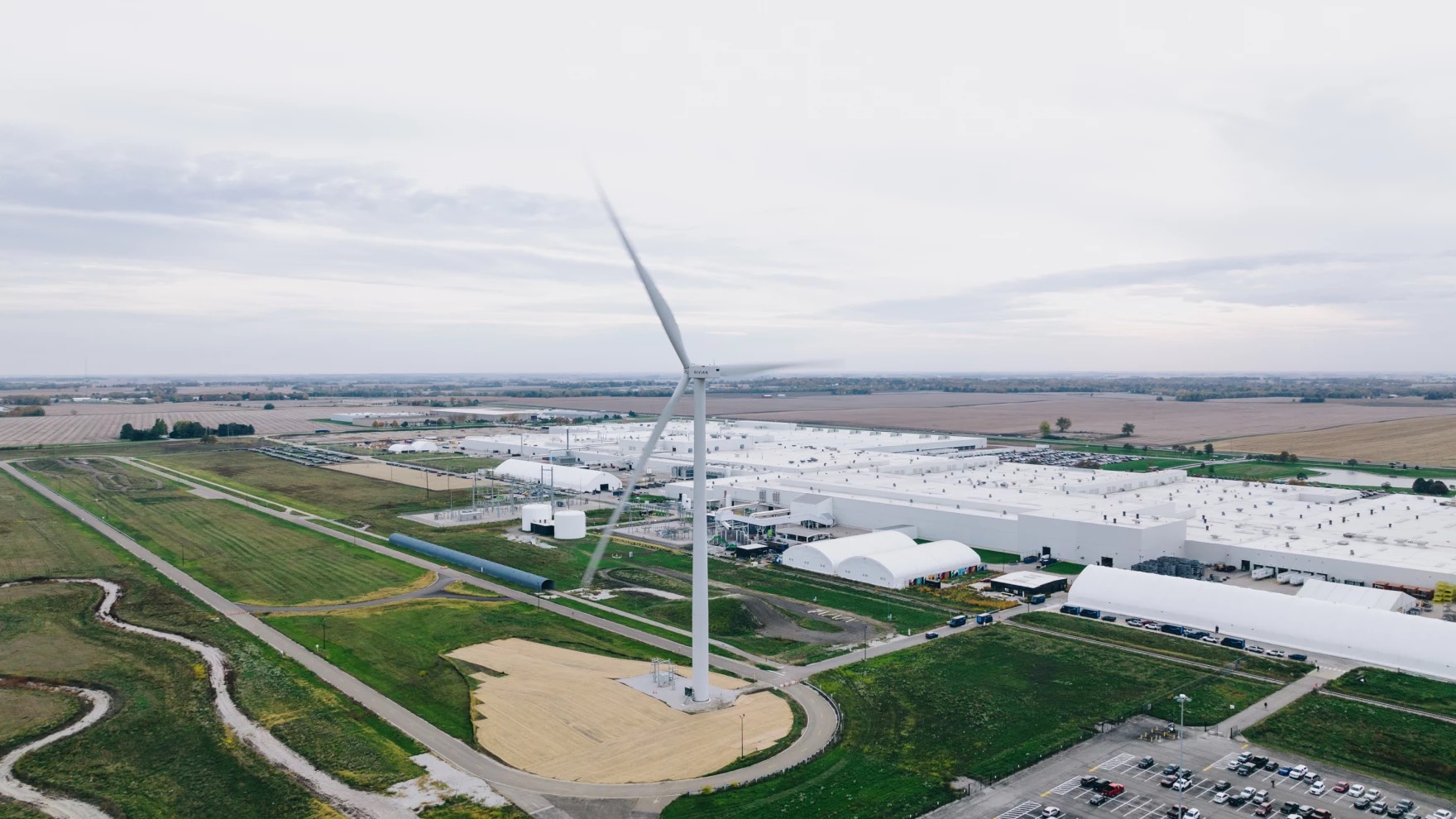
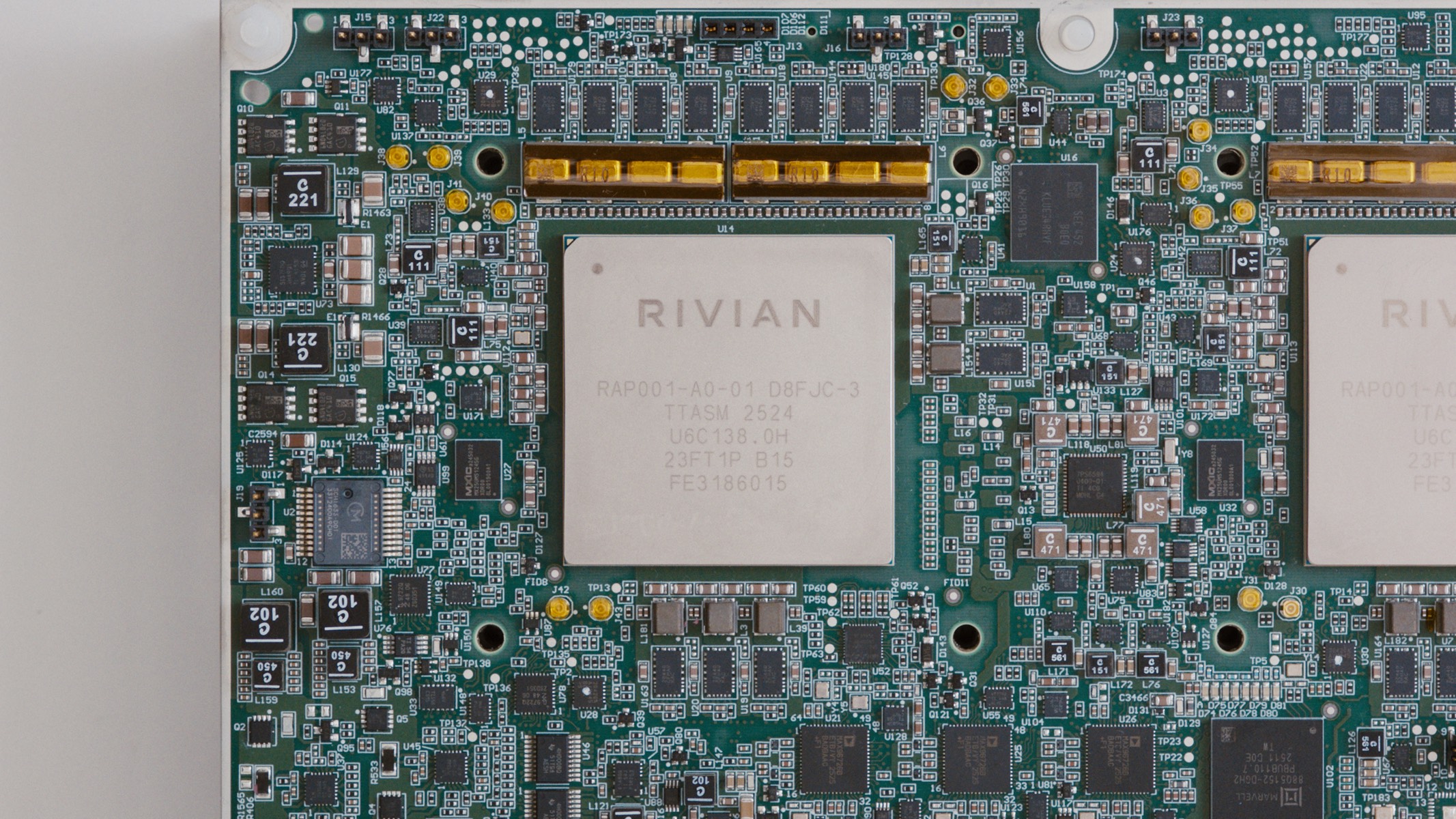
Rivian is becoming an AI company at the same time as it is being an EV company, and the brand has not really caught up to what that means. The Autonomy and AI Day event in December, the new in house RAP1 chip (Rivian Autonomy Processor), the Large Driving Model that Rivian is training the same way OpenAI trains GPT, the robotaxi plans with Uber. And now Rivian Assistant leaning on Google Gemini for the actual voice and reasoning work. All of that adds up to a lot of computing power being used somewhere, and most of it not on the vehicle itself. The brand is built on keeping the world adventurous forever, which has always been an environmental promise. So this feels like the right time to ask the question nobody is asking.
The numbers around AI and the environment have moved fast over the last year. The International Energy Agency says global data center electricity use is going to roughly double by 2030, mostly because of AI. Training one big AI model can use 50 to 100 gigawatt hours of power and evaporate hundreds of thousands of gallons of water through cooling. And the running cost, every time someone asks an AI a question, has already passed the training cost as the bigger piece of AI’s total energy use, because so many people are using these tools every day.
So how does this map to Rivian. Some of it actually works in their favor because the self driving work in the vehicle happens on the vehicle itself, on the Gen 2 hardware sitting in today’s R1T and R1S, running off the battery you already pay to charge. That energy is already counted in the vehicle’s range. It is not pulling extra power from a data center somewhere in Arizona. And when RAP1 finally ships on R2 later this year, the on vehicle efficiency only gets better. Doing the AI work on the car instead of out in the cloud is a real environmental win, and it is one of the smarter calls Rivian has made.

Rivian Assistant is a different situation. It uses Google Gemini and Vertex AI for the heavier voice and reasoning work, which means every time you say “Hey Rivian” and the request routes to one of those models, it is making a round trip to a Google Cloud data center somewhere. That is electricity and water being used somewhere else, not on the vehicle. Multiply that across a fleet that is going to grow a lot once R2 starts hitting customers in volume, and the cost adds up quickly. The Assistant is great. I use it every day. But saying it is environmentally free just because the vehicle is electric is not really honest.
The Large Driving Model is the bigger issue. Rivian is training its self driving model the same way OpenAI trains GPT, on huge amounts of fleet data, and it has to be retrained over and over as new edge cases come in. That is not a one time cost. It is a workload that runs forever. And it runs on whatever the local grid happens to be, which sometimes means coal or natural gas depending on where the data centers are. The “we use renewables where we can” line hits differently when you are pulling that much power and never stopping.
There is a version of this story where the AI work eventually pays for itself in environmental terms. Smarter routing saves real miles over time, and better battery management makes the pack last longer, which matters because building new battery packs is where most of the lifetime carbon hides. Robotaxi service, if it ever actually happens, would also drop emissions per passenger because you are getting way more use out of each vehicle. The case for AI making Rivian greener over time is not crazy. It just is not automatic.
The honest move would be for Rivian to get ahead of this before someone else does. Publish real numbers every year. The actual electricity and water cost of running the AI side of the business, plus what Rivian is doing to bring those down. Tesla and Waymo do not share that level of detail and the broader AI industry barely does either. The difference is Rivian’s whole brand is built on being the environmental option in a way none of those other companies are, and that puts the bar higher whether the company wants it there or not.
EVs are still better than the gas alternatives and that part is not really in dispute, but the real question is whether Rivian is going to be open about what the AI side of the business actually costs the planet or just hope nobody runs the numbers.



How about we let them roll out Lidar and Level 4 autonomy first before making demands about the AI power stats…priorities!
This is a sensible topic. Musk dropped sustainability like a hot potato when AI became the shiny new thing. Hopefully Scaringe and Rivian don’t do the same. It’s easier to fix now, as stuff is being built out (like Microsoft restarting a nuclear plant unit for a data center nearby), rather than partly retrofitting later as some tokenism. Not hard to find barren, unused land for a solar farm and data center (like east of I-25 between Colorado Springs and Pueblo, plenty of technical workforce to draw on), or for an SMR from a few companies. Just plan it out as an integrated solution, with the needed elements.
Agreed.
Maybe one day Tesla will build those solar farms they were talking about to power the whole world…
Should this be Rivian’s problem? All the companies listed, and more, have no green footprint whatsoever. At least Rivian is doing something good along the way.
This reminds me of greenwashing, everyone else is doing it.
Good article, but I struggle with your assumption that on-vehicle compute is “free”. On-board compute takes energy resources just like server based compute does. Your vehicle needs to actively power and cool that compute, which impacts range and ultimately leads to more charging at home. If you are trying to justify $’s or kW’s of power required per measure of compute, it is way more efficient to manage that server side than within a vehicle. The main reason for onboard compute is latency, Rivian will continue to offboard compute that isn’t time-sensitive to the vehicle or user experience.
From my understanding in asking the technical folks at Rivian, with the current setup the on-board compute resources are very minimal and shouldn’t impact range very much. That being said, you are right that it’ll be “replenished” using your at home charging which one could say is “cleaner” depending on how you get energy?
Good call on clean home energy, certainly changes the situation if you have solar at home. But compute is compute regardless of where it’s done. If it’s minimal on board, it would also be minimal at a data center, and that data center will always be more efficient than a vehicle due to scale.
yeah the most efficient thing is to ride a bicycle everywhere, live in a tiny home, take cold showers and never waste food. I appreciate that for people who are super serious about saving energy, Rivian has developed micro mobility vehicles. Rivian is making great progress toward living more in harmony with the world around us and I think that is more important than perfection. In the future I hope that I have an AI powered robot that plants and tends an organic vegetable garden in my back yard. I hope that the robot pulls weeds and keeps away bugs and rodents from the garden and replenishes the soil with compost. I hope the AI powers a world where there is enough for all. I hope mind robotics helps power our future factories so we can spend more time with our loved ones and helping the most vulnerable in society. I pray we grow more in harmony with each other as children of God.
I don’t think me asking my Rivian to call my wife a few times a week is really going to move the needle. The AI tasks Gemini is doing for Rivian drivers are very basic – it’s not like it’s writing heavy code or something that really requires a lot of computing power.