
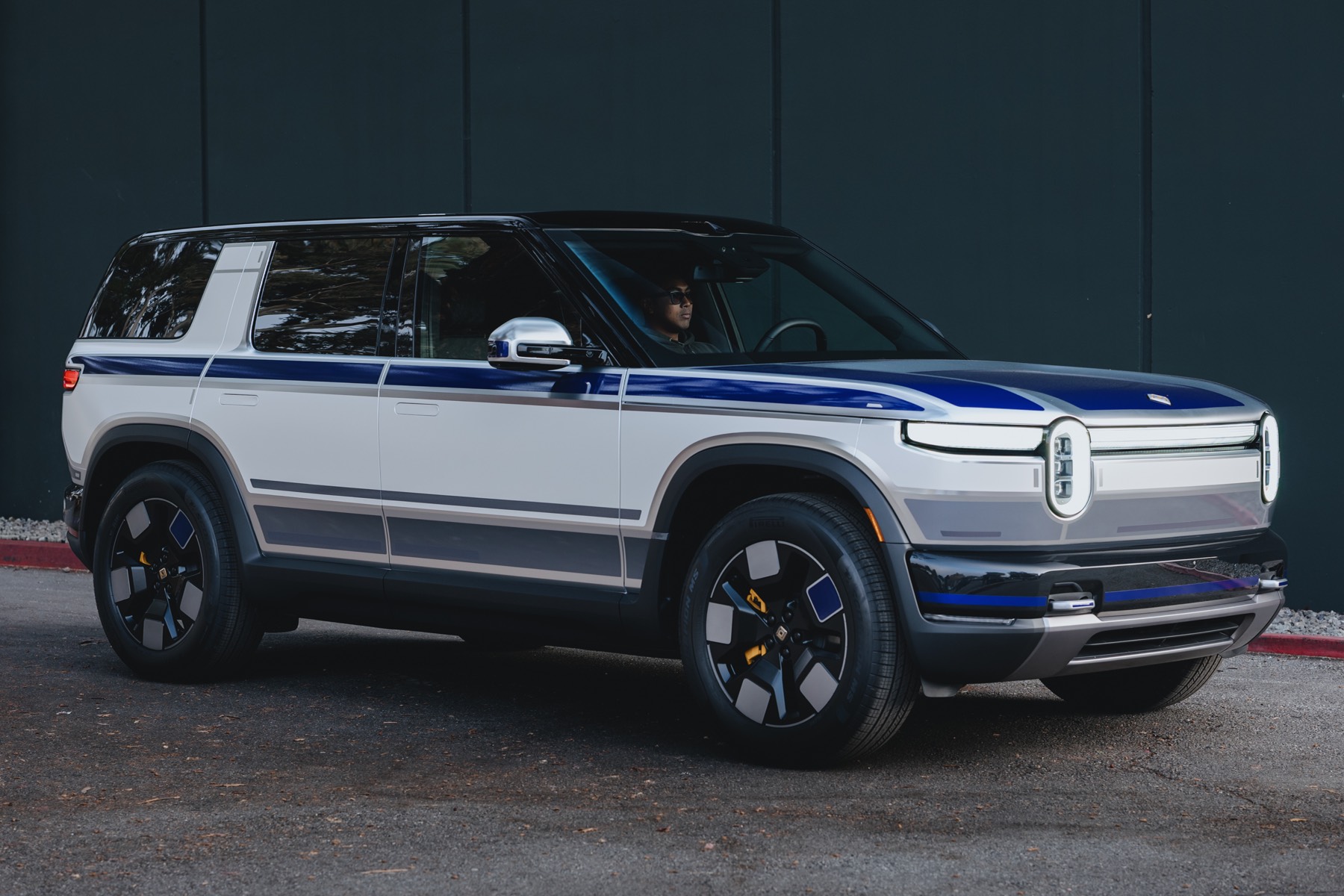
Rivian might end up manufacturing its own LiDAR sensors right here in the United States, and if the plan actually lands, the R2 would become the first mass-market American EV with a domestically built LiDAR unit. RJ Scaringe dropped this during a Reuters interview.
The catch is that Rivian wants to do this using Chinese LiDAR technology, possibly through a joint venture, rather than just buying finished sensors off the shelf. RJ said the company is already in active discussions with solid-state LiDAR manufacturers, and pointed out that the real LiDAR advancements of the last few years haven’t happened in the US. They’ve happened in China.
That’s a pretty honest read of the industry. Solid-state LiDAR has gotten dramatically smaller and cheaper, and most of that progress has come from Chinese suppliers like Hesai and RoboSense. If Rivian wants the sensor to be cost-viable in a vehicle that starts in the mid 40s, partnering to manufacture domestically with proven Chinese tech makes more sense than starting from scratch.
It also fills in another piece of the R2 story. Early R2s rolling off the line in Normal aren’t getting LiDAR at all, and they won’t be eligible for a retrofit later. The LiDAR-equipped versions don’t show up until late 2026, paired with Rivian’s first in-house chip, the RAP-1, which is really the foundation for any eyes-off driving down the road.
Between the Volkswagen JV, the Autonomy Processor, and now potentially in-house LiDAR, Rivian is steadily pulling more of its critical tech stack under its own roof. Whether this one actually lands as a real partnership or stays in the “active discussions” bucket for another year is anyone’s guess.



Jose- do you think RJ’s recent comments about taking LIDAR in-house with a CHinese partner means that the current LIDAR planned for R2 is either 1) noty working the way they want or 2) too expensive? And if either, that R2 LIDAR will now not materialize untill the make a dtermination on bringing it in house? Which would likely delay it until well into to 2027 or longer?