
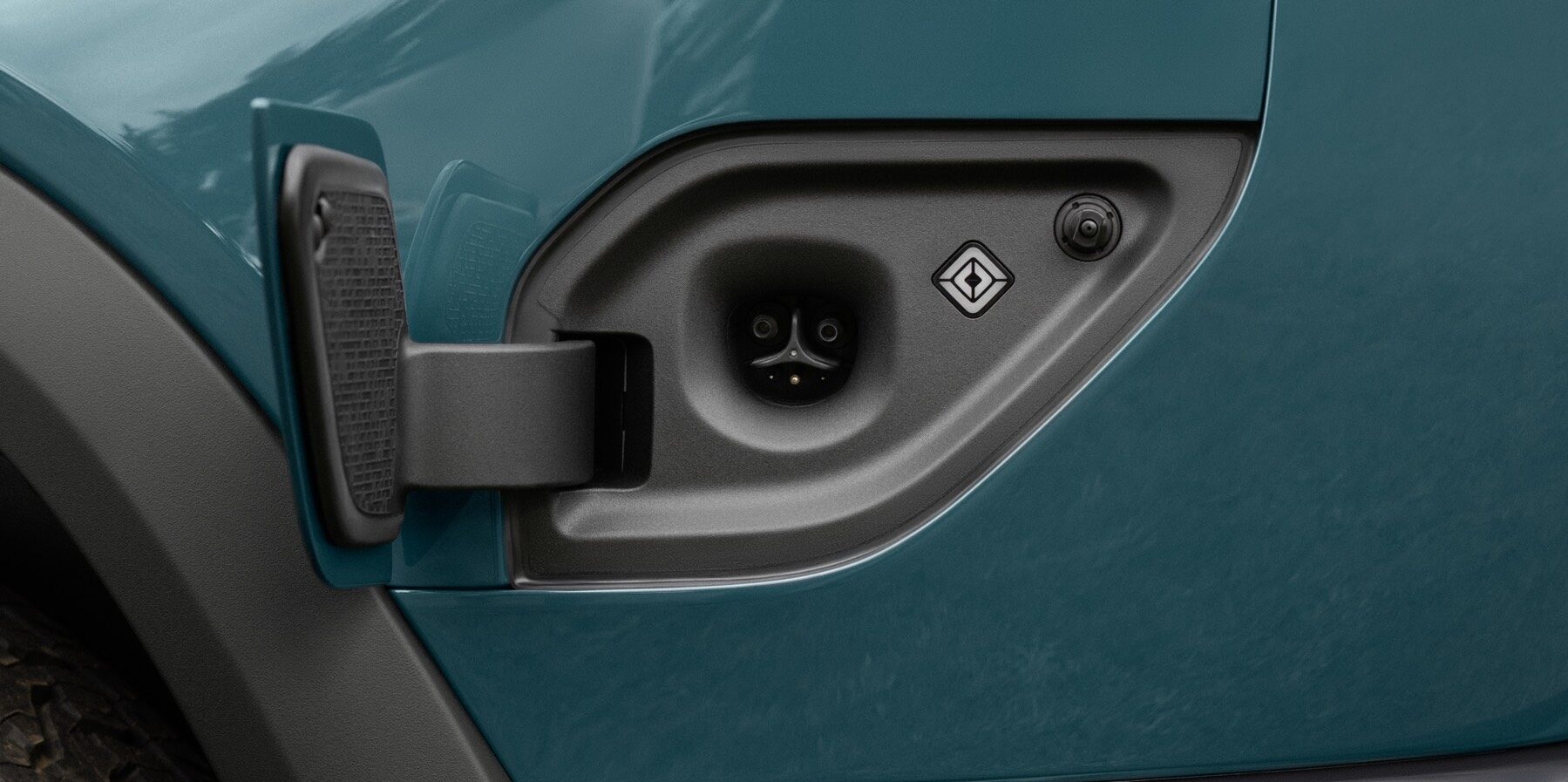
The Rivian R2 fun begins tomorrow and unlike the R1 it is built to sell in real volume. That changes the charging conversation a little. A lot more people are about to take a Rivian on a road trip for the first time, and once you get past the Tesla Supercharging network, Rivian Adventure Network, and even IONNA, the rest of the public charging world still runs on connectors your NACS port cannot use directly. So you are going to want adapters.
This is not a new problem. R1 owners have been living with it since Rivian announced you could charge at Tesla Superchargers. But the R2 is the one that puts a Rivian in a lot more driveways, and most of those buyers are coming from cars where they never had to think about any of this.
Two adapters cover almost everything you will run into. A CCS1 adapter for DC fast charging, since plenty of fast chargers out there are still CCS, and a J1772 adapter for Level 2 AC, which is what most destination chargers, workplaces, and older public stations use. With those two in the frunk you can pretty much plug in anywhere.
Rivian sells both in the Gear Shop. The CCS1 DC adapter is $200 and the J1772 AC adapter is $50, so $250 for the pair. They work, and they are the safe default if you would rather just buy from Rivian and be done with it.
There is one wrinkle worth knowing before you spend anything. Depending on where you live, Rivian is essentially handing the official adapters to you for free.
Customers registering a new R2 in CA, CO, DC, DE, MA, MD, NJ, NM, NY, OR, RI, VT and WA can get a Rivian Portable Charger, J1772 AC Adapter and Combo CCS1 DC Adapter at a discount equal to the price of each item. We’ll automatically apply your discount during the purchase process before delivery of your vehicle.
If you are registering in one of those states, that changes the math completely. The official adapters cost you nothing, and the portable charger comes along too, so there is no real reason to look elsewhere for those buyers. Everyone outside that list is back to paying full price, and that is where the A2Z route is worth a look.
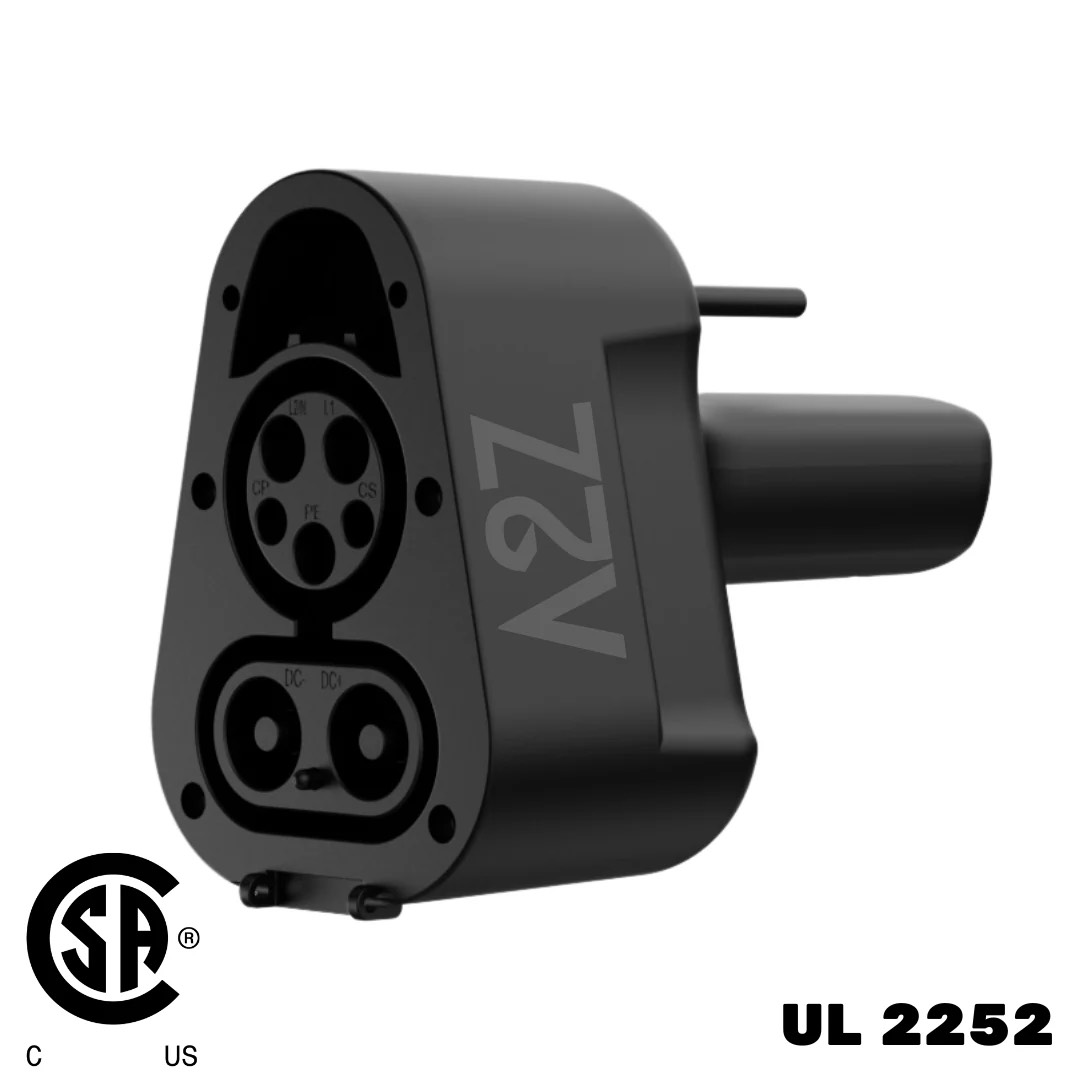
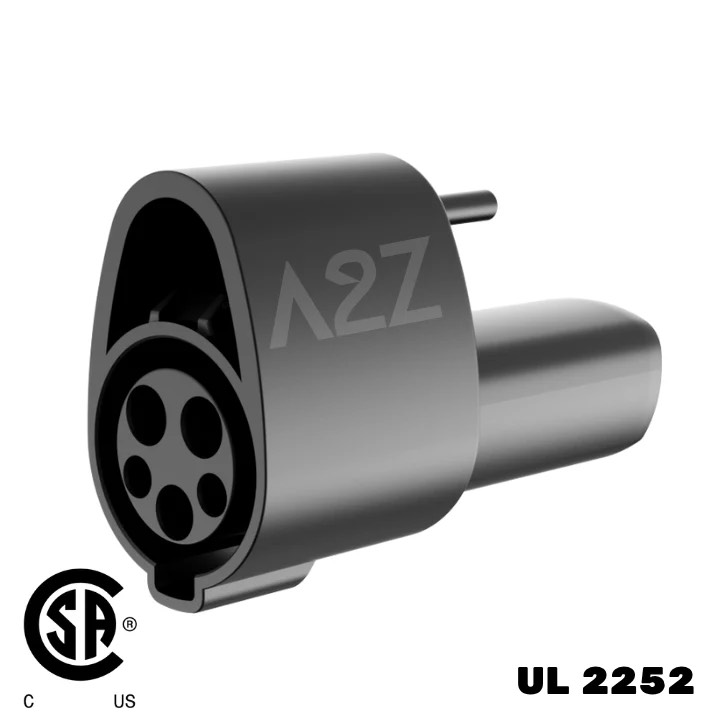
We have teamed up with A2Z on this, and full disclosure, the links below are affiliate links. A2Z has been a partner of ours since they launched their NACS adapter for CCS vehicles, and they are the adapters I actually use day to day. Their CCS1 DC adapter, the Thunderstorm, runs $139, and with my referral link you get an extra 10 percent off, which brings it to $125. Their J1772 AC adapter, the Atom, is $45 and comes down to $40 with the same discount. That is $165 for both.
So the math is $250 with Rivian or $165 with A2Z for the same two pieces.
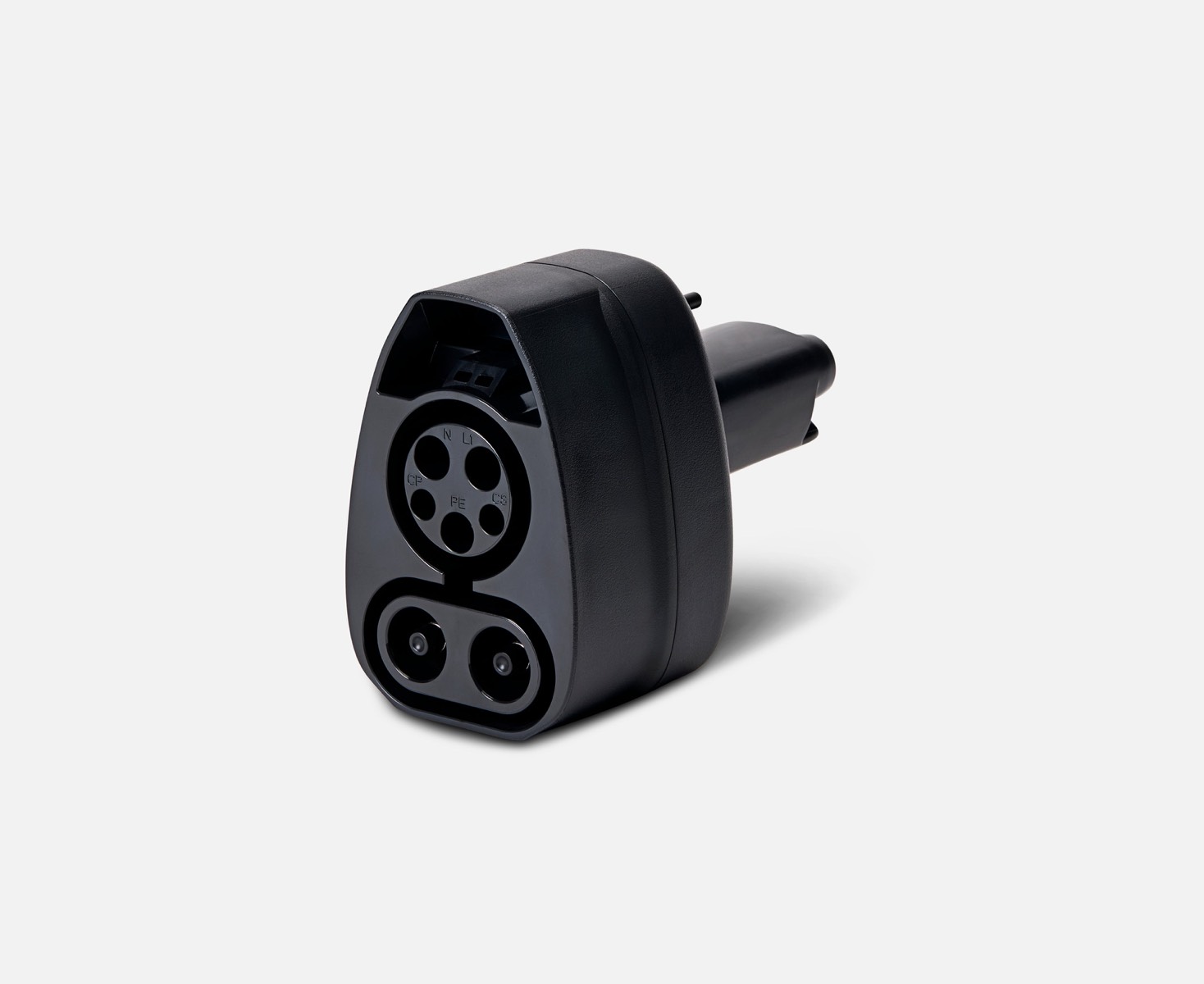
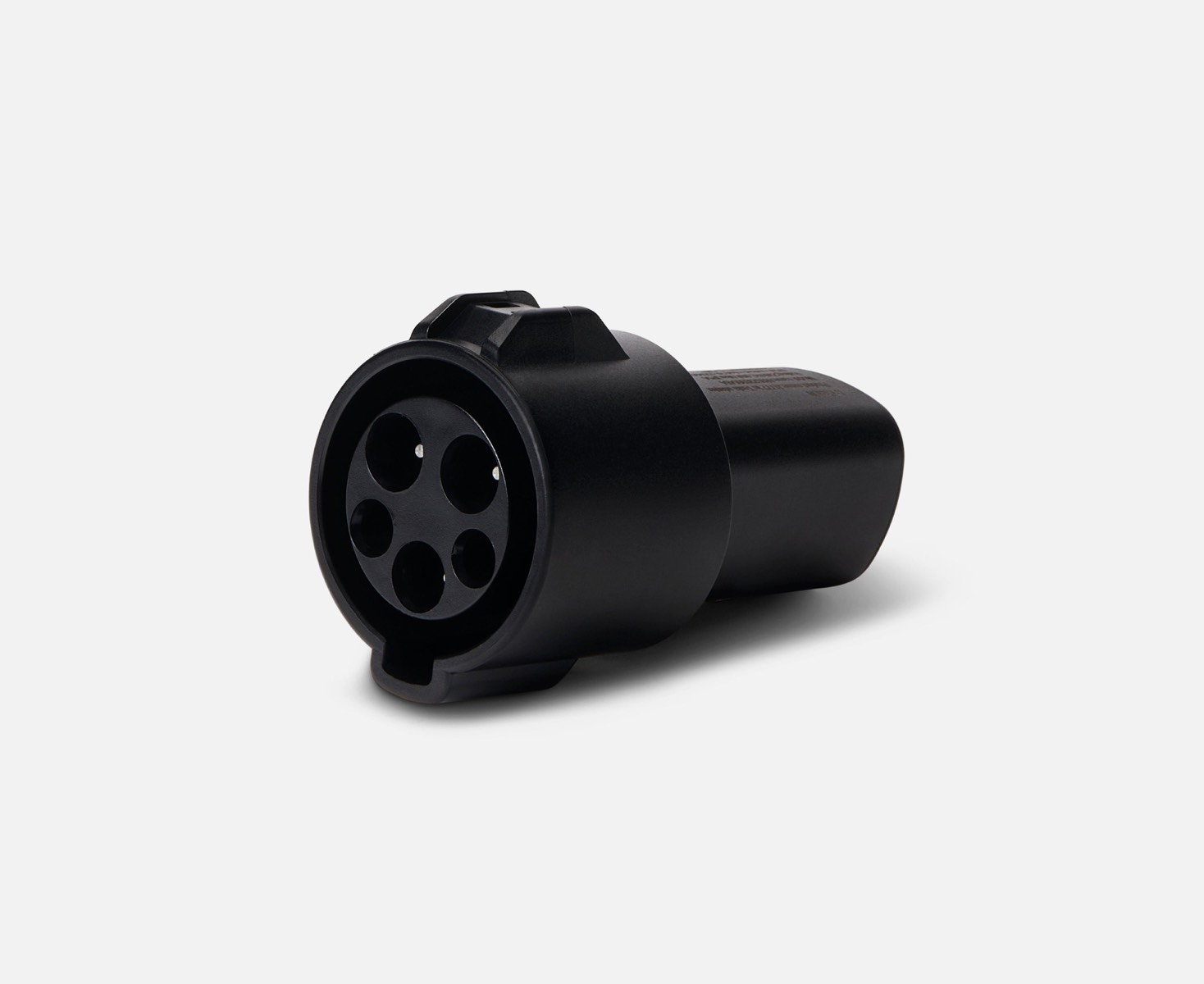
I know third party adapters make some people nervous, and that is fair. There is a lot of junk out there. But A2Z is the brand I trust, and these two are not cheap no-name parts. Both are UL2252 and CSA-C22.2 certified. The Thunderstorm is rated for 500A and 1000V, which is well beyond anything the R2 will ever pull. The Atom is rated for 80A at 240VAC.
Here are the links if you want them:
- A2Z Thunderstorm CCS1 DC adapter (affiliate link)
- A2Z Atom J1772 AC adapter (affiliate link)
- Rivian CCS1 DC adapter
- Rivian J1772 AC adapter
You can find cheaper options on Amazon, of course. I would be careful there. A bad adapter can damage your vehicle, and the few dollars you save are not worth that risk on something carrying that much current.
If you are picking up an R2 soon, I would just get the adapters now rather than wait until you are standing at a charger you cannot use. Over time more of these networks will add native NACS plugs and the adapters will matter less, but we are not there yet, and on a road trip this year you will reach for them more often than you expect.


I will be in Denver in August. I think I will go by the Rivian Space and test drive an R2. Looks like a great EV, and I hope it catapults Rivian into the R3X…I mean into profitability.
I think Rivian has a winner on its hands.
Don’t forget, if registered in select states, these adapters are free as per Rivian.com.
“Customers registering a new R2 in CA, CO, DC, DE, MA, MD, NJ, NM, NY, OR, RI, VT and WA can get a Rivian Portable Charger, J1772 AC Adapter and Combo CCS1 DC Adapter at a discount equal to the price of each item. We’ll automatically apply your discount during the purchase process before delivery of your vehicle.”
Great note, I’ll make sure to add that!
I swear, some EV articles are so clownish and elementary, they either make me laugh or make me feel like I’m in the top tenth of one percent of the population in EV knowledge. Anyone who doesn’t know these basics BEFORE buying an EV should stick to internal combustion vehicles.
I’m here to help new EV owners understand this information! It’s a shame that you think everyone should know this automatically. Don’t be silly.
Why just those states. I’m in Michigan and this alone would prevent me from buying one on principle.
Either these are the states they can do direct sales in, or regulations state they have to supply them I would imagine.
Thank you Jose, very helpful information!
This article makes no sense! Being a Tesla owner myself I have never needed any adapters. Mainly due to the fact that tesla superchargers are more available than any other charging stations..and much more reliable than any non tesla chargers..Period! This article makes it out like tesla superchargers are the inferior way to charge. Don’t waste your money getting adaptors. I’ve never needed one. The fact that the R2 has a NACS charging port is awesome. This article is nonsense!
Remember that non Tesla vehicles can’t use the older Superchargers, which makes them less available. In Colorado, I mostly use non Tesla fast chargers, just based on convenience to specific routes. Not being able to use the (older) Supercharger in Poncha Springs means that I typically need to use another brand of fast charger in Salida.
In terms of reliability, the situation seems a lot better in the last two years.
I don’t think this article is suggesting that Superchargers are inferior at all. It is simply informing people who are new to EVs (which will be the case with many R2 owners) that they will need adapters to use non-Tesla charging sites. Nothing more.
If Tesla opened up their entire network to all EV manufacturers, I’d probably agree. But way too often the Tesla superchargers where I want to charge are restricted to Tesla only. Fortunately I always carry an adapter for my R1S so I can use any charge station.
Some of us avoid Tesla chargers whenever possible. For reasons.
Walmart’s network has both CCS and NACS in equal numbers, one each per charger. So that’s another option for native NACS (J3400). Their chargers work well in my experience. (Hopefully Rivian adds them to the navigation.)
I know you usually recommend the Tesla Universal wall charger for home charging, but what about a portable charger? I have an old Gen1 Tesla Mobile Charging Cable that I use to top up my Tesla at home, but from what I’ve read that one isn’t going to be compatible with my R2, and I’m holding off on buying a new hardwired wall charger until Rivian gives out more details about their V2H solution. Do you have any recommendations for a portable charging cable, or is the one on the Rivian Gear Store my best bet?
If you have the Gen 1 mobile connector that Tesla sold from 2012-2018, commonly bundled with early Model S and X, it may well work fine with your R2! Though I haven’t seen anyone confirm compatibility with real-world testing yet, the first generation mobile connectors (post-Roadster, though Roadster’s did as well) used the J1772 signaling protocol, the same as is specified for all AC charging in the NACS/J3400 standard. It was only with the second generation mobile connector (by far the most common these days) that Tesla introduced a proprietary implementation with single-wire CAN as the standard communication protocol between the mobile connector and the vehicle, to enable the car to push firmware updates to the MC and receive more data from it during charging. The second gen mobile connectors *do* still support J1772 signaling, but they default to attempting to communicate via CANbus, and only revert to the ‘legacy’ J1772 mode after failing to connect or detecting a J1772 adapter with an active circuit for this purpose. This means that many non-Tesla NACS vehicles (and J1772 vehicles programmed to be particularly impatient about failed handshakes, and/or connected via cheaper passive adapters) don’t play well with the second generation mobile connector. Tesla’s relatively new third generation mobile connector was designed after the release of the NACS/J3400 standard, and ought to be broadly compatible with all NACS vehicles. But that impacts far fewer potential R2 owners, as the 3rd gen mobile charger has only been broadly available for about a year now.
TLDR: 1st and 3rd gen Tesla mobile connectors ought to work fine with R2. It is specifically 2nd gen mobile connectors that do not work properly with newer non-Tesla NACS vehicles, as they were designed before NACS as a standard, and thus operate with the assumption that anything using a NACS port can communicate via Tesla’s proprietary single-wire CAN protocol.
If you have the CCS1 adaptor there’s no need to also have the J1772 adaptor, right? Why encourage people to buy both if one tackles both issues?
CCS2 adapter doesn’t work with AC charging 🙂
If your EV charging port doesn’t match the charger you are using then you need to use an adapter.
So, I would have needed to accommodate three different charging protocols and carry two separate adapters AND change my home charger or risk a house fire, just in exchange for a slower charging rate than any new EV on the market?
Put the 40 pounds back in the machine and let me use the energy source i choose. (And which is commonly available to me now.)
I’ll go back to gas before i give money to tesla.
Just ordered both the A2Z’s for my upcoming R2 – thanks Jose!