
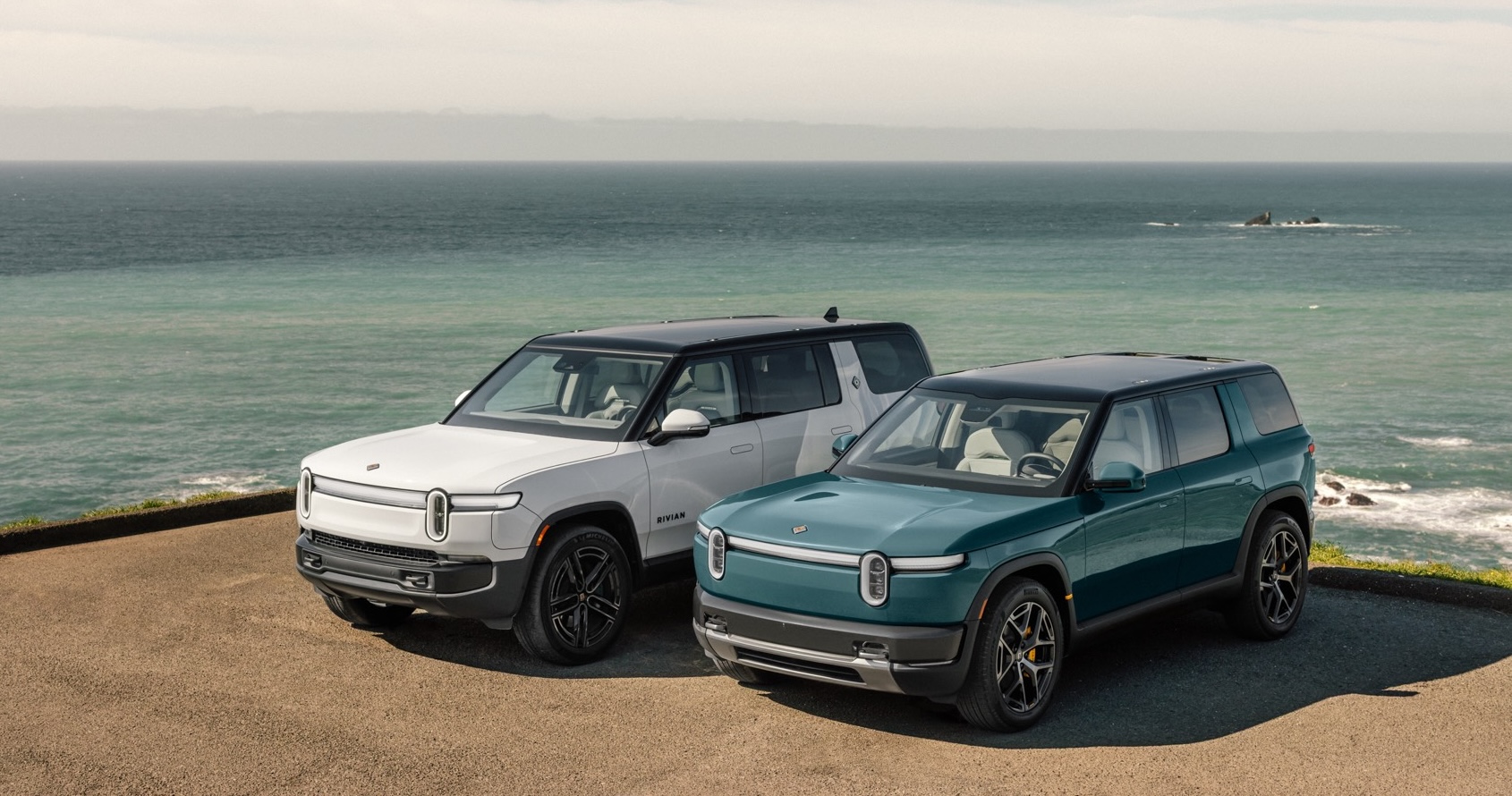
A month into living with the R2, the newer and cheaper vehicle has quietly solved a bunch of problems the R1 never did. Here is what should carry forward.
The R2 mirror housing keeps the camera lens dry in the rain. Drive an R1 through a Florida afternoon storm and the mirror feed becomes a blurry mess of water drops that makes it genuinely hard to see what is next to you when trying to change lanes.
Same with the steering wheel. The haptic halo setup takes time to get used to, and I wasn’t sold on it at first, but a month in it feels so much better than the old R1 wheel. The feedback is more precise, and the layout is easier to read at a glance.
Inside is where I would draw a line, though. The next R1 should not become an R2 on the inside. The premium materials and interior design language are why people pay R1 money.
What it needs is the R2 approach to interior construction. Press or pull on almost anything in the R2, and it feels solid. Do the same in the R1, and you get a creak. Premium materials over a more rigid structure underneath, and the R2 already proves Rivian can build it.
The same goes for the vents. If we are keeping digitally controlled vents, take the R2 placement. The vents sit directly in front of you, so on a hot Florida day the air actually hits you in the face instead of getting aimed somewhere in your general direction. I don’t know about you but I struggle with my R1 in finding the perfect location for the air to hit.
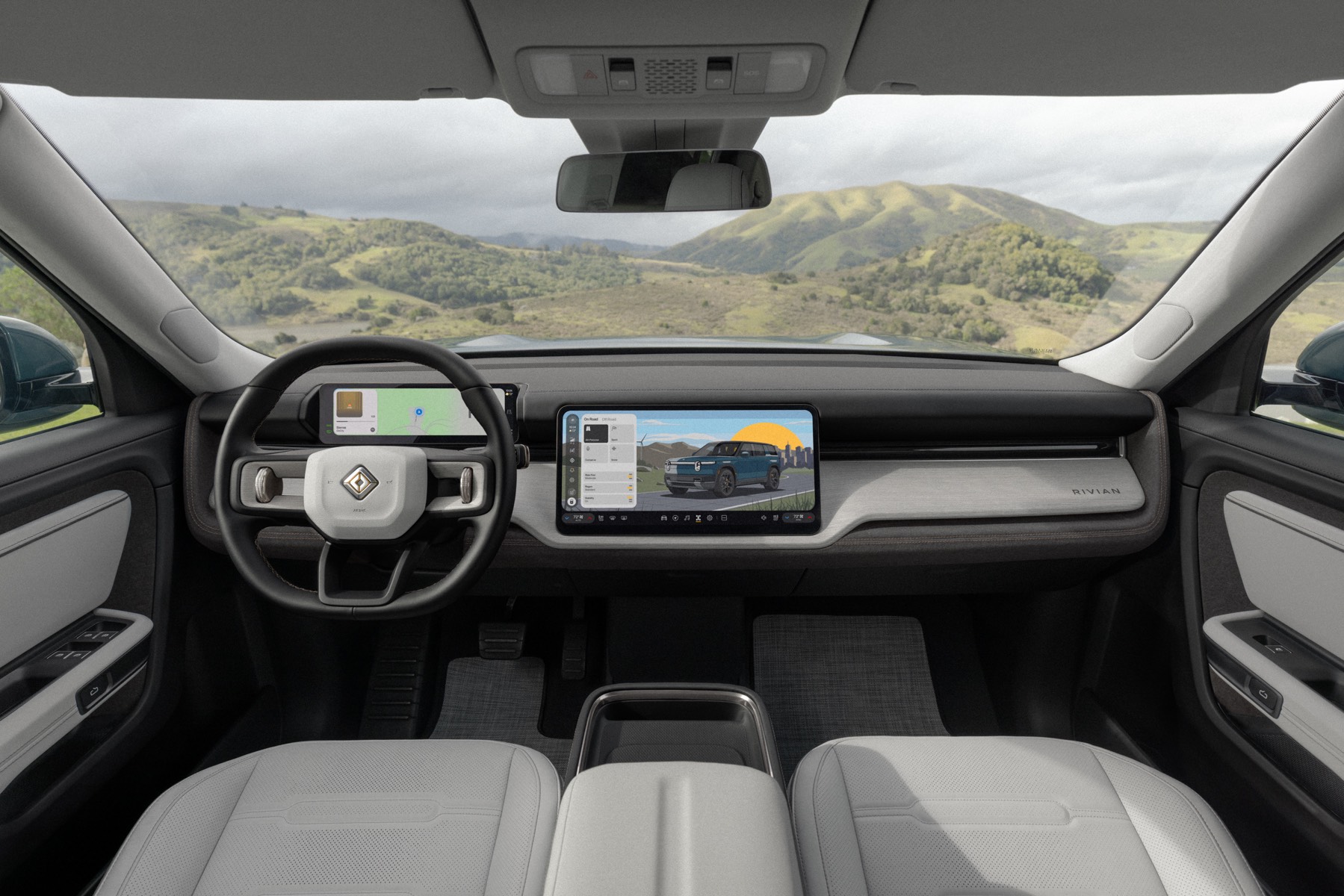
Audio is the same story. A lot of owners think the R1 system sounds subpar next to the R2. Whatever Rivian did on the newer platform, the next R1 should get it or actually better.
The rear screen should go the other direction. Give rear passengers real functionality like entertainment options, or delete it and save the cost. Right now it exists mostly to exist.
And the ridiculous one. Two gloveboxes. Nobody cross-shops on storage compartments, but you notice it every day once you have it.
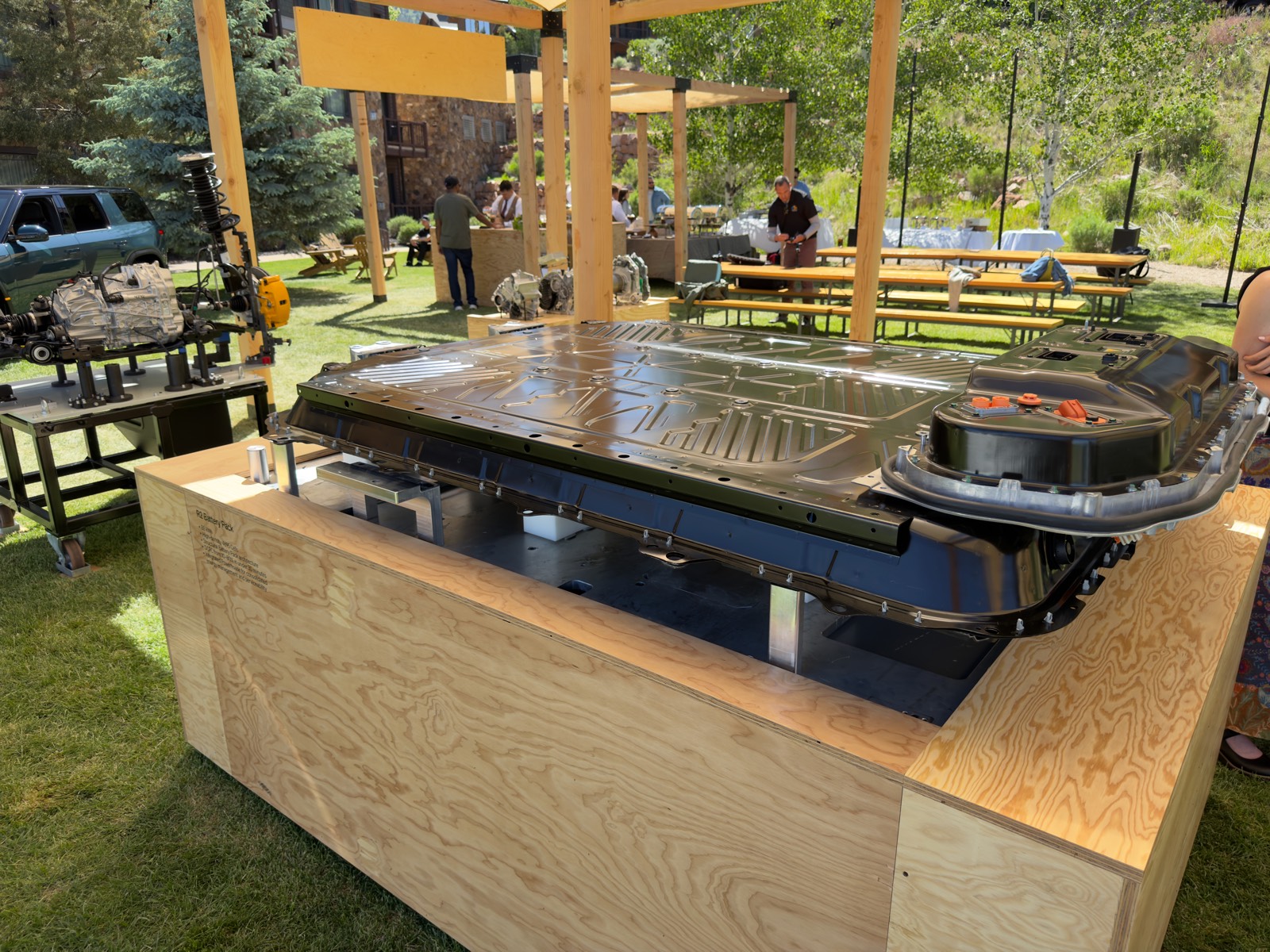
Everything up to here is quality of life. The 4695 cells are the actual argument. The R2 runs a 400-volt architecture with 4695 cells in a structural pack of three modules, and the charging curve and current limit make the R1 pack feel dated. Rivian got there without going to 800 volt, which means the gain came from chemistry, thermals, and pack design rather than an architecture jump. That should absolutely trickle up.
The clearest sign of where things are headed is autonomy hardware. LiDAR and the RAP1 chip are showing up on the R2 first rather than on the flagship, which is the opposite of how this normally goes, and it means the next-gen R1 inherits that stack from below just like everything else on this list.
That is really the story. Rivian is doing its newest engineering on the cheaper platform, and the R1 is the one playing catch-up. The next R1 does not need to be a bigger R2. It needs to stop losing to its little brother on the details.



I wouldn’t be surprised if the forthcoming R2 Tri outperforms the R1 Quad.
R2 a/c is a huge improvement over R1 in my opinion. It’s soooooo much quieter. R1 can get so noisy outside of the vehicle.
I feel like the battery pack should NOT trickle up. Rivian needs to start designing for the future in every decision they make, and 400V is NOT the future. The next big generational leap forward for R1 should include 800V architecture, and that should trickle DOWN to the next gen R2. They are going to have to have 800V in the next R2, as it will be headed to Europe and be competing with the Chinese brands. 400V is not going to cut it. Also, look at Volvo, BMW and Mercedes. They are 800V right now. The next R1 vehicle generation needs to follow suit. It can’t afford to stay 400 volt and expect to remain competitive in a market that is not building their own vehicles to yesterday’s standards.
100% agree. This is one of the few disappointments I have with the R2; they kept it 400V when the industry has been moving towards 800V+ for half a decade. I keep hearing that 800V is more expensive, but that seems like a load of bologna when Hyundai and Kia have had it since 2021 in vehicles that cost less than the R2. If Rivian were to have an 800V architecture, while keeping the ability to take 600A, that would immediately jump Rivian to the top of the pack for charging speed (at least in the US).
I keep hoping this is a situation like the Volvo EX90 where the first model year was limited to 400V but then migrated to 800V for its second model year. That wouldn’t have been possible if it hadn’t been designed for 800V from the start. Hopefully Rivian also planned ahead for the option to migrate to 800V in the future without a major redesign.
I understand the technical implications of 800V versus 400V, but I’m less clear on the real-world value of 800V. How much time would I actually save in my daily life by switching to an 800V vehicle? And how much extra would I be willing to pay for an R2 with 800V?
Rather than chasing specifications and numbers, I value reliability and consistency during charging. For me, those factors are more important than the theoretical advantages of a higher-voltage architecture.
I can’t say how much you’d be willing to pay because I’m not you. But personally, I don’t think it should cost extra for an R2 with 800V, since Hyundai/Kia have been offering 800V for half a decade as standard for a lower price than the R2. Yes, Hyundai/Kia has scale and vertical integration that Rivian just can’t match, but nonetheless, 800V+ is the direction the industry is headed.
As far as real-world advantages, 800V allows for thinner wires, which can significantly reduce weight. Rivian has bragged about how much weight has decreased through their wiring harness upgrades in the Gen 2 R1 and again with the R2. That weight loss would be even more with 800V. Additionally, 800V allows charging at lower current levels while maintaining the same overall KW rating, which reduces heat from wire and battery resistance. That makes charging more efficient and allows better thermal management for the battery.
Unless you are fast-charging daily, the answer to the question of how much you would save in your daily life is “nothing.”
Even the fast-charging picture isn’t a cut and dried victory for 800v. The Hyundai/Kia E-GMP platform is 800v, but its charge rates aren’t much faster than the R2’s. And if an E-GMP car has to use a 400v-only charger (like a Tesla Supercharger), the R2 should beat it handily.
People focus on DCFC performance, and that is important, but it is only half of the story. Efficiency is the other half. Tesla cars charge poorly but make up for it by needing to charge less because they are so efficient. R2 charges well, which allows it to post lower efficiency numbers and still function well on a long trip.
I am about to trade my 2018 launch-edition Tesla Model 3 for a 2027 launch-edition Rivian R2, and in many respects I have deja-vu. It was the same story back then, with the cheaper Model 3 getting the better next-generation architecture well before the original flagship vehicles got it.
Of course, we now know that Tesla ultimately wound up discontinuing their flagships entirely. While they did upgrade them eventually to be better than the 3/Y, they never did do so to a degree that justified the price premium Tesla wanted for them. I have to wonder if the R1 platform is destined to suffer a similar fate, especially since Rivian’s engineering focus is sure to shift to the R3 now that R2 is out the door.
I really don’t think Rivian will drop the R1 anytime soon. Tesla is dropping the Model S/X because they are no longer interested in being a car company, and are opting to refocus on the new business. Model 3/Y only still exist for them to generate cash to fund new ventures. Rivian seems to be taking a totally different path, which I feel is better for those of us that actually care about cars.
No way Jose, R1 is here to stay for a long time.
The model X and S weren’t really all that different size-wise from the 3/Y. And now with YL there really is no reason for the X to exist. The R1s sits in a much larger vehicle size segment then the R2 so it’s existence is still justified I would think.
If Rivian adds Gen 3 AI to the R1s within the next 2 years I’ll get one. Otherwise I’ll figure out how to make a YL work. I can’t live without FSD now.
Do you think they would release an R2S and R2T. More budget friendly versions of the R1 products. Keep R1 super high end. Make R2 for the masses. ie no air suspension, yes halo wheels, no premium interiors, yes R2 materials, no tri/quad motors, yes performance trim. I think that sounds more compelling than trying to bring R1S and R1T down to the R2 level.
José, I enjoyed the opinion piece very much. I own a 2023 quad R1S and love it! Sounds like a lot of good improvements in the R2. I’m sure Rivian will continue to incorporate feedback from both model lines as they continue to iterate. One little nit that is more of a pet peeve of mine….could you consider saying, “less-expensive” rather than cheaper. I’m sure this is my own hang up, but cheaper to me has a negative connotation that I associate with quality. Keep up the great work! I appreciate all you do and the information you share with this community!
I have:
2023 R1S Launch (400v) 210kW peak, but only for a brief period in the middle of the battery
2026 Ioniq 5 (800v) 235kW peak, but for longer periods
I am thinking to trade in the R1S for a R2, but I might just wait until 800v is adopted.