Want to get in touch? Contact us at [email protected]

Editorial: Why Rivian’s Autonomy Future Focuses on Gen 2 While Gen 1 Driver+ Fades
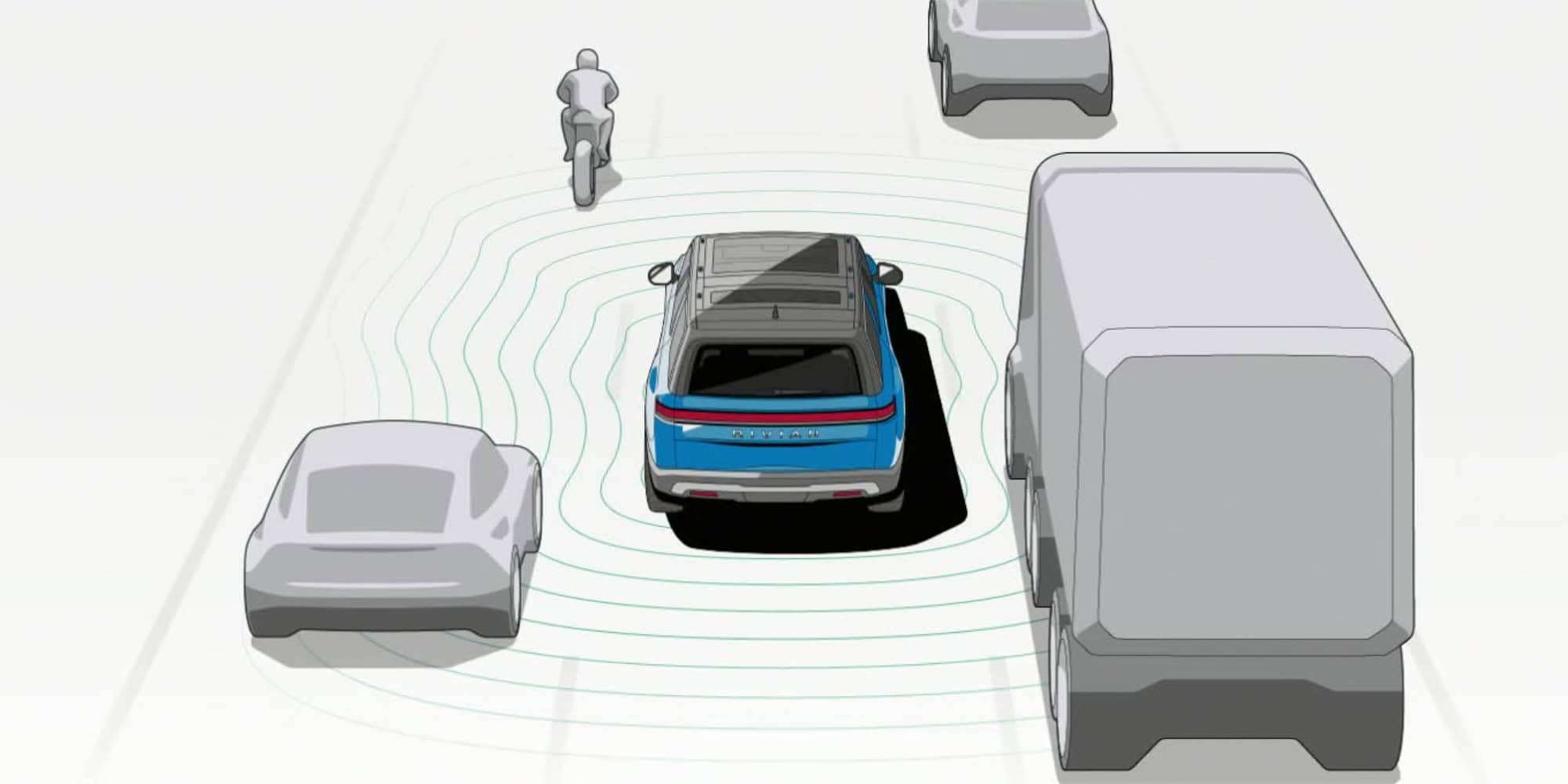
As Rivian’s first ever Autonomy Day gets closer, I think it’s important to talk honestly about something that hasn’t been officially announced but feels increasingly unavoidable, the future of Driver+ on Gen 1 R1 vehicles.
To be clear from the start, this is my opinion. Rivian has not formally come out and said that support for Driver+ on Gen 1 R1T and R1S vehicles is ending. There has been no press release, no explicit cutoff date, and no official statement declaring Driver+ “dead.” That said, when you step back and look at Rivian’s actions, not just their words, the writing feels very much on the wall.
tl;dr
- This is my opinion, Rivian hasn’t officially ended Gen 1 Driver+ support, but the direction is clear.
- Driver+ will keep working on Gen 1 R1s, but major new features are unlikely.
- Rivian’s autonomy focus has shifted fully to Gen 2 and the Rivian Autonomy Platform+.
- Autonomy Day announcements will be centered on Gen 2, not Gen 1.
- R2 is expected to build on Gen 2 autonomy or go even further.
Driver+ was a solid system for its time. For a brand new automaker, hands-on highway assist, adaptive cruise control, lane keeping, and a full suite of active safety features were genuinely impressive. But Driver+ was built on Gen 1 hardware, cameras, sensors, and compute that were never designed to support the kind of autonomy Rivian is clearly chasing now. Over time, that hardware ceiling has become harder to ignore.
Everything Rivian is talking about today points forward, not back. Gen 2 R1 vehicles introduce the Rivian Autonomy Platform+, a fundamentally different foundation with far more capable compute, improved sensor coverage, and an AI-first software stack designed to evolve continuously. This is where Rivian’s autonomy investment is going. Updates, testing, messaging, and future-facing demos are all centered around Gen 2.
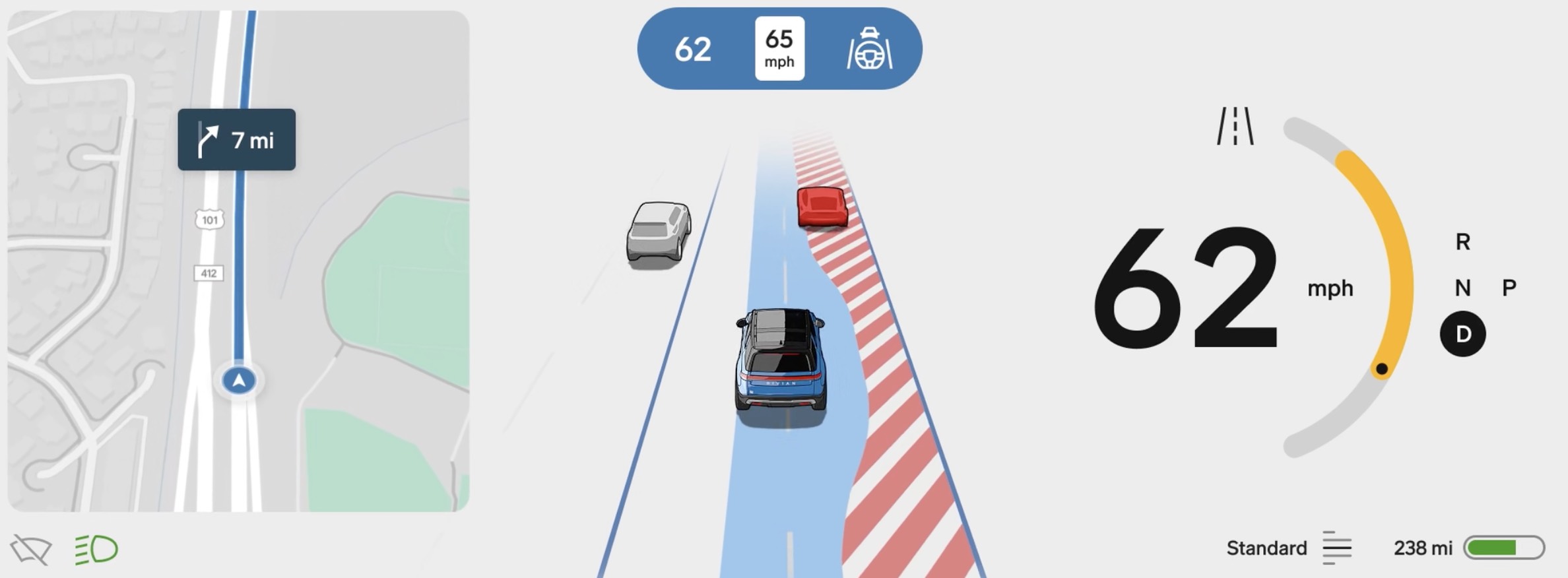
Gen 1 Driver+ still works, and I fully expect it to continue working as-is for years. But meaningful evolution, new capabilities, or feature expansion feel increasingly unlikely. We’re not seeing new Driver+ features roll out, and we’re not hearing Roadmaps that include Gen 1 in any meaningful way. Again, Rivian hasn’t said this outright, but you don’t always need an official announcement when the direction is this clear.
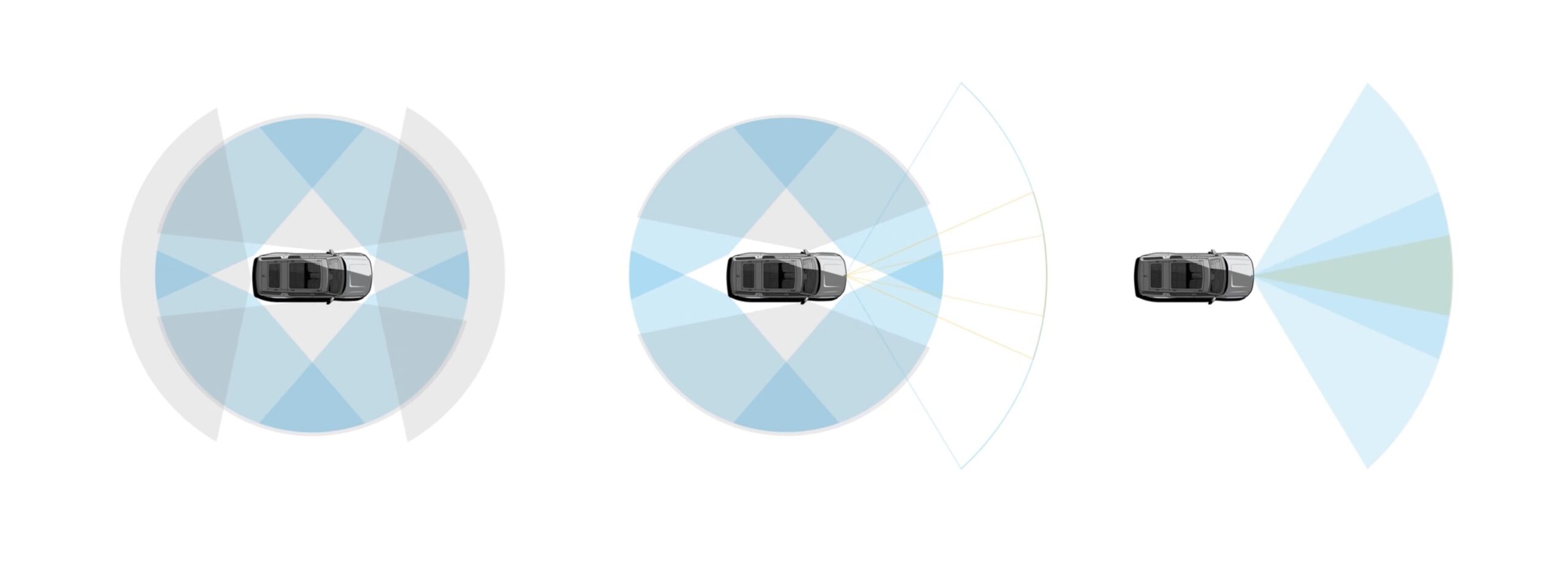
Looking even further ahead makes the contrast starker. R2 is coming, and as Rivian’s first true mass-market vehicle, it will almost certainly rely on the Rivian Autonomy Platform+ or something even more advanced. It simply would not make sense for Rivian to anchor R2 to older autonomy tech. In fact, what we see debut on Gen 2 R1 vehicles may just be the baseline for what R2 eventually becomes.
From Rivian’s standpoint, this approach makes sense. Supporting two fundamentally different autonomy stacks would slow development, increase cost, and dilute focus at a time when Rivian needs to move fast. Betting everything on one scalable platform is the pragmatic choice, even if it’s a painful one for early adopters.
None of this makes the situation any easier for Gen 1 owners, especially those who helped support Rivian in its earliest days. It’s frustrating to feel like your vehicle is being left behind, even if it remains excellent in nearly every other way. But as Autonomy Day approaches, I think expectations need to be realistic. The future of Rivian autonomy will be framed around Gen 2, and beyond that, R2.
Again, this is just my read on the situation based on Rivian’s actions, not an official statement from the company. But sometimes, the direction a company is heading is clear long before it’s ever put into a press release.
Gen1 started rolling out in late 2021. That’s now a 5 year old tech platform (and older since dev was years prior) Expecting continuous support on legacy products is neither realistic nor the industry practice in nearly ALL industries. (Apple is ~7 years on their hardware for example.) The only reason we even debate this nowadays is that it is actually possible. No one who purchased a car in 2015 was complaining that say, Honda, wasn’t giving them upgrades on a regular basis. What you purchased was THE product. IT’s more grey now as features are announced as “coming later”. I just think this is caveat emptor on any of this tech stuff. While we do not want to encourage rampant “planned obsolescence ” for the sake of profit, it is a thing in these industries. Vehicles age our and require replacement allowing companies to remain in business.
Absolutely common sense. Trying to maintain backwards compatibility is costly, time consuming, and limits new development. Witness what it takes for Microsoft with Windows.
Easy for me to say as a Gen 2 owner but I know there is a Gen 3 coming.