
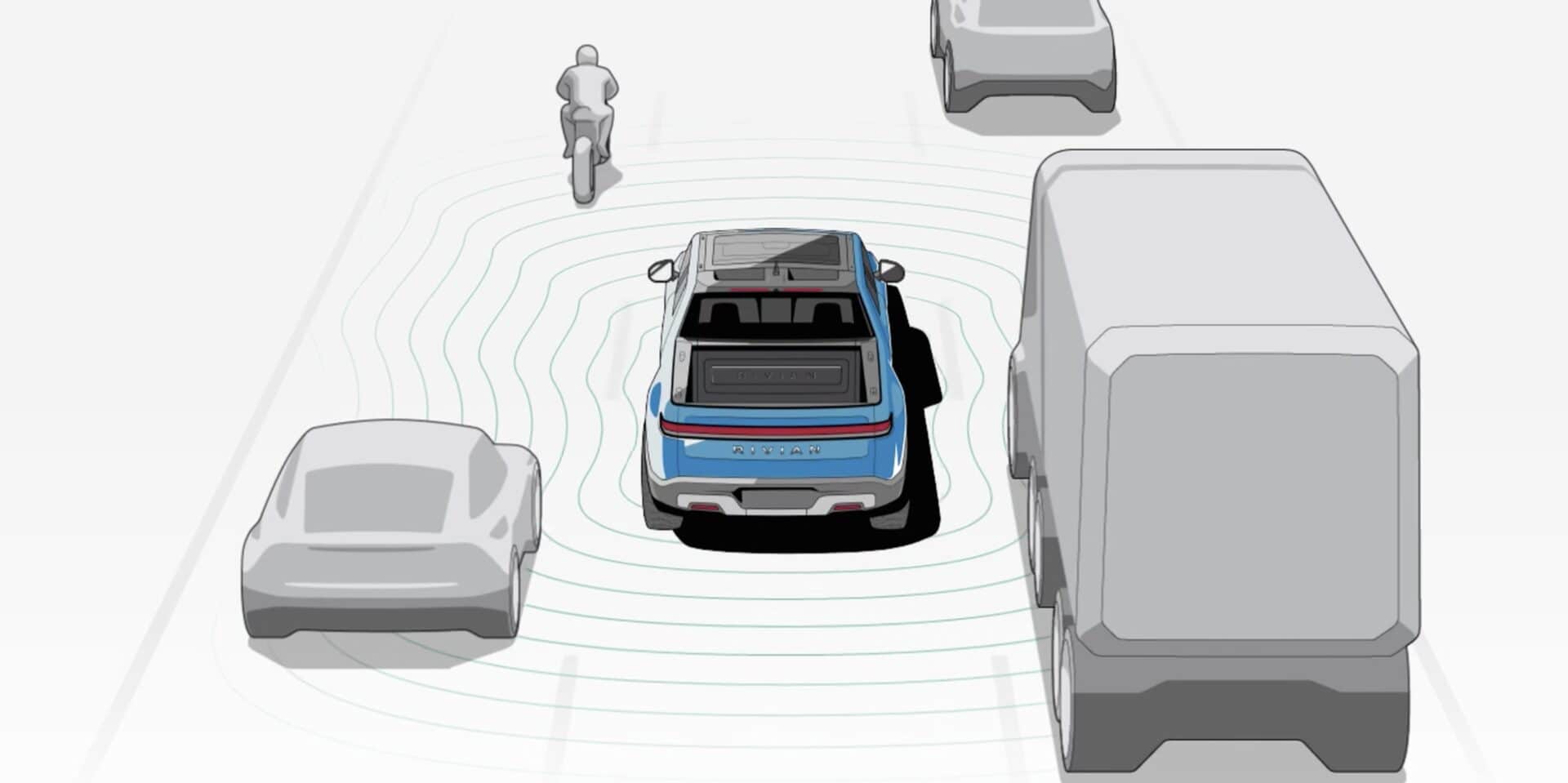
Autonomy is one of the most overused words in the auto industry. Brands throw it around like it is a single feature you either have or you do not, but the reality is a responsibility ladder, and the higher you climb, the more the car takes on, and the less you do.
The clean way to talk about it is the SAE J3016 scale (Levels 0 through 5). It does not grade how confident a system feels, it defines who is responsible for the driving task and who is responsible when something weird happens.
Level 1 is driver assistance. The vehicle can help with either steering or speed control, but not both at the same time. You are driving, it is helping.
Level 2 is partial automation. The vehicle can steer and control speed together in certain situations, but you are still responsible for monitoring the road and the environment. This is the level where most “hands-free” systems live, because hands-free is not the same as eyes-off. If you are still the supervisor, it is still Level 2.
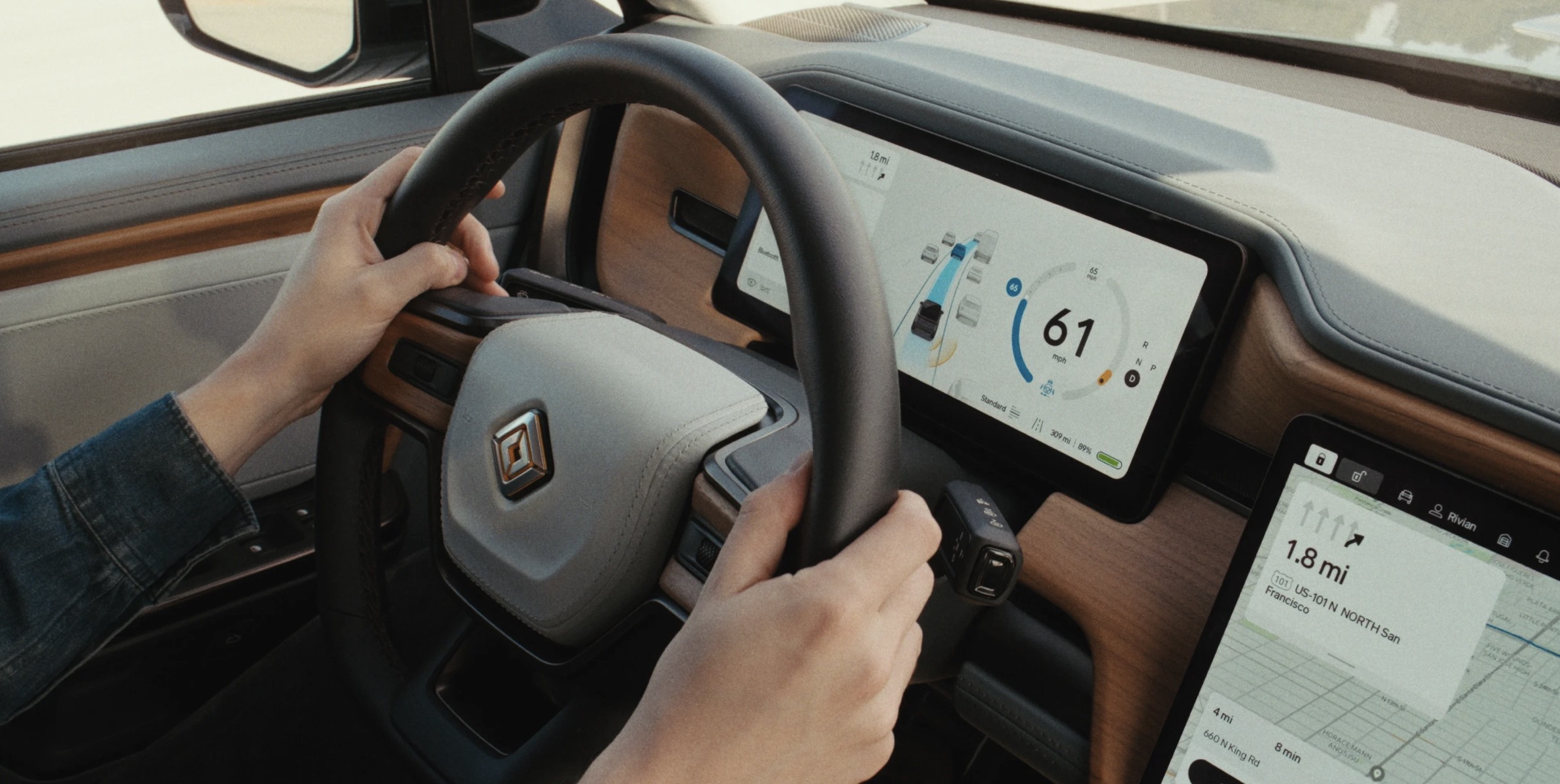
Level 3 is conditional automation. This is the first real shift in responsibility. When the system is active within its allowed conditions, it is responsible for the driving task and it monitors the environment, and it can allow eyes-off. You still have to take over when it asks, but the core difference is that the system is doing the monitoring when it is engaged.
Level 4 is high automation. Within a defined operating area (think specific roads, geofenced zones, certain speeds, certain weather), the system can handle the driving task and handle fallback on its own. If it cannot continue, it can get itself to a minimal-risk condition without expecting you to save it.
Level 5 is full automation everywhere, all the time. No domains, no limits, no “only on these highways.” Nobody is delivering this in consumer vehicles today in any real, general way.
So where is Rivian right now?
Rivian today is a Level 2 company, and that is not an insult, it is the reality for basically every mainstream automaker selling advanced driver assistance to consumers. Rivian’s current and near-term feature set is built around driver support:
- Universal Hands-Free
- Co-steer
- Lane Change on Command
- Plus features like Auto Parking that Rivian is explicitly framing as part of the Autonomy+ bundle
Rivian has also made the Autonomy+ plan very clear: it is a paid package priced at $49.99/month or $2,500 one-time (tied to the vehicle), with charging starting in February 2026.
Here is the part I want Rivian owners to keep repeating to friends at stoplights: Universal Hands-Free is still Level 2. It is hands-free assisted driving on supported roads, while Driver Attention Detection is making sure you are looking at the road. That “eyes on road” requirement is the whole tell. It is a driver assist system that reduces workload, not a system that takes responsibility.
And Rivian is being pretty honest about the boundaries. Autonomy+ is built around well-marked roads and it is not pretending to be a point-to-point robot driver today.
Where is Rivian heading?
Rivian’s Autonomy and AI Day messaging was not “we are shipping Level 4 next week.” It was “we are building the stack, the compute, and the sensor strategy to get there.” Rivian openly talked about aiming toward Level 4 capability long term, and Reuters summarized the company’s direction as targeting Level 4 autonomy, where vehicles can operate without human input under certain conditions.
The most important part of Rivian’s strategy is not one feature, it is the platform change: in-house autonomy compute (Rivian Autonomy Processor), a software foundation they describe as a Large Driving Model, and a move toward more sensing redundancy including LiDAR on future vehicles like R2. That is the blueprint you would expect if a company wants to graduate from “good Level 2” to something that can credibly chase Level 3 and Level 4 over time.
Rivian also made a really interesting point about LiDAR and “ground truth” data for training and validation. Rivian frames LiDAR as a way to produce detailed 3D spatial data and redundancy, and specifically calls out how it can help make the R2 fleet a much larger ground truth fleet. That is a very Rivian way of saying, “more vehicles collecting better truth data equals a faster learning loop.”
My take is that the next couple of years are going to be the most confusing era for owners, because Level 2 will keep getting better and feel more magical, while still demanding that you stay mentally in the driver seat.
Rivian is clearly trying to do two things at once. First, make Level 2 feel premium and useful (hands-free on millions of miles, smoother lane changes, better highway behavior). Second, lay the groundwork for the harder leap, where the vehicle is not just controlling the car, it is responsible for monitoring the environment and handling more of the “what if” moments.
If Rivian delivers “eyes-off” capability in a meaningful, legal, safe way, that is where the conversation changes, because eyes-off is the psychological marker that separates “this is helping me drive” from “this is driving, and I am the fallback.” Until then, I think Rivian is doing the right thing by not overselling what it is today. Autonomy+ is a serious upgrade to driver assistance, and it is exactly where a company should be if it wants to climb the ladder without tripping on hype.



What are your thoughts on the current Gen2 hardware stack for Level 3 and Level 4? I personally don’t think they’re going to release Eyes Off for Gen 2.
Love this article. Explains so much and helps me understand autonomy.
Just get a Tesla if you want eyes and hands off driving..I’ve been driving my model y for over 5k miles with not even touching the steering wheel or the brake. Just enter my destination seat back and enjoy the scenery and let you choose how to park when it reach it’s destination.
Not so sure about your eyes OFF and hands OFF comments. I’ve been driving FSD and there are times it would certainly crash if I wasn’t there to take over. The sun at the right angle and time of day/season along with a little hill will make it throw the red hands on steering wheel and give you less than a second to take over type of warning. Remember Tesla takes zero responsibility if you attempt eyes OFF and hands OFF in the “Full Self Driving”.
Be careful with your Tesla and eyes off. It is only level 2 hands off at best.
So does Level 2 include stopping at stop signs and stop lights hands free?
Not turning, just stopping then going straight.
Will Rivian’s Autonomy+ that costs $$ include this or will it just be what we have now?
That’s kind of the interesting thing right now; Level 2 has such a wide margin of capabilities between manufacturers. Someone may say that Tesla and Rivian are comparable because they both have Level 2 systems, but a Tesla can drive you from start to finish, turning, starting, stopping, maneuvering, reading and obeying signage, and so on, while a Rivian currently can only maintain driving on a road or highway, not obeying traffic signals or signs, and only traveling based on road lines and other cars around you. I’m sure that Rivian’s goal is to be where Tesla is now, and I expect they will be eventually, but the big question is when they will get there. In the end, both Rivian and Tesla’s systems are still considered Level 2, but that doesn’t make them equal. Jose makes a great point in saying “My take is that the next couple of years are going to be the most confusing era for owners, because Level 2 will keep getting better and feel more magical, while still demanding that you stay mentally in the driver seat.” It already is a confusing era for drivers in general because of the vast differences in Level 2 systems.
Extremely well written and informative.
“Rivian has also made the Autonomy+ plan very clear: it is a paid package priced at $49.99/month or $2,500 one-time (tied to the vehicle), with charging starting in February 2026.”
Does this mean that they are going to offer free charging at RAN stations as part of the subscription?
No, charging will not be included.
Full self driving. Right up there with solid state batteries with 800 mile range. Eternal vapor ware.