
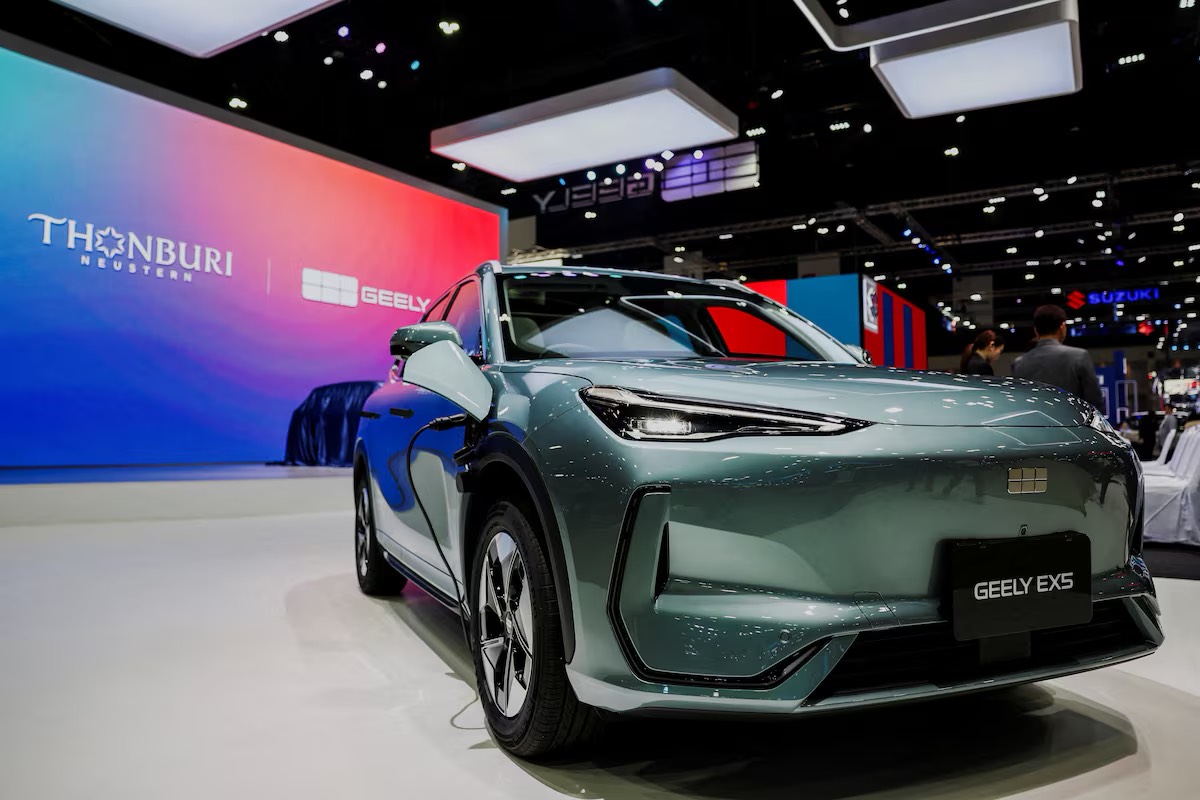
RJ Scaringe thinks Chinese automakers will eventually sell cars in the U.S., and he told The New York Times that tariffs are the main thing keeping the playing field level until then. His words were that “in the fullness of time, China will likely be able to sell here.”
RJ was clear that China’s price advantage comes down to cost. Labor is cheaper there, capital is cheaper and sometimes provided by the government outright, and even electricity and utilities cost meaningfully less than they do here. He framed tariffs as the way a country decides whether it wants to keep an industry at all, and said that if they go away, a lot of manufacturing capacity is going to move to China. He also thinks it’s one of the rare issues where the right and the left actually agree.
RJ said he’s raised over a billion dollars for Mind Robotics, his separate robotics company, to build “humanoid-ish” machines that work alongside people on the assembly line, with the goal of shrinking the labor cost gap that tariffs are covering for today.

For owners and shoppers, this matters more than it might seem. Chinese EVs are effectively blocked from the U.S. right now, and if you’ve seen what BYD sells overseas for the money, you know that competition would put real pressure on Rivian’s pricing. R2 and the upcoming R3 are Rivian’s answer on affordability, but they’re being priced in a market where the cheapest competition isn’t allowed in.
Jose’s take
I agree with RJ that we’ll see Chinese EVs in the U.S. at some point, and honestly, I think it’ll be a kick in the butt that American EV makers and legacy OEMs need. Tariffs buy time, but they don’t make anyone build a better or cheaper car, and competition from brands that can do both at half the price would force everyone here to move faster, Rivian included. That’s why I think Mind Robotics matters just as much as whatever R3 ends up costing, because Rivian will need both to be ready when that day comes.



Ford and GM already sell Chinese-made cars in the US, to the ignorance of the anti-China crowd. And both have long standing partnerships in China with Chinese brands. No reason they wouldn’t sell EVs made under such partnerships. Only thing barring that from happening is politics and greasing of the official wheels.
I agree! Keeping manufacturing on US soil is less about job creation and more about securing national independence. Temporary protective measures, such as tariffs, are acceptable only if they serve as a short-term bridge. To truly compete in an open market, the future of US car manufacturing must be fully automated, driven by advanced robotics, artificial intelligence, and more affordable energy solutions.