
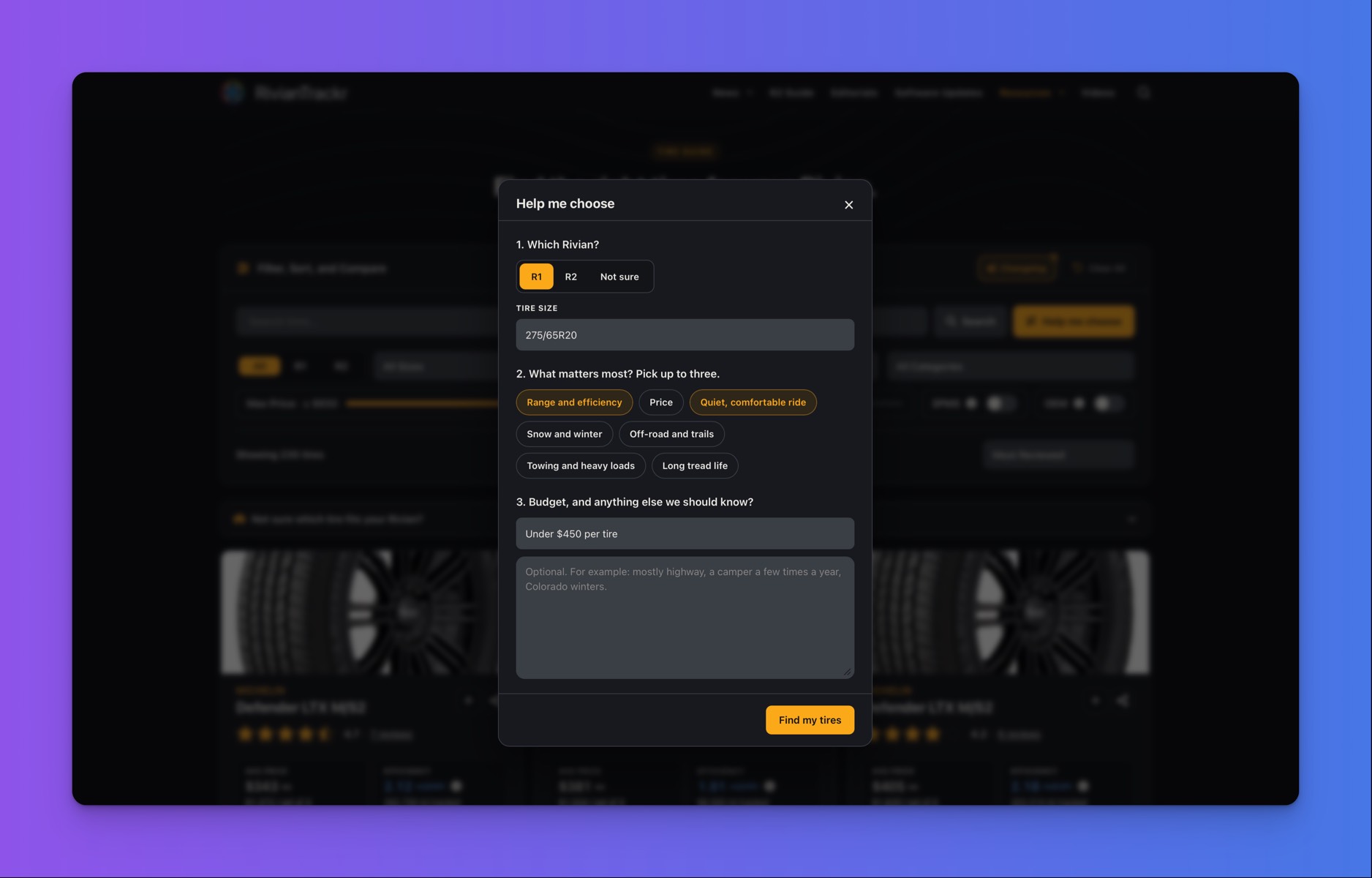
There’s a new button next to Search on the Tire Guide called “Help me choose.” Three questions, and it comes back with up to three tires that fit your truck, each with a reason and a trade-off.
It asks which Rivian you drive, with whatever you already picked in the filters pre-selected and the option to lock a specific size. Then what you care about, up to three out of seven, covering range and efficiency, price, quiet ride, snow and winter, off-road, towing, and tread life. Then budget per tire, plus a small box if you want to add context like “mostly highway, tow a camper a few times a year, Colorado winters.”
Filtering happens before anything else. Only tires that fit your stock or alternate sizes, and only tires that clear the minimum load index, 116 on R1 and 112 on R2. Anything under that never becomes an option. That check matters more than it sounds like it should, because plenty of tires sold in Rivian sizes come in under the minimum and no retail site is going to stop you from buying one.
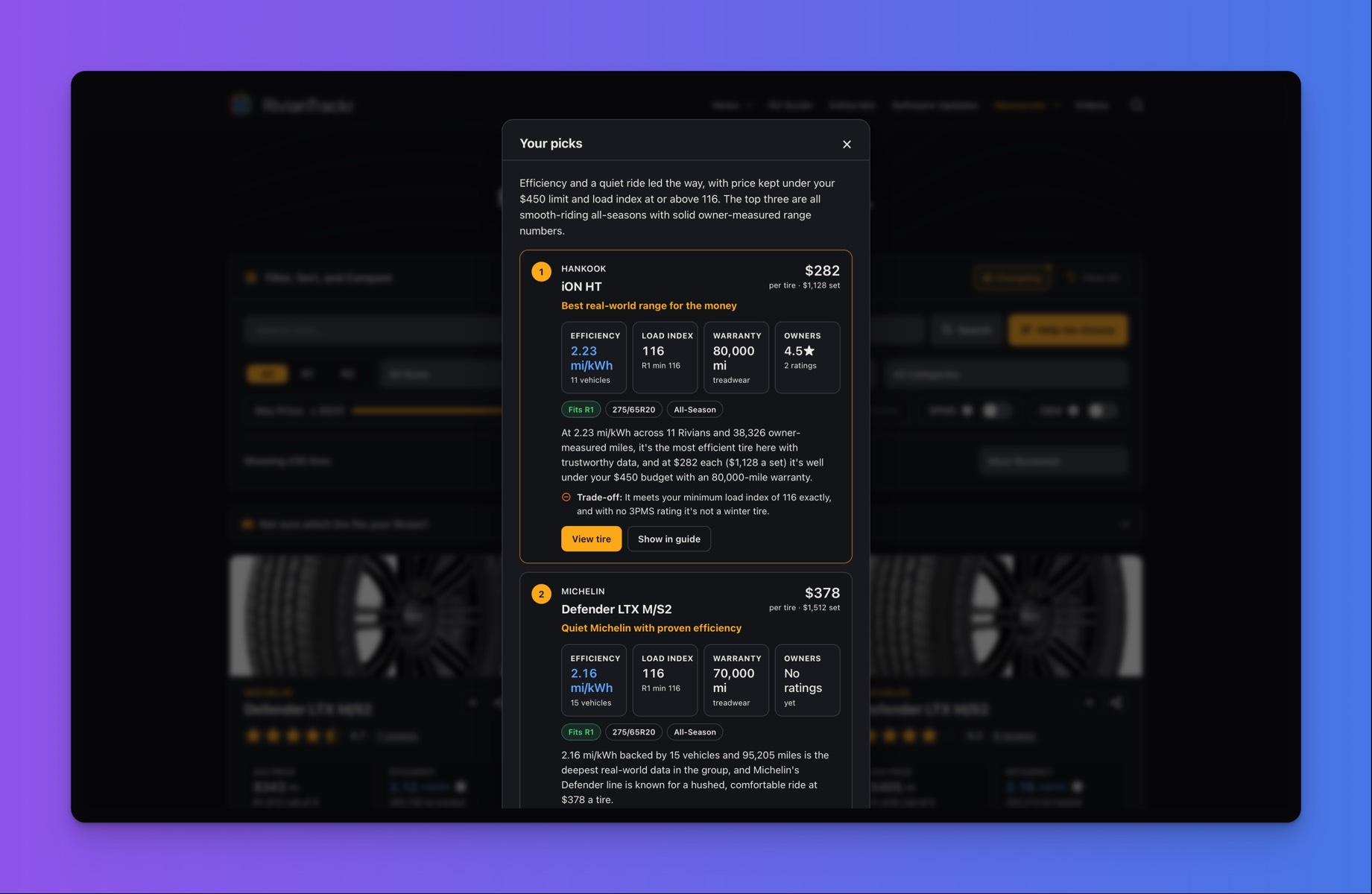
What survives gets scored by the guide’s own rules, one score per priority you picked, plus a small bump for owner ratings. The top twelve go to Claude with real numbers attached, including price, load index, mileage warranty, 3PMS rating, and Rivian Roamer efficiency with the sample size next to it. Claude writes the three picks. Then the guide checks each one back against the candidate list and drops anything that isn’t a real fitting tire. Prices and efficiency on the final cards come from the catalog, never the model. It can’t invent a tire or a price.
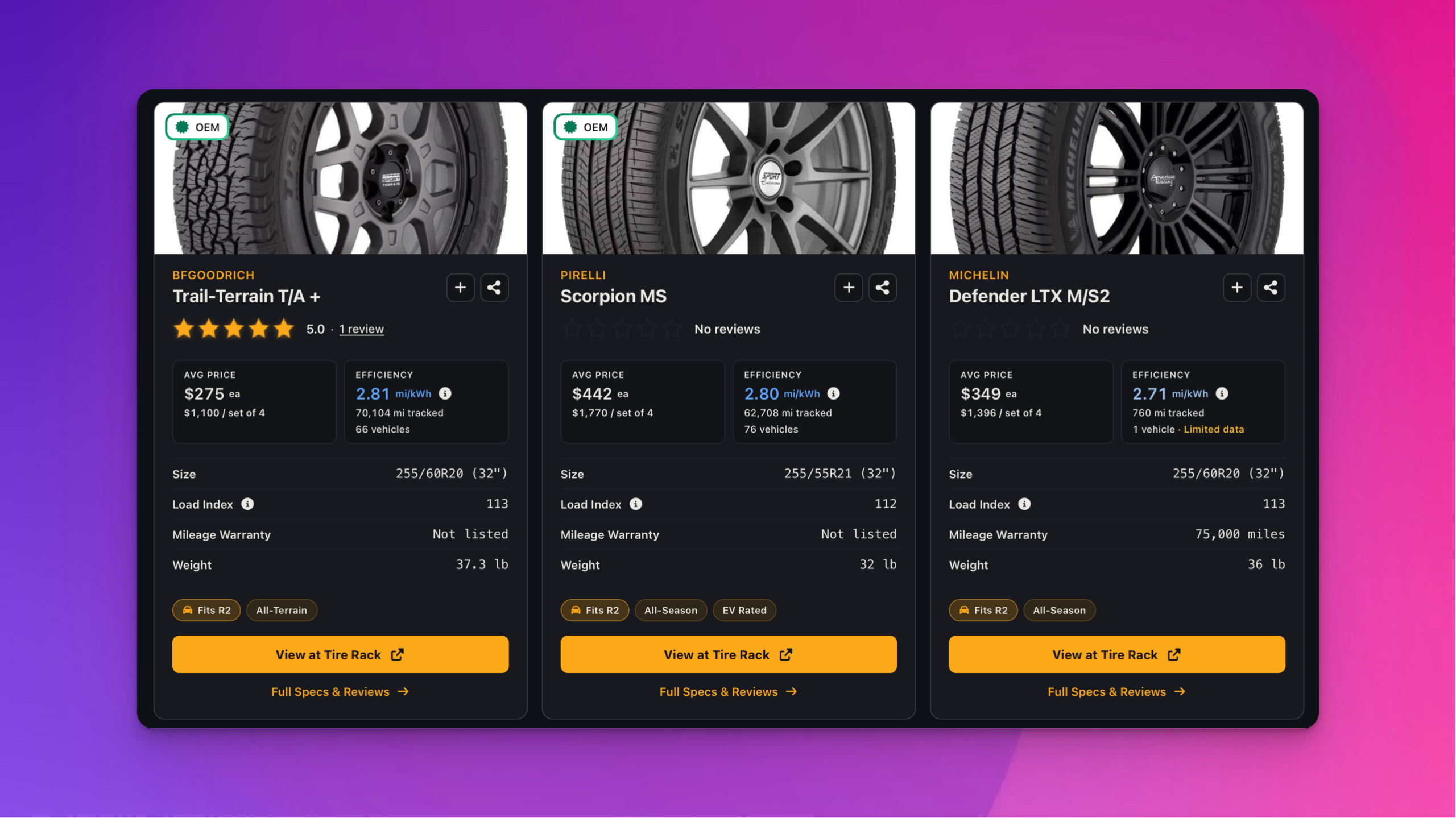
Each pick shows brand and model with a one-liner on why, price per tire and per set of four, then tiles for efficiency with the vehicle count behind it, load index against your minimum, warranty, and owner rating. Chips for fitment, size, category, 3PMS. Under that a short reason built on the numbers, the trade-off, and buttons to view the tire or jump to its card in the guide with your filters applied.
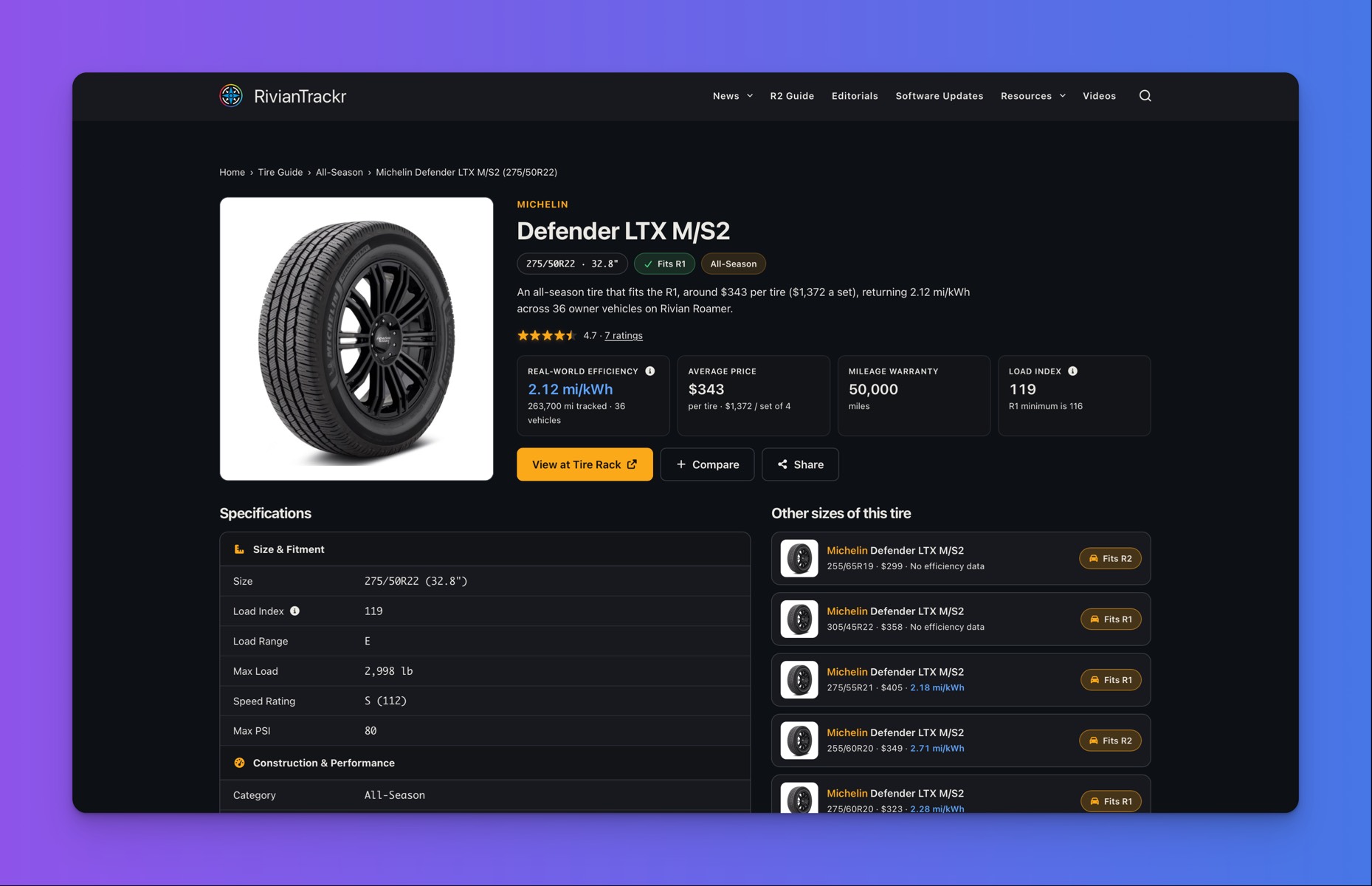
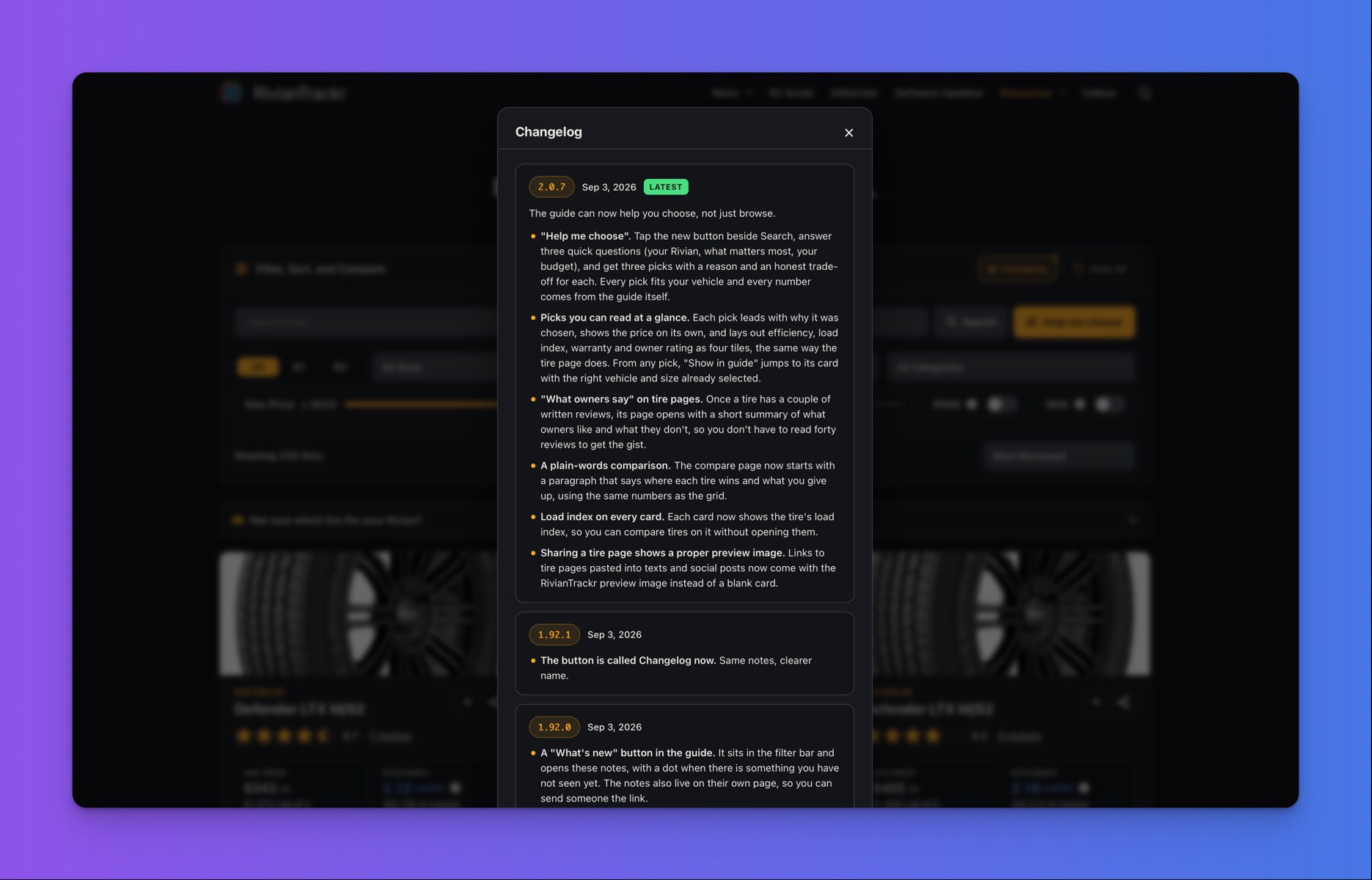
A few other changes went out with it. Tire pages get a “What owners say” summary once a tire has a few written reviews, no names involved. The compare page opens with a plain paragraph on where each tire wins and what you give up. The spec and review page got a redesign so the information is easier to read at a glance instead of hunting through it. And there’s a changelog now, so you can see what’s been added or fixed in the guide without having to spot it yourself.
Efficiency data is thin on some tires, so small samples get flagged and empty ones say no data. Answers cache for a day. And it only knows what’s in the guide, so if nothing fits, it says nothing fits rather than stretching to fill three slots.