
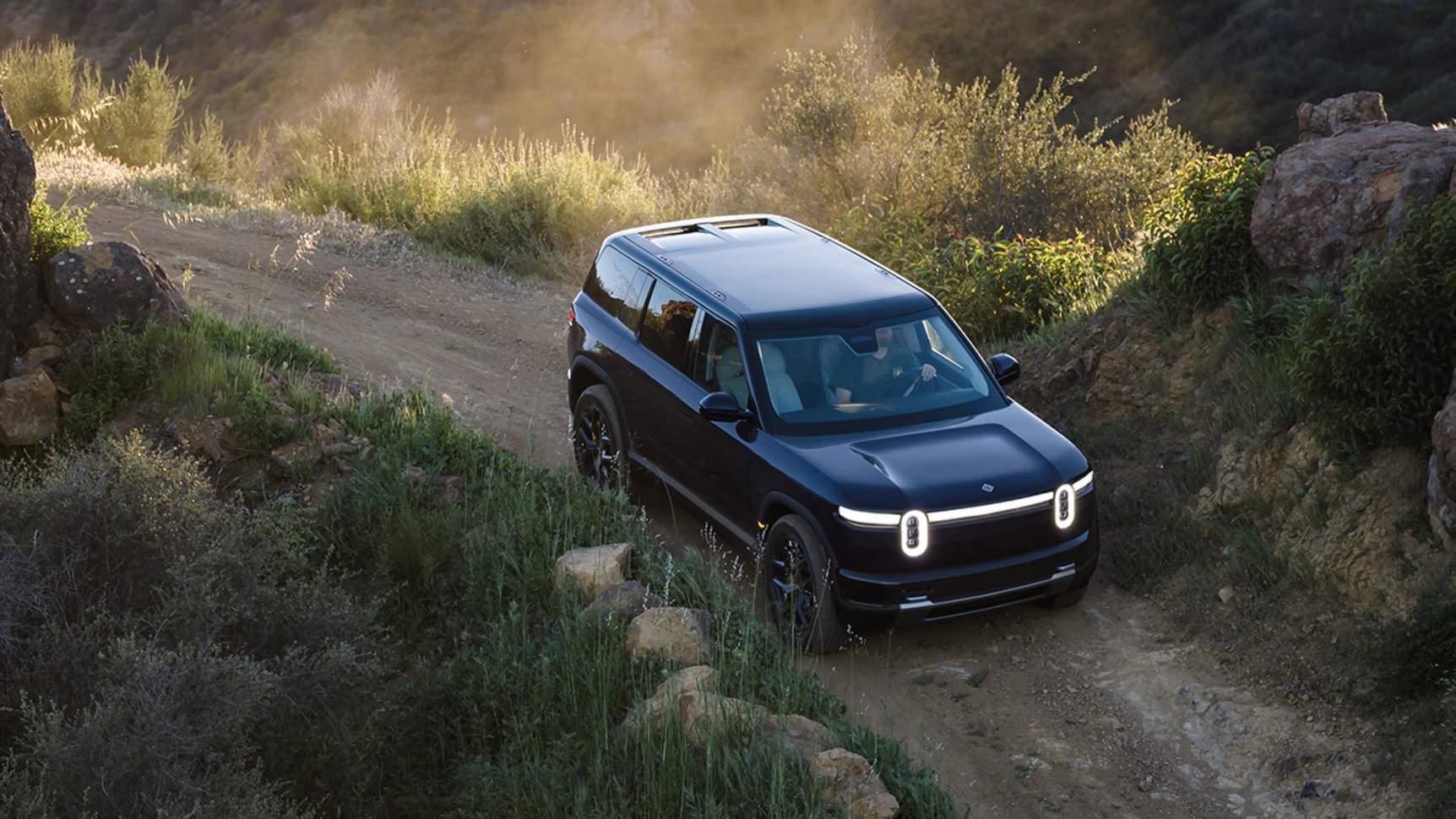
Rivian says the R2 has already hit the company’s 2030 carbon goal, cutting its lifecycle carbon footprint in half compared to the R1S Launch Edition, and it got there four years early.
Rivian published the numbers in its R2 Circularity, Energy, & Carbon Footprint report, which is the first lifecycle assessment in the industry to follow the new SAE J3341 disclosure standard. I haven’t gone through the methodology myself, so treat this as Rivian’s math for now.
Most of the gain comes from R2 being smaller, lighter, and more efficient, but I found the materials more interesting, with floor mats made from 99% ocean waste, interior textiles made from Nordic paper-industry leftovers, and a frunk and trim that are 85% post-consumer recycled material.
The owner-facing stuff hasn’t changed. Rivian still matches the first 10,000 miles of every delivered vehicle with renewable energy, and the smart charging software keeps shifting home charging to cheaper, cleaner off-peak hours automatically.



there is an error in the Roamer software app. it indicates that my FR window is open, and it is not open..
Peter