
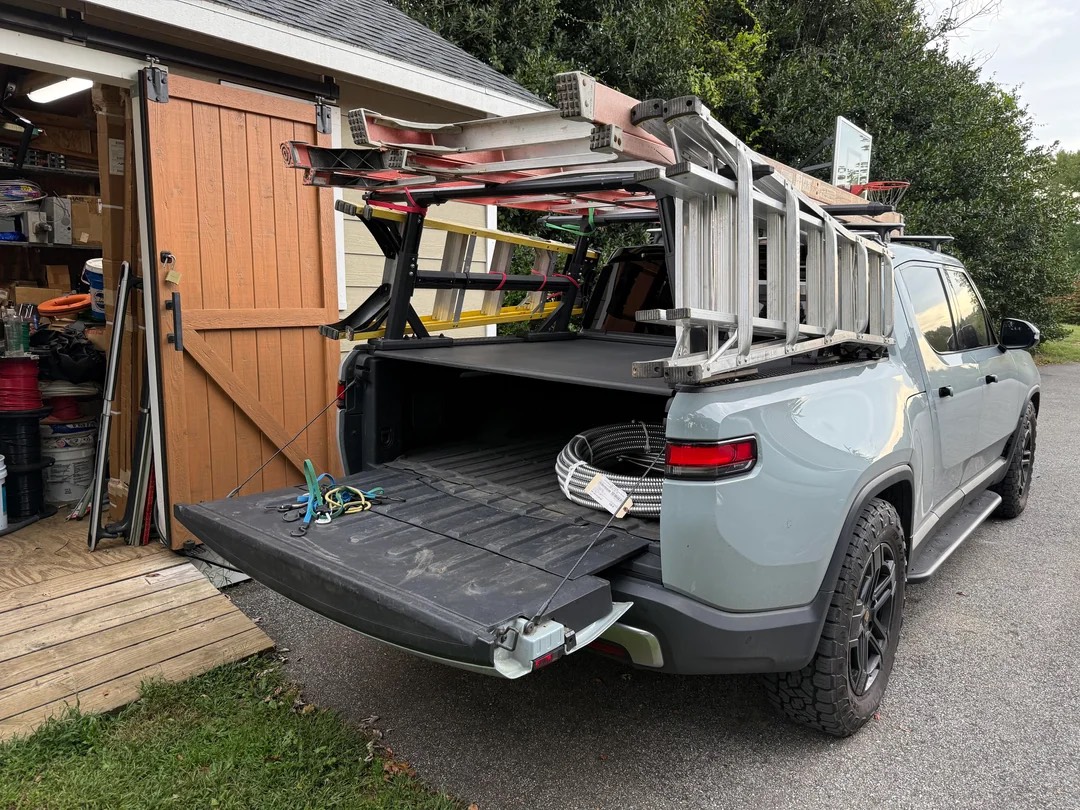
The Rivian R1T is one of the most capable trucks on the road today. Quad motors, adjustable air suspension, gorgeous interior, clever storage everywhere. It’s a technological flex. But it’s also very clearly positioned as a premium lifestyle truck and that leaves a massive opportunity sitting wide open.
Rivian needs a base level R1T work truck.
Not a stripped down version that feels cheap, but a purpose built one that embraces utility over luxury. Think durable cloth or marine grade seating instead of vegan leather. Fixed ride height with steel springs instead of air suspension. Smaller wheels with affordable, long lasting tires. No glass roof, no fancy trim, no unnecessary complexity. Just the essentials, built to work.
Right now, the R1T starts at a price point that puts it out of reach for a lot of contractors, fleet operators, and small business owners. These are exactly the people who benefit the most from an electric truck. Lower operating costs, less maintenance, quiet operation on job sites, and instant torque when hauling tools or towing equipment. But they don’t need quad motors or a panoramic roof. They need reliability, durability, and affordability.
Ford saw this opportunity early with the F-150 Lightning Pro. It was designed specifically for fleets and work use, and it quickly found its way into utility companies, municipalities, and contractor fleets across the country. One of its standout features wasn’t speed or luxury, it was power. Multiple 120V and 240V outlets in the bed and frunk turned the truck into a mobile generator. You could run saws, compressors, welders, lights, or even power an entire job site directly from the truck. For many workers, it wasn’t just transportation, it became part of their toolkit.
But now, Ford has made the decision to cancel the Lightning, marking a clear shift in their EV truck strategy and that creates an opening Rivian is uniquely positioned to fill.
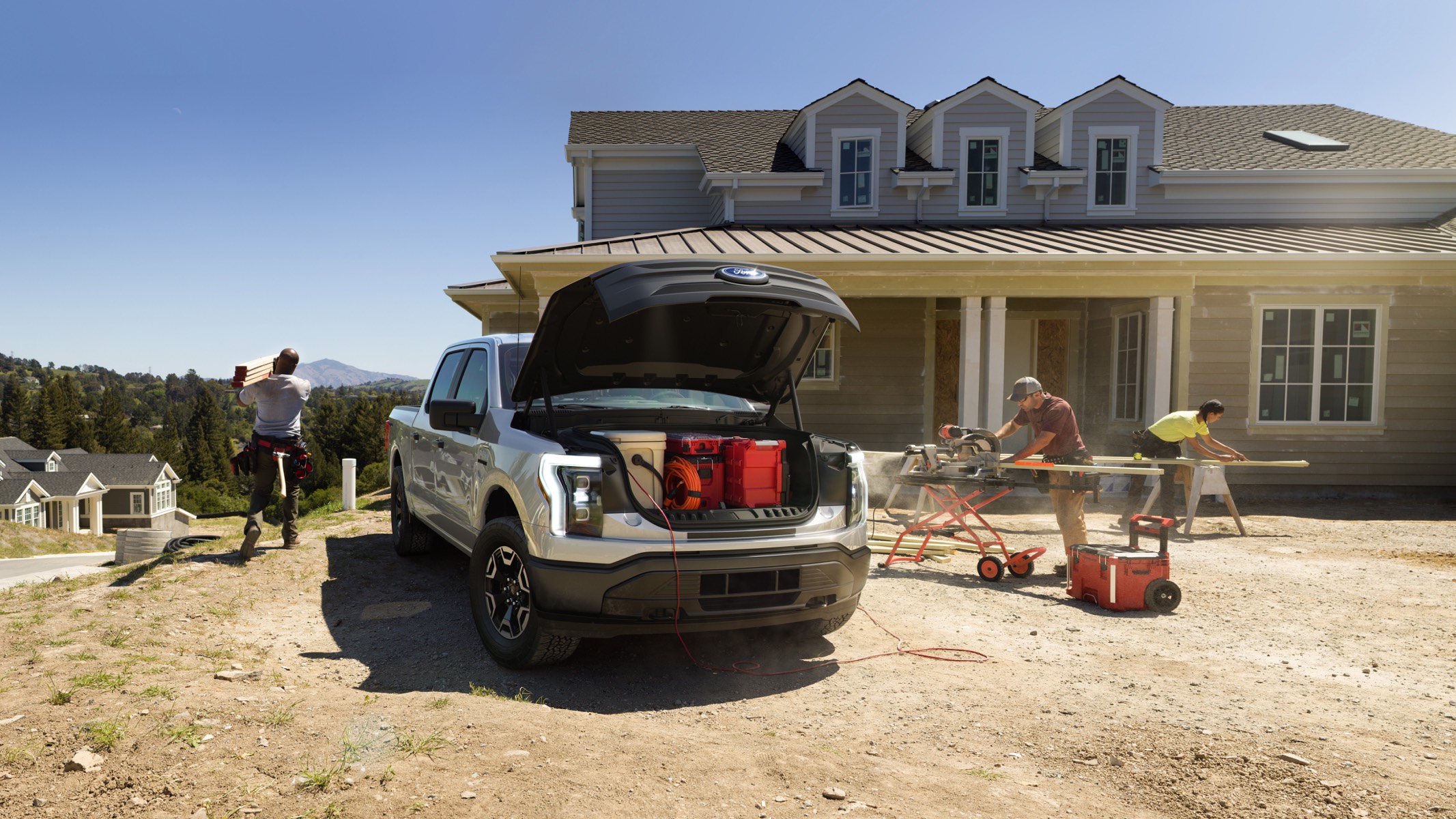
The R1T already has onboard outlets, but a dedicated work truck variant could take it further. More bed mounted outlets. Easier access. Higher output options. Maybe even configurable power packages depending on the job. Imagine showing up to a site and plugging everything directly into your truck without dragging around a generator. No fuel, no noise, no maintenance. Just silent, instant power.
This is where EV trucks have a massive advantage over gas trucks, and Rivian could lean into it hard.
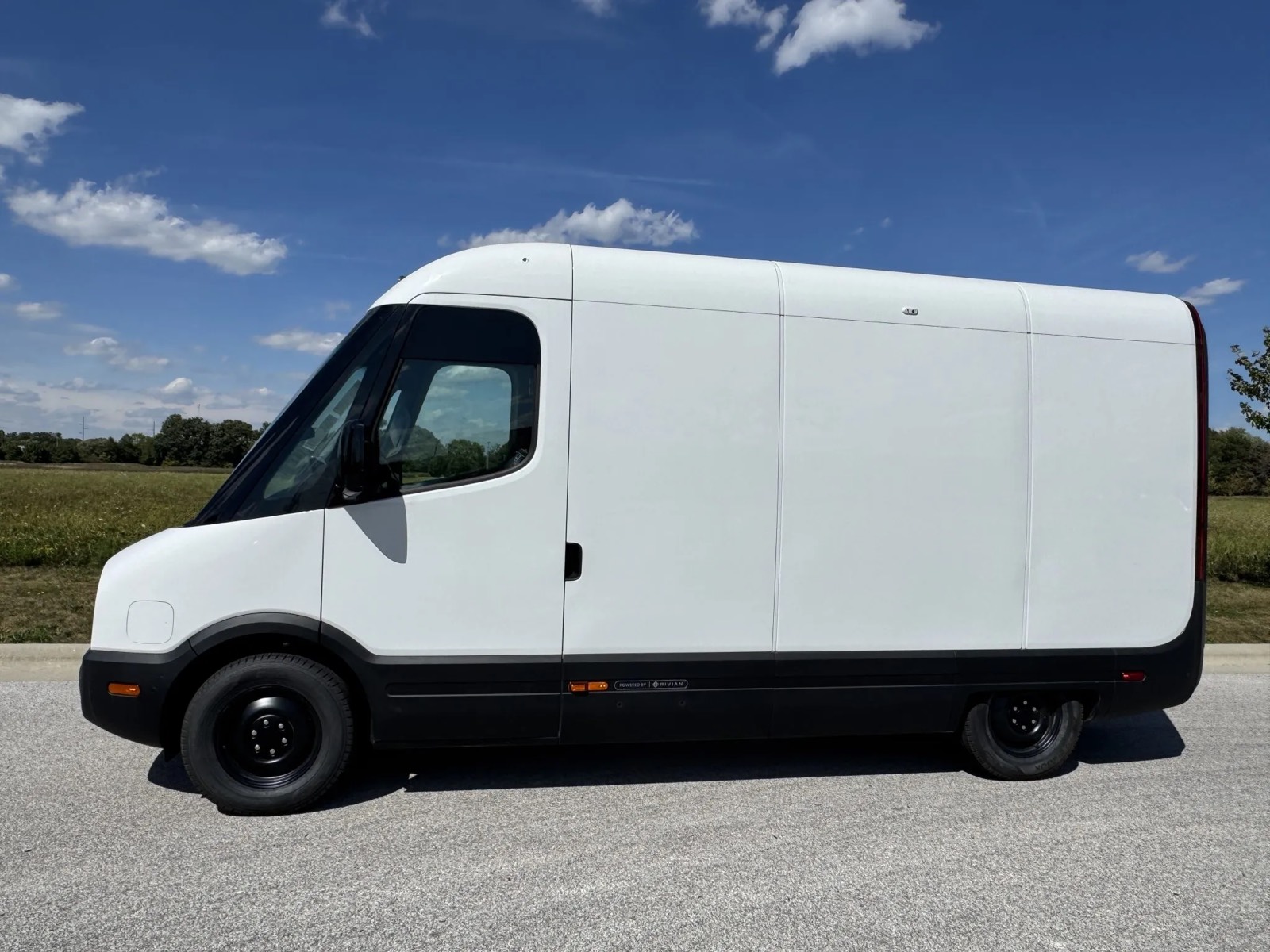
Rivian already proved they can build a true work vehicle with the Commercial Van. Amazon didn’t ask for walnut wood trim and ambient lighting. They asked for something durable, efficient, and functional. Rivian delivered. And now those vans are quietly becoming one of the most important pillars of Rivian’s business.
There’s no reason that same philosophy can’t apply to the R1T.
In fact, it might be more important now than ever. With the R2 on the horizon and clearly targeting a lower price point, Rivian is already thinking about scale and accessibility. A work truck variant of the R1T could serve as a bridge, bringing in a completely different kind of customer. Not the early adopter enthusiast, but the person who depends on their truck to make a living.
It would also strengthen Rivian’s identity. Rivian talks a lot about adventure, but adventure isn’t just camping in the mountains. For a lot of people, adventure is starting a business, building something with your hands, showing up every day and getting the job done. A work truck speaks directly to that.
There’s also a long term strategic benefit. Fleet sales are sticky. Once a company adopts a platform, they tend to stick with it. Charging infrastructure, service familiarity, parts, training. It all adds up. Winning fleets early could lock in years, even decades, of loyalty.
And let’s be honest, there’s something undeniably cool about a no nonsense Rivian work truck. Steel wheels. Simple interior. Rubberized floors you can hose out. Extra outlets ready to power whatever you throw at it. It would feel like a tool, not a showpiece. And in a weird way, that might make it even more appealing.
Rivian has already built the hard part. The platform exists. The motors exist. The battery exists. This isn’t about reinventing the truck. It’s about offering a version that removes barriers instead of adding features.
Not everyone needs the ultimate Rivian, some people just need the right one and right now, Rivian has a rare opportunity to step in and define what the electric work truck should look like.
Hero image sourced from u/Charlie-Mops



Meanwhile:
https://driveteslacanada.ca/news/tesla-cybertruck-to-join-florida-fire-department-as-brush-truck/?utm_source=rss&utm_medium=rss&utm_campaign=tesla-cybertruck-to-join-florida-fire-department-as-brush-truck
That’s unfortunate.
Maybe. There is a reason why Ford walked away from the Lightning. Cybertruck sales are also cratering. Majority of the Scout preorders are for EREV platform. Hard for full EV trucks to compete.
I do like the idea of an R1T work truck. I think that the bed would need to be longer. Put in a downgraded but tough interior and I think Rivian would have a winner on their hands. Just my 2 cents.
Jose, quick question. Is Rivian moving to bi-monthly software updates instead of monthly now? Based on the last couple, it seems like that might be the case. I was expecting to see an update announcement for January, so just wanted to check if you’ve heard anything.
Rivian really needs to solve their lack of owner right-to-repair on all of their existing vehicle before before going after the work truck market.
Nobody is going to buy a work truck they can’t change a 12v battery in without a service center appointment in 6 months.
I think it is a bigger effort than it might first appear. Need to remove the air suspension to reduce costs which then means all new wiring harnesses, different control modules and different software. A very different platform under the skin.
I like this idea, and it makes a lot of sense. It would also allow Rivian to allow a single-motor variant since most work trucks are 2WD, which would further lower the price. To be successful though, Rivian would likely need to get rid of the center touchscreen. Work truck buyers want knobs that they can operate with gloves on (as would a few non-WT buyers, I’m guessing). Touchscreens make that difficult. WT users also tend to use glove boxes, which the R1T doesn’t have. It would also make sense to take the opportunity when developing a WT model to get rid of the idiotic electronic door handles and go back to mechanical ones.
I dont think Rivian should focus on a work truck. Work trucks are largely a U.S.-specific thing. In many other markets (Europe, Asia) businesses such as catering, roadside assistance, landscaping, and roofing primarily use vans rather than trucks. Vans can offer comparable payload capacity, and off-road capability is rarely a requirement for these use cases.
Given that Rivian already produces a commercial van and is looking to expand into international markets, it would make more sense to double down on the van platform.
Additionally, many small business owners in my area (Utah) who do drive trucks tend to own high-end models, such as well-equipped F-250s that already cost $70k or more. These vehicles are often purchased to serve both work and personal use, not as dedicated work vehicles.