
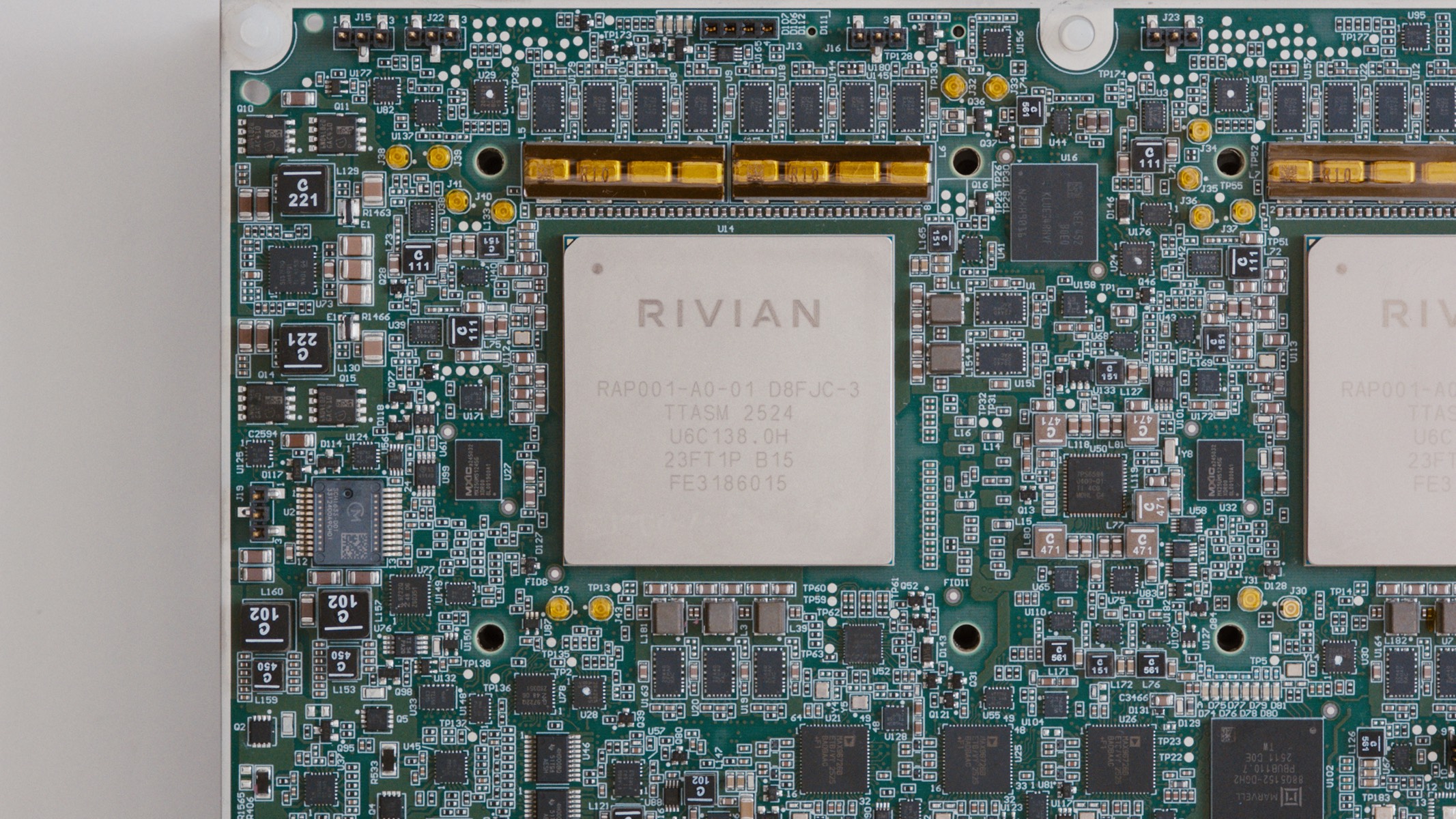
Rivian made a big decision when it chose to build its own autonomy stack instead of buying something off the shelf from NVIDIA. On the surface, buying a proven platform like NVIDIA DRIVE or even Tesla Full Self-Driving might have looked faster or safer. Long term though, Rivian’s choice to own the full autonomy stack looks like exactly the right move.
The reason is simple. Autonomy is not just another feature checkbox. It is the roadmap.
When a company outsources the brain of the vehicle, it also outsources its future. You get what the platform gives you, when it decides to give it to you. That is fine if your goal is basic driver assistance that keeps pace with the industry. It does not work if your goal is to lead.
tl;dr
- Autonomy is the roadmap, not just a feature
- Owning the stack avoids generic off the shelf compromises
- Autonomy+ works long term without paying a platform tax to NVIDIA
- Rivian can iterate faster on its own timeline
- Safety and future LiDAR integration are easier in house
- Custom silicon improves long term control and stability
- You cannot lead if you rent the vehicle’s brain
Rivian has been very clear about where it is headed. With the introduction of its custom autonomy processor (RAP1) and next generation autonomy compute, Rivian is moving toward an AI-defined vehicle where hardware, software, and sensors are designed together. That kind of tight integration is impossible when your autonomy stack is built to work for everyone instead of being purpose-built for your vehicles.
Off-the-shelf autonomy platforms are designed to be general. They need to support a wide range of sensors, vehicle architectures, and performance targets. That flexibility comes with compromises. When Rivian controls the silicon, the compute module, and the software running on top of it, the entire system can be optimized around Rivian’s actual vehicles, thermal limits, power budgets, sensor layout, and safety goals.
There is also a real business angle here. Rivian is getting ready to monetize their advanced driver assistance through Autonomy+, priced at $2,500 one time or $49.99 per month. That only works long term if Rivian can ship meaningful improvements consistently without paying a platform tax to a third party forever. Owning the stack turns autonomy from a recurring expense into a long-term asset.
Iteration speed matters just as much. Modern ADAS progress is driven by training loops, real-world data, and rapid deployment. If every meaningful change requires alignment with a vendor roadmap, progress slows. When Rivian wants to adjust perception models, memory layouts, safety partitioning, or data ingestion paths, it can do so on its own timeline. That kind of control compounds quickly over years, not quarters.
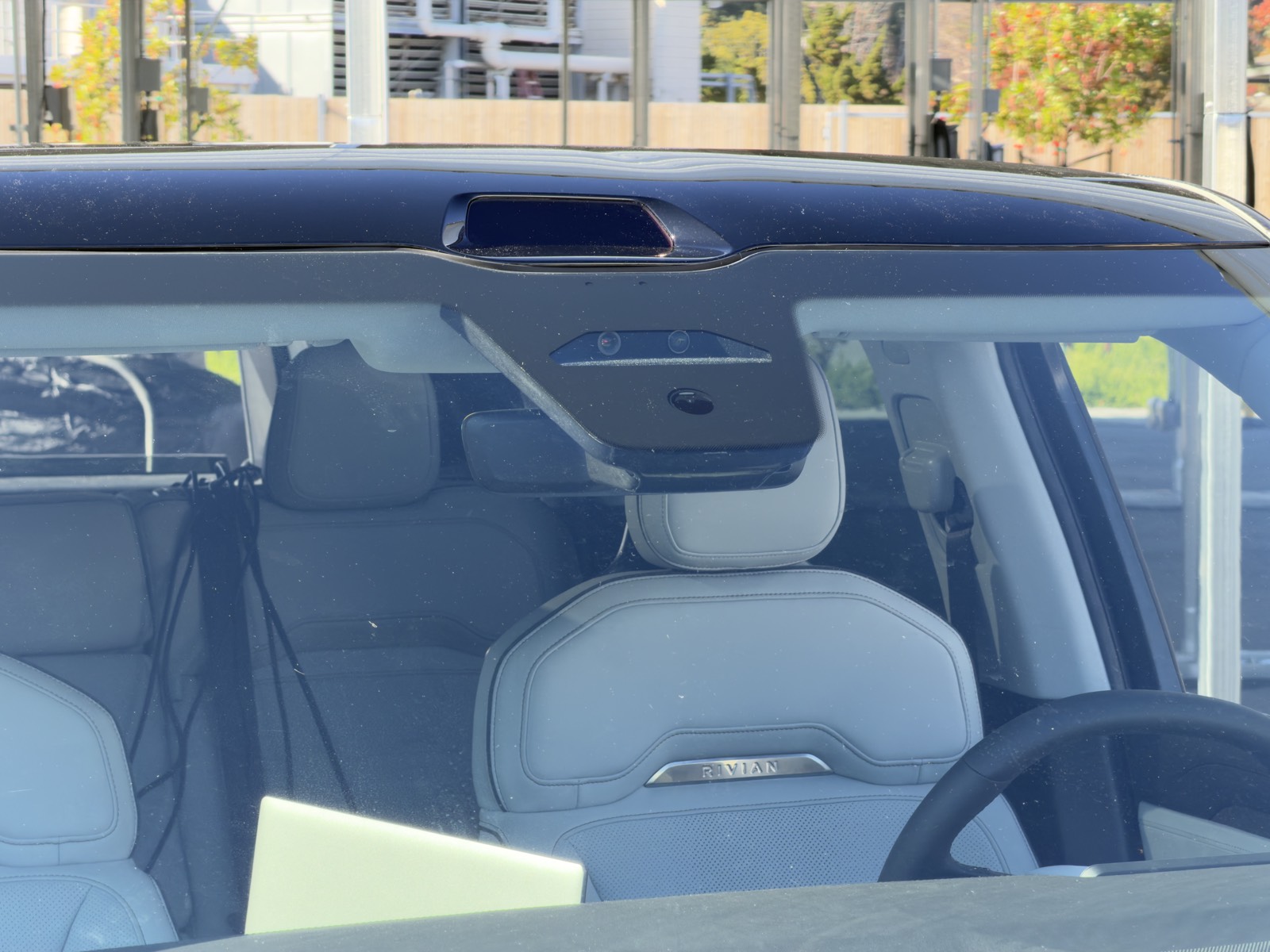
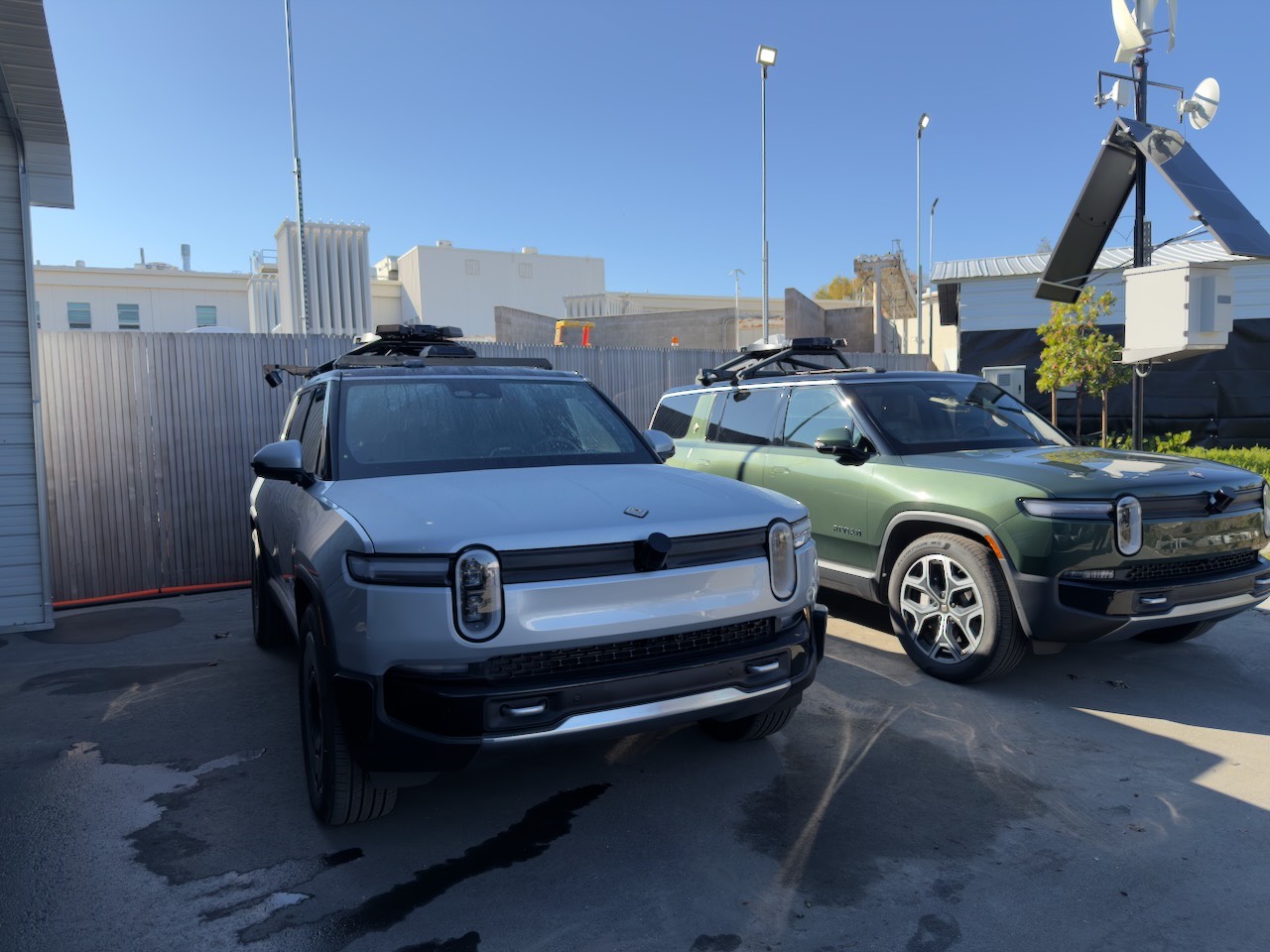
Safety and sensor strategy also benefit from this approach. Rivian has been open about its plan to add LiDAR to the R2 later in 2026. Multi-modal sensor fusion is significantly easier to execute when the compute platform and perception stack are designed as a single system. This is not about chasing buzzwords. It is about building redundancy and confidence into how the vehicle understands the world.
There is also a quieter advantage here, supply chain resilience. Recent years have shown how risky it can be to depend entirely on a single compute supplier’s allocation and cadence. Rivian still partners with foundries for manufacturing, but owning the design gives it far more control over long-term availability and platform stability.
None of this is easy. Building custom silicon and an in-house autonomy stack is expensive, slow, and risky. NVIDIA’s platform exists for a reason, and for many automakers it is the right call. Rivian, however, is no longer positioning itself as a company that just wants to be competitive in ADAS. It wants to own the intelligence layer of the vehicle.
That ambition also aligns with Rivian’s broader strategy, including its software partnership with Volkswagen Group. Owning the autonomy stack makes Rivian more than just a vehicle manufacturer. It makes its technology transferable, licensable, and strategically valuable.
At the end of the day, you cannot compound advantage on someone else’s platform. You can ship on it, you can survive on it, but you cannot lead on it.
If Rivian wants autonomy to be a defining pillar of its future, building its own stack was not just the right move. It was the only move that made sense.


Great insight. A few questions come to mind:
– are any other auto manufacturers taking this approach with autonomy “ownership”, besides Tesla?
– if Rivian successful here, can we estimate at this point what sort of impact that would have on profits?
Great questions.
On the first point, yes, Tesla is the most visible example, but they are not alone. Waymo is obviously doing this end to end, and on the OEM side Mercedes, BMW, and GM are all moving more autonomy work in house, even if they still rely on partners for pieces of the stack. The key difference is depth. Most legacy automakers still depend heavily on suppliers for core perception and planning, while Rivian is aiming to own the full system over time, including compute, models, and vehicle integration. That puts Rivian much closer to the Tesla approach than the traditional OEM model.
On profitability, it is still early, but the impact can be meaningful if Rivian executes. First, autonomy becomes a high margin software product instead of a low margin hardware add on. Autonomy+ at $2,500 one time or $49.99 per month is almost pure software margin once the platform is built. Second, owning the stack avoids long term licensing and platform costs that would otherwise scale with volume. Third, it creates optional upside, licensing the technology, deeper partnerships, or monetizing autonomy features over the life of the vehicle.
The short version, near term it increases costs, long term it improves margins and gives Rivian more control over where profits come from. That is the same bet Tesla made, and it is why this decision matters well beyond driver assistance features.
Great insight! Love following Jose’s updates on Rivian. Keep it up! Thanks.
Appreciate you reading 🙂
I really want Rivian to be successful. I’m excited to see where they go, and their future looks potentially bright. I just hope Rivian can execute their plan in a reasonable amount of time. I feel like time is their biggest enemy now, and potentially funding depending on the success of the R2 and R3. If they can get their platform to the level that Tesla or NVIDIA are at now, say maybe within 2 years, I think they will have great success. But if they’re always playing catch up, and are too far behind, it could greatly hinder their success. I hope the R2 and future R3 are a huge success, and they get their chance to build this platform. It’s a great prospect and I really hope it’s successful.
Could you explain the computer hardware differences between gen 1 R1, gen 2 R1, R2, and the future R2 with lidar and in house silicon? It would be nice to know the limits of capability of my gen 2 R1S as well as the others. I get the sense the LiDAR model will blow everything else out of the water. Thanks!
R2 will launch with gen2 hardware. Gen3 hardware will be incorporated in model year 2027. Gen3 adds Lidar and more processing power. Gen1 = 50 TOPS, Gen2 = 200-250 TOPS, Gen3 = 1,600 TOPS. Compare this to Tesla HW4 at 500 TOPS. Clearly there is a big advantage of in-house design over the NVIDIA chip used in gen2 while also leapfrogging Tesla in terms of processing power.
I hadn’t thought about how OEM’s will have to keep paying companies like nvidia for updates, thanks. It seems likely that Rivian will sell the AI to VW and other European OEM’s. I guess we’ll see how it goes with Mercedes
As an early adopter Gen 1 R1S quad owner, I’ve been very pleased with my Rivian over these first 78k miles of driving. A little disappointed that the software updates for Gen 1 are fading as quickly as they are – still hopeful that a cruise control resume feature can be added. Sounds like I need to keep driving mine until Gen 3 arrives in 2017. I commute over 120 miles/day and very much looking forward to FSD