

At $45,000 with compact SUV proportions, R2 isn’t just an EV play. It’s walking into the most competitive segment in the American market and asking gas buyers to switch.
But here’s the thing most people overlook when they see that $45,000 number: that’s the single-motor RWD base. Rivian hasn’t confirmed pricing for the dual-motor or tri-motor variants yet (we should get the full breakdown at the March 12 reveal), but based on industry expectations and early speculation, the dual-motor AWD most buyers actually want could land around $50,000-$52,000, with the tri-motor performance variant potentially pushing $55,000-$58,000. Nothing is official until Rivian says so, but if those estimates are even close, it changes the competitive picture pretty significantly.
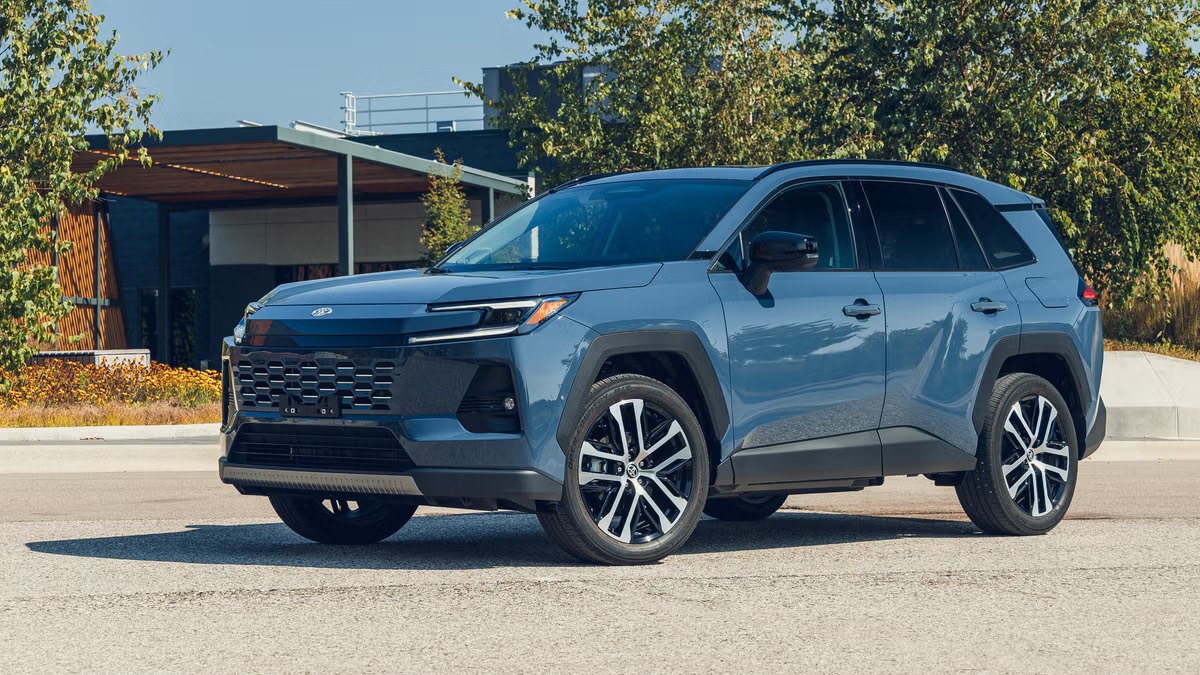
On the volume side, you’ve got the Toyota RAV4 Hybrid, the best-selling SUV in America, completely redesigned for 2026 and now hybrid-only across the board. It starts around $34,000 and it’s the default choice for this segment.
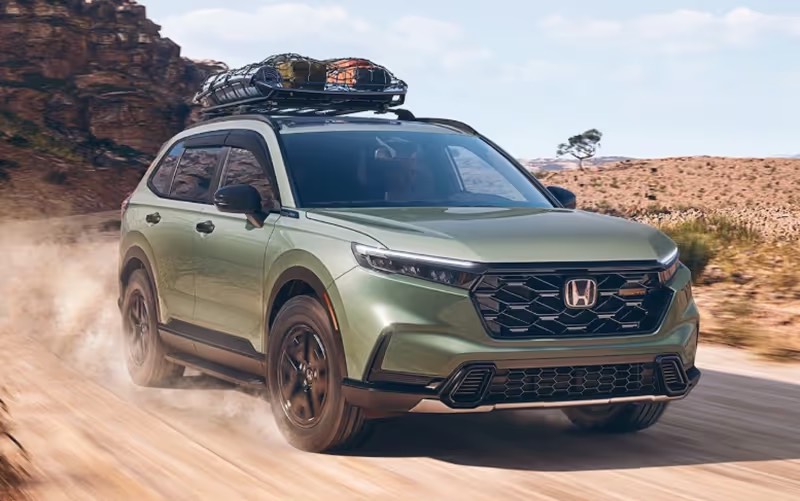
The Honda CR-V Hybrid starts at $37,080, tops out around $43,700, and is widely considered the best-driving compact SUV you can buy with the most spacious interior in its class.
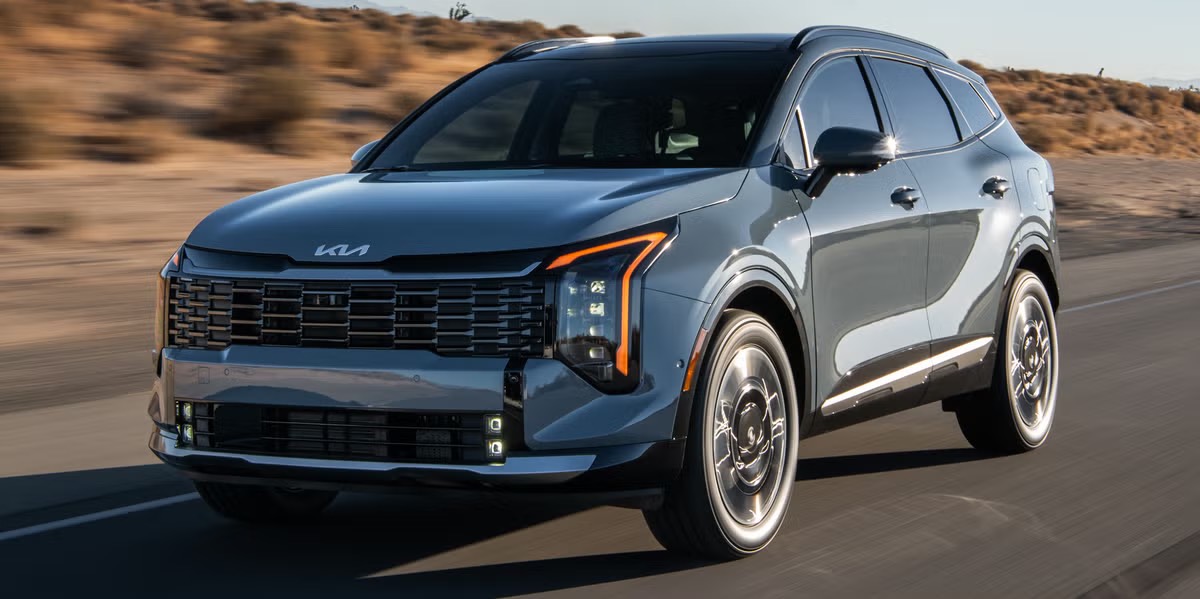
Then there’s the Kia Sportage Hybrid, which might be the best value of the bunch, undercutting a comparable CR-V by about $2,000 even in its top trim while backing it with a 10-year/100,000-mile powertrain warranty.
These are all $5,000 to $15,000 cheaper than a base R2, and at dual-motor pricing they’re $15,000 to $20,000 cheaper. That’s a gap Rivian has to clearly justify.
But Rivian isn’t selling a commuter crossover. R2’s identity lives in the adventure space, and that’s where the more interesting matchups happen.
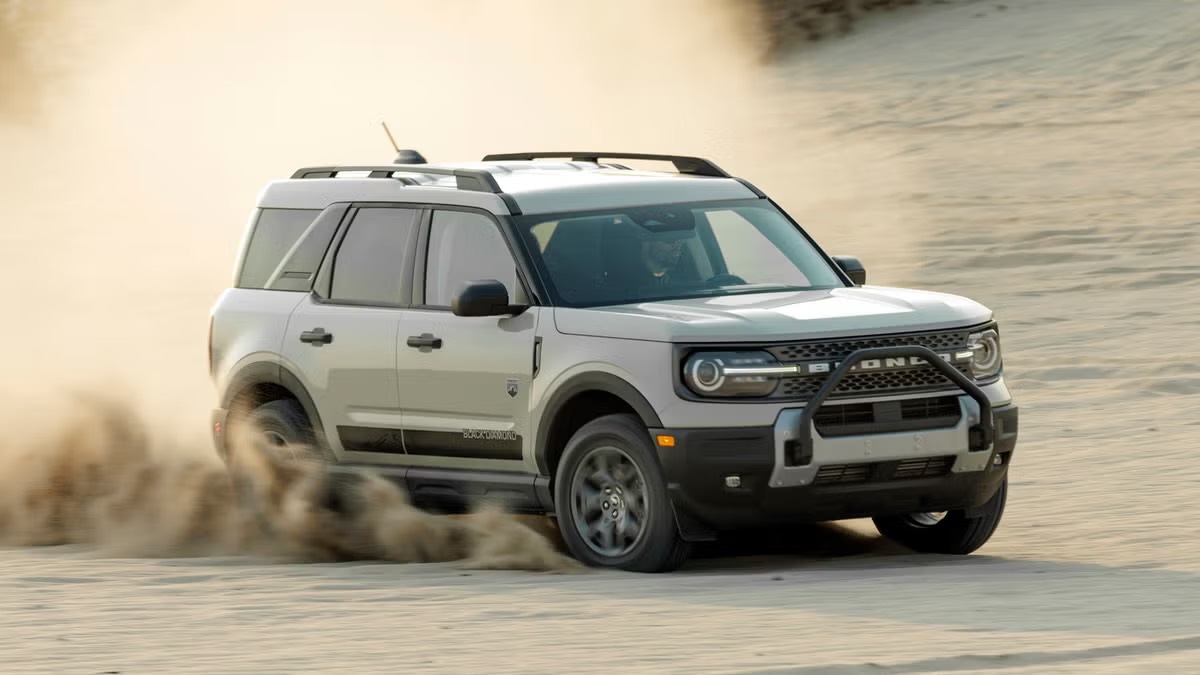
The Ford Bronco Sport is probably the closest ICE analog to what R2 is going for, starting at $33,840 with standard AWD and pushing to $42,260 for the Badlands with a 250-hp turbo, off-road suspension, and steel skid plates. Real trail capability at a lower price.
The Subaru Forester Wilderness starts at $36,290 with 9.3 inches of ground clearance, standard AWD, all-terrain tires, and 3,500 lbs of towing. Subaru basically owns the “outdoor lifestyle on a budget” lane.
The Mazda CX-50 Turbo is the dark horse, almost identical in size to R2 at 185 inches and topping out at $44,395, competing more on driving feel and interior quality.
And the Toyota 4Runner starts at $43,065 and is the aspirational adventure SUV a lot of Rivian’s target buyers currently drive. Body-on-frame with 6,000 lbs of towing, it’s bigger than R2 but occupies the same mental space.
Here’s where the higher R2 trims get interesting though. A dual-motor R2 at that speculated $50,000-$52,000 range would be right in 4Runner TRD Off-Road territory. A tri-motor at $55,000-$58,000 would sit next to a 4Runner TRD Pro at $63,000 or a Trailhunter at $60,000, but with sub-3-second 0-60 and no gas bill.
At that price point, R2 isn’t just competing with compact crossovers anymore. It’s offering legitimate performance SUV territory for the price of a mid-spec body-on-frame truck, and that’s a compelling pitch.
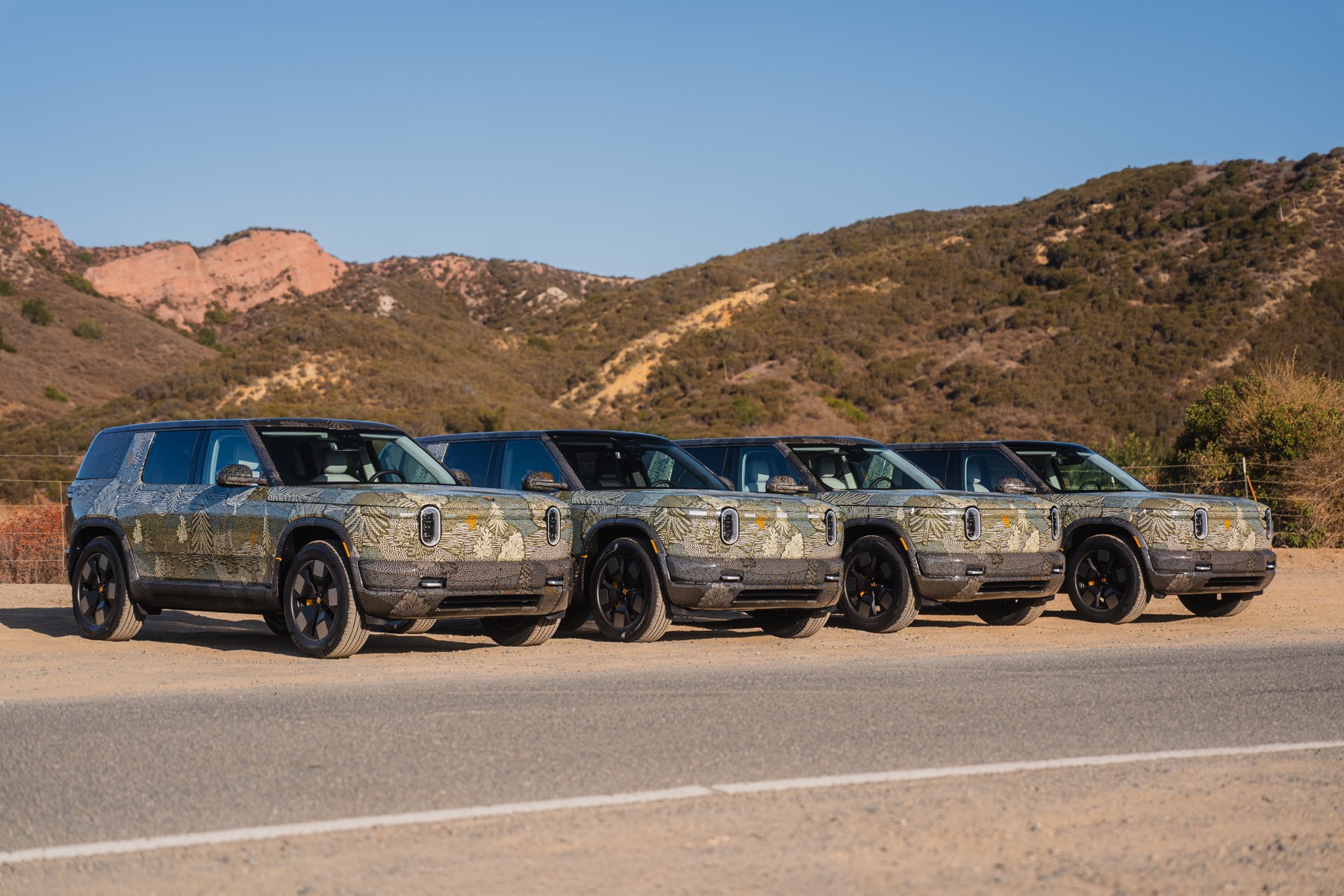
None of these ICE vehicles do 0-60 in 3.6 seconds in dual-motor form, let alone sub-3 seconds in tri-motor. R2’s dual-motor puts down 656 hp, which is supercar territory in a family crossover. The fastest adventure competitor here, the 4Runner hybrid, makes 326 hp.
Factor in zero gas costs, no oil changes, minimal brake wear, and the 5-year ownership math starts closing whatever price gap exists. Add 9.8 inches of ground clearance, 300+ miles of range, 30-minute fast charging, a frunk, and OTA updates, and R2 bundles capability that no single ICE competitor can touch.
The honest challenge is that a buyer can walk into a Toyota dealer today, spend significantly less, and drive home in something proven. But at the $50,000-$55,000 range where most R2 buyers will actually land, the value gap between R2 and a well-equipped 4Runner or loaded Bronco Sport shrinks a lot.
At that point it’s less about price and more about whether you’re ready to go electric. R2 doesn’t need to beat all of them. It just needs to convince enough buyers that the future is worth the leap.



Starting with a production and sales target of 20,000-25,000 this year means Rivian only has to interest a very small fraction this year. Then, word of mouth to expand sales. It means they have to get it right, right out of the gate, though, of course.
The R2 also offers a lot of Utility as a Sport Utility Vehicle (SUV) which helps to close the gap and I’m sad to report that while the latest hybrid CRV is nice it lacks once standard real world Utility features. For example:
Our 10 year old CRV: Tows 1,500 lbs, fog lights on mid trim, spare tire, handles in the trunk to quick fold down the 2nd row seats (great for loading bikes or larger items without the need to go to the 2nd row directly), replaceable gas cap, AWD is on 100% of the time
Newest CRV: Tows 1,000 lbs, no fog lights on any trim, no spare tire, 2nd row only folds down from the 2nd row, capless gas system requires an adapter to fuel when not at a pump, AWD is computer controlled with relatively little ability to control it
Meanwhile R2 will most likely have a higher tow rating, will most likely let you keep a spare of some kind under the rear trunk floor, will have better driving modes like snow to force AWD to be on 100% of the time when you need it, and the rear window will let you carry long items more easily like wood. And that’s all while having more ground clearance than both CRVs, having a quicker 0-60 which never hurts for a commute, around town driving, an adventure, or just fun, and the savings you’ll get from no gas and less maintenance.
with all the wasted space from ICE engines and transmission, without looking at specs, i would say R2 might have comparable interior space to the 4runner. 4runners tend to have dealer markups as well, especially the off road trims (trd off-road, trailhunter, and trd pro.) its a small feature, but 4runner owners, like myself, can attest to the rear sliding window being a huge feature. None of the compact crossovers or the 4runner have frunks too!
I think R2’s behind the rear seats storage is around 28.7 cu ft, but there is an additional 4.6 ish cu ft under the rear floor for a total of 33.3 cu ft in the rear. The fronk has around 5.19 cu ft worth of storage so total storage is about 38.49 cu ft. This total matches the class leading Honda CRV or exceeds it slightly although its breakdown is very different (3 areas vs just behind the rear seats while up). A 4Runner on the other hand behind the rear seats while up is more like 46-48ish Cu ft meaning the 4Runner is a much larger vehicle. Granted my R2 specs aren’t 100% confirmed, but the CRV is about 38 which still makes it smaller than the 4Runner. Still the rear glass will really help!
I think the 5 year ownership is only for people who make too much money. If I buy I plan to own 12 or 13 years and expect to save more than the price difference of a ICE equivalent vehicle.
If R2 gets 3 miles per KWH fuel cost at my electricity rate is $0.04 per mile.
RAV4 hybrid gets 40 mpg so $0.08 per mile for fuel and another $0.03 per mile maintenance advantage.
Given my 12,000 miles per year the R2 saves $840 per year in fuel and maintenance.
Forgot to mention self driving, which none of the ice competitors have.
Absolutely right!
I’m not so sure many would agree that Subaru is a ‘budget’ brand. Maybe rephrase to…
Subaru basically owns the “outdoor lifestyle for the masses” lane.