
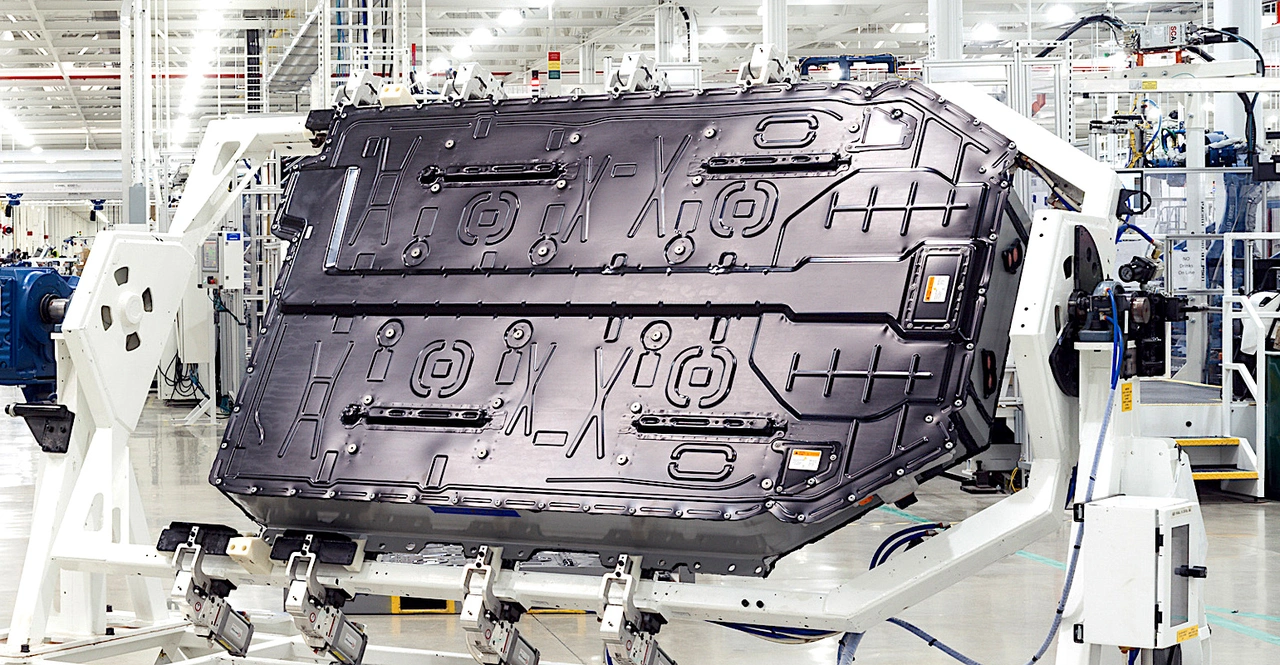
Rivian and Redwood Materials announced a partnership to deploy a battery energy storage system at the Normal plant using more than 100 second-life Rivian battery packs. The system holds 10 megawatt-hours of energy that Rivian can pull from during peak demand instead of buying expensive grid power.
Redwood is handling the integration with its Pack Manager technology, and the companies are claiming this is the largest repurposed battery energy storage system at any U.S. auto manufacturer.
The idea behind it is pretty straightforward. EV batteries are built to last a long time, and a lot of them still have plenty of usable capacity when a vehicle gets retired. Putting those packs to work at the factory rather than scrapping them early is a practical way to cut costs and reduce grid load at the same time.

JB Straubel, who co-founded Tesla before starting Redwood, was pretty blunt about the motivation: electricity demand is growing faster than the grid can keep up, and that’s becoming a real constraint for industrial growth. This is one way to work around that without waiting for grid infrastructure to catch up.
RJ framed it around long-term thinking on energy, and scaling is apparently part of the plan. Worth keeping an eye on whether this expands beyond Normal.



This is a great decision that will both help control operating costs and keep the factory running – for awhile – when the local power grid is down.
I’m assuming that the batteries will be charged at night when electricity is cheaper, and ready for draw during the peak pricing time of the day?
I wonder if similar will prove useful for fast charger locations, allowing them to reduce their demand charge by charging up batteries slowly between vehicle charging sessions, reducing the peak electricity usage at the site, a key cost for such facilities.
This is a strange article and not EV friendly.
Rivian hasn’t been around long enough to have “Old Batteries”.
It’s sending the wrong message.
My ’17 Bolt @ 142k miles is showing no degradation, that I can tell…
Come on guys, send out better news releases.
Your 9 year old Chevy batteries show no sign of degradation? What a total crock of shat.