
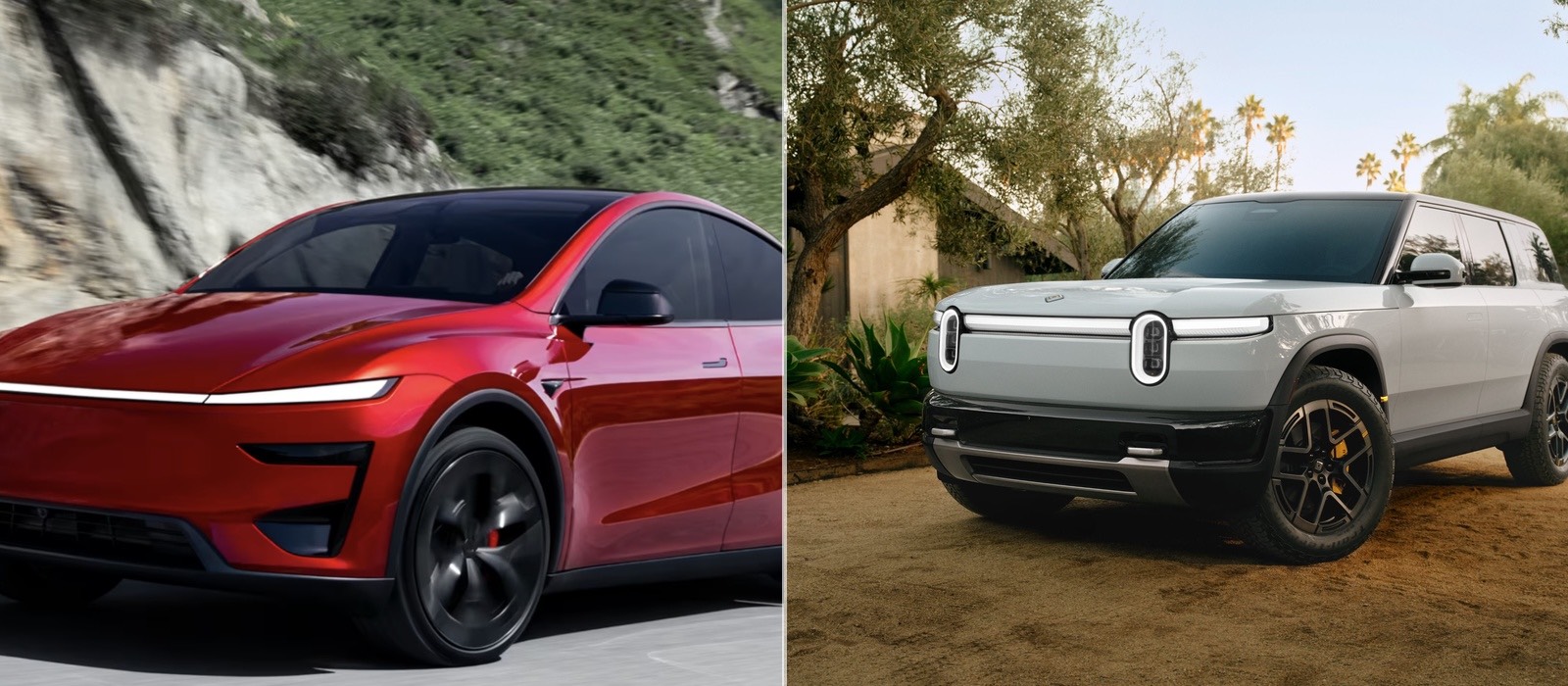
The Tesla Model Y has been the best-selling electric vehicle on the planet for three years running. Now Rivian is coming for its territory with the R2, a mid-size electric crossover that starts around $45,000 and tops out at $57,990. These are the two vehicles most cross-shoppers are comparing right now, and the spec sheets tell a surprisingly competitive story on both sides.
This isn’t a “which one should you buy” piece. It’s a straight comparison of what each vehicle offers across pricing, performance, range, capability, and technology. Both have clear strengths and trade-offs. Here’s where they line up and where they diverge.
Head-to-Head Specs
Best-of-lineup numbers where applicable. Green highlights indicate which vehicle leads in each category.
The Bottom Line
The Model Y starts about $5,000 cheaper, is available right now, and has the most mature charging network and software ecosystem in the EV space. Its Performance trim edges the R2 to 60 mph (3.3 vs 3.6 sec) and the Premium RWD leads on range at 357 miles EPA. Where Tesla leans on vision-only autonomy with FSD at $99/mo, Rivian pairs 11 cameras with 5 radars and offers Autonomy+ at $50/mo — with a 60-day trial on every R2.
The R2 counters with genuine off-road capability — 9.6 inches of ground clearance versus 6.6, up to 8 drive modes, and 4,400 lbs of towing versus 3,500. It also offers more cargo space (90.1 vs 75.5 cu-ft), a larger battery (87.9 vs 81 kWh), a bigger display (15.6″ vs 15.4″), and more raw power (656 hp / 609 lb-ft on the Performance). The R2 Performance and Premium carry EPA-estimated range of 330 miles; the Standard Long Range (345 mi) and base Standard (275+ mi) are still Rivian estimates awaiting EPA certification. Both vehicles sit in the $40K–$58K range, both use NACS charging, and both should qualify for federal EV tax credits. If you need a vehicle today, the Model Y is the pick. If you can wait until 2026–2027 and want adventure-first DNA, the R2 makes a strong case.
The Model Y starts about $5,000 cheaper, is available right now, and has the most mature charging network and software ecosystem in the EV space. Its Performance trim edges the R2 to 60 mph (3.3 vs 3.6 sec) and the Premium RWD leads on range at 357 miles EPA. Where Tesla leans on vision-only autonomy with FSD at $99/mo, Rivian pairs 11 cameras with 5 radars and offers Autonomy+ at $50/mo, with a 60-day trial on every R2.
The R2 counters with genuine off-road capability, 9.6 inches of ground clearance versus 6.6, up to 8 drive modes, and 4,400 lbs of towing versus 3,500. It also offers more cargo space (90.1 vs 75.5 cu-ft), a larger battery (87.9 vs 81 kWh), a bigger display (15.6" vs 15.4"), and more raw power (656 hp / 609 lb-ft on the Performance). The R2 Performance and Premium carry EPA-estimated range of 330 miles; the Standard Long Range (345 mi) and base Standard (265+ mi) are still Rivian estimates awaiting EPA certification. Both vehicles sit in the $40K–$58K range, both use NACS charging, and both should qualify for federal EV tax credits. If you need a vehicle today, the Model Y is the pick. If you can wait until later 2026–2027 and want adventure-first DNA, the R2 makes a strong case.



Double paragraphs and:
both should qualify for federal EV tax credits.
The R2 also has 2 screens vs Tesla