
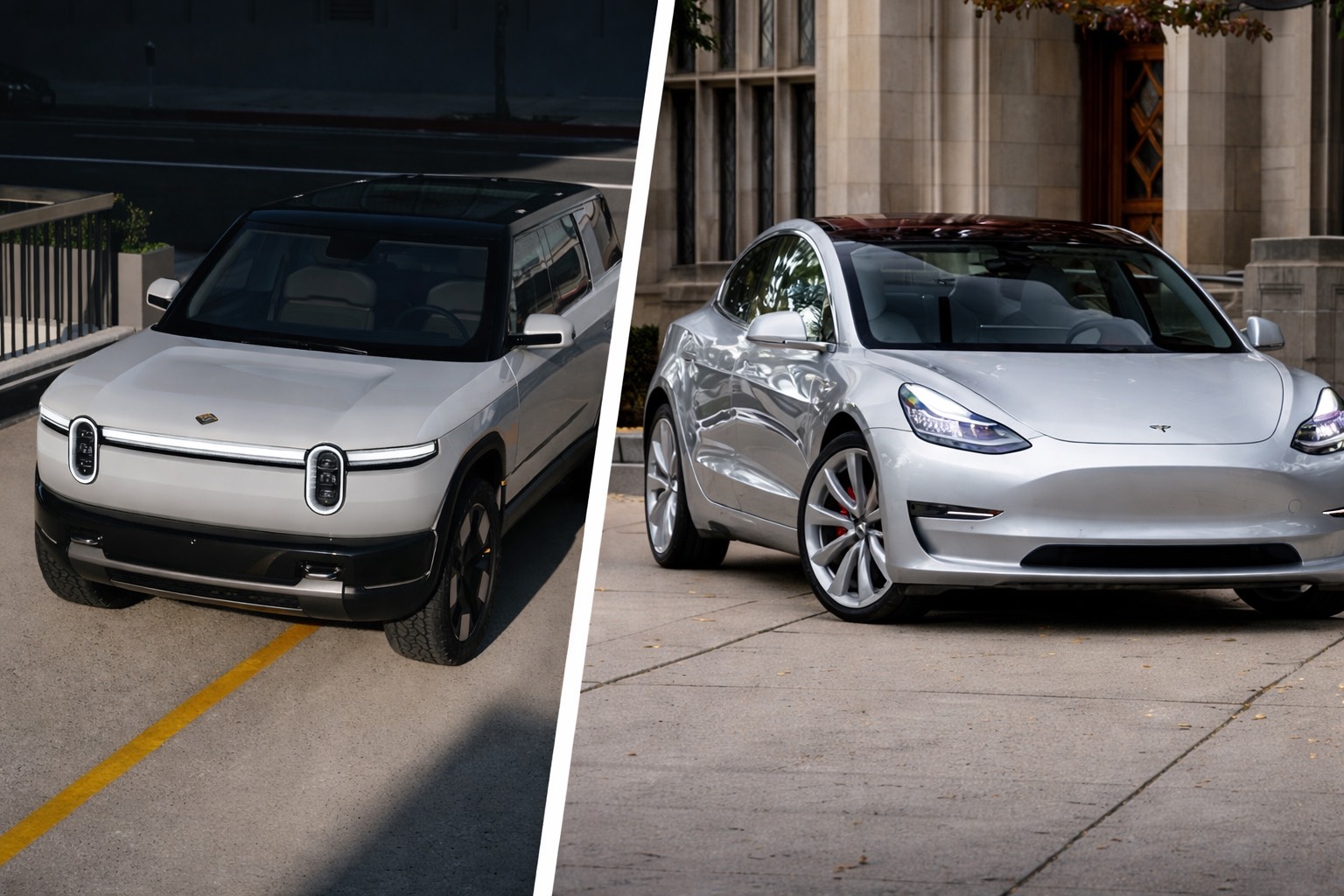
For years now, the Tesla Model 3 launch has been remembered as this explosive turning point, the moment Tesla supposedly flipped a switch and instantly became a mass market powerhouse, but when you actually rewind the tape and look at the first six months of real deliveries, the story becomes far less cinematic and far more instructive about how brutally difficult scaling an affordable EV really is.
Tesla delivered its first Model 3s on July 28, 2017, and despite the tidal wave of reservations and hype that surrounded the car, the production reality was sobering, with just 220 Model 3s delivered through the end of Q3 2017 and approximately 1,550 more delivered in Q4 2017, meaning that from late July through the end of December 2017 Tesla delivered roughly 1,770 vehicles worldwide while navigating what would later be described as production hell, a period defined by automation missteps, supplier bottlenecks, and the painful realization that designing a great car and building that car at scale are two very different challenges.
That context matters enormously when we start talking about Rivian and the R2.
If Rivian launches the R2 in June and manages to deliver 25,000 units by the end of December 2026, we are not talking about a modest ramp or a symbolic milestone, we are talking about an entirely different launch trajectory, one where instead of struggling to break 2,000 units in the first six months like Tesla did with Model 3, Rivian would be pushing tens of thousands of vehicles into customer driveways in roughly the same timeframe.
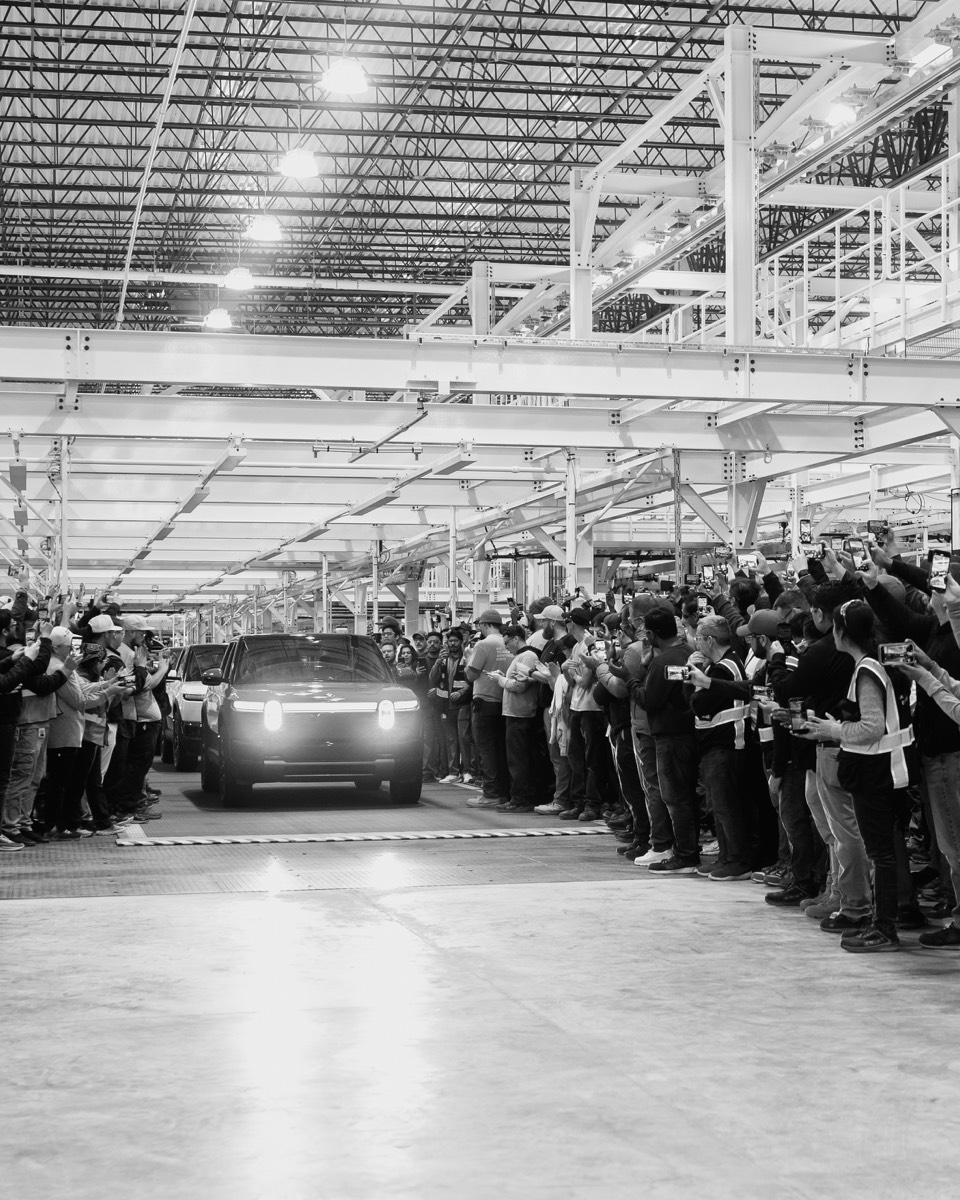
When Tesla launched the Model 3, it was attempting to transform itself from a niche luxury EV maker into a true high volume automaker, simultaneously reworking manufacturing philosophy, battery pack assembly, automation strategy, supplier integration, and logistics at a scale it had never attempted before. Model 3 was not just another product in the lineup but rather the company’s existential bet on survival. It needed to succeed, not only technologically but operationally, if Tesla was going to justify its valuation and stay afloat.
It would be easy to frame that as a simple Tesla versus Rivian comparison, but that would miss the larger point, because the circumstances surrounding each launch could not be more different.
Rivian, by contrast, will be entering the R2 era with years of R1T, R1S, and EDV production behind it, with the Normal plant already operating, with supplier networks established, with service infrastructure expanded, and with the scars of its own production ramp challenges already absorbed into its organizational memory, meaning that while R2 represents a new platform and a lower price point, it does not represent Rivian’s first attempt at industrial scale manufacturing.
That difference in starting position is precisely what makes the comparison compelling rather than superficial.
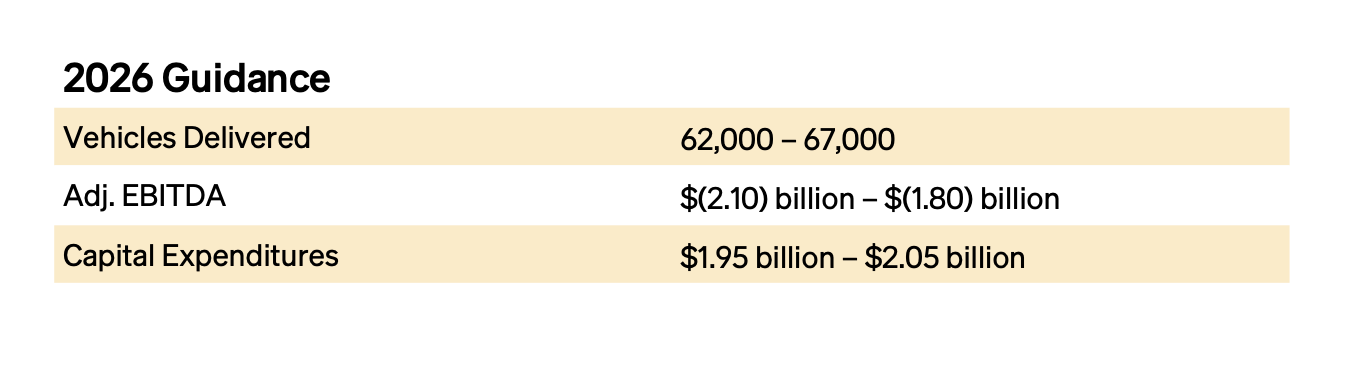
Rivian’s 2026 guidance calls for roughly 62,000 to 67,000 total vehicle deliveries for the year, and analysts widely expect the R2 rollout to account for the majority of that incremental growth, placing estimated R2 deliveries in the 20,000 to 25,000 range for 2026, which makes a 25,000 unit June through December scenario ambitious yet plausible if the production ramp proceeds without major disruption.
If Rivian were to deliver 25,000 R2s in its first six months on the market, it would signal more than strong consumer demand, it would signal that EV manufacturing as an industry has matured, that lessons learned from Tesla’s early struggles, from supply chain volatility, from battery production scaling, and from service and delivery growing pains have collectively lowered the barrier to ramping a mass market EV at speed.
And yet, early volume is not destiny.
Tesla’s slow Model 3 ramp did not prevent it from eventually dominating the segment, and the under 2,000 vehicles delivered in those first six months did not define its long term trajectory, just as hitting 25,000 R2 deliveries by December 2026 would not automatically guarantee Rivian’s sustained success, because the real test will come in 2027 and beyond, when margins, competition, pricing pressure, incentives, and quality control all converge at scale.
The Model 3 launch was Tesla proving it could survive at scale under immense pressure and public scrutiny.
The R2 launch will be Rivian proving it can compete at scale in a far more crowded, far more mature EV landscape.
That is why this comparison matters, not because one number dwarfs the other in isolation, but because it highlights how far the industry has evolved, how much higher expectations are for any new entrant in the affordable EV space, and how the next chapter of EV growth will be written not by hype alone, but by disciplined, repeatable, industrial scale execution.



Fantastic write-up and deep dive Jose!
I think expecting the number of R1’s sold this year to be roughly flat to last year is the wrong assumption. I’m guessing Rivian is planning for R1 volumes closer to 30k and R2 being north of 30k.
I am really curious how R1, especially R1S, does have Rivian announces R2 launch pricing. Additionally, I wonder if Rivian will offer some great lease deals on R1S (beating the current $799/mo on Dual Standard).
I agree — I expect the R2 will cannibalize a minimum of 10% of R1 sales. Even those that can afford $100k may not need a 7,000lb 3-row SUV when a nimble sub-5,000lb 5 passenger SUV with the same great looks and utility can be had for $60k. The rest of the buyers will come from current EV owners looking for an upgrade (like me) and probably even more EV-curious ICE owners cross-shopping Subaru, Toyota, Chevy and perhaps Cadillac EVs.